My way or the highway is a popular English idiom that describes a person who refuses to accept other opinions. They want things done only their way. If others disagree, they can leave.
You may hear this phrase at work, in relationships, sports teams, or even politics. It often describes a controlling attitude. While confidence can be useful, being too rigid can create problems.
Understanding this expression helps you recognize certain behaviors and communicate more effectively. In this guide, you’ll learn the meaning, origin, examples, synonyms, and correct usage of my way or the highway. You’ll also discover common mistakes and expert tips for using this phrase naturally in everyday conversations.
Quick Summary Box
What Does “My Way or the Highway” Mean?
- An idiom that means “do things my way or leave.”
- Describes a controlling or inflexible attitude.
- Often used to criticize stubborn behavior.
- Common in workplaces, relationships, and leadership discussions.
- Usually carries a negative meaning.
- Suggests there is no room for compromise.
What Does “My Way or the Highway” Mean?
The phrase means someone insists on getting their way.
They do not want discussion or compromise. Others must agree or face consequences.
Simple Definition
It means accepting one person’s demands without argument or leaving the situation.
Example
- “The coach had a my way or the highway attitude.”
- “Our manager believes in my way or the highway leadership.”
Understanding the Phrase in Simple Words
Think of a road with only one direction.
The person says:
- Follow my path.
- Accept my rules.
- If not, leave.
This creates a take-it-or-leave-it situation.
The phrase often describes:
- Strict bosses
- Controlling parents
- Stubborn leaders
- Difficult partners
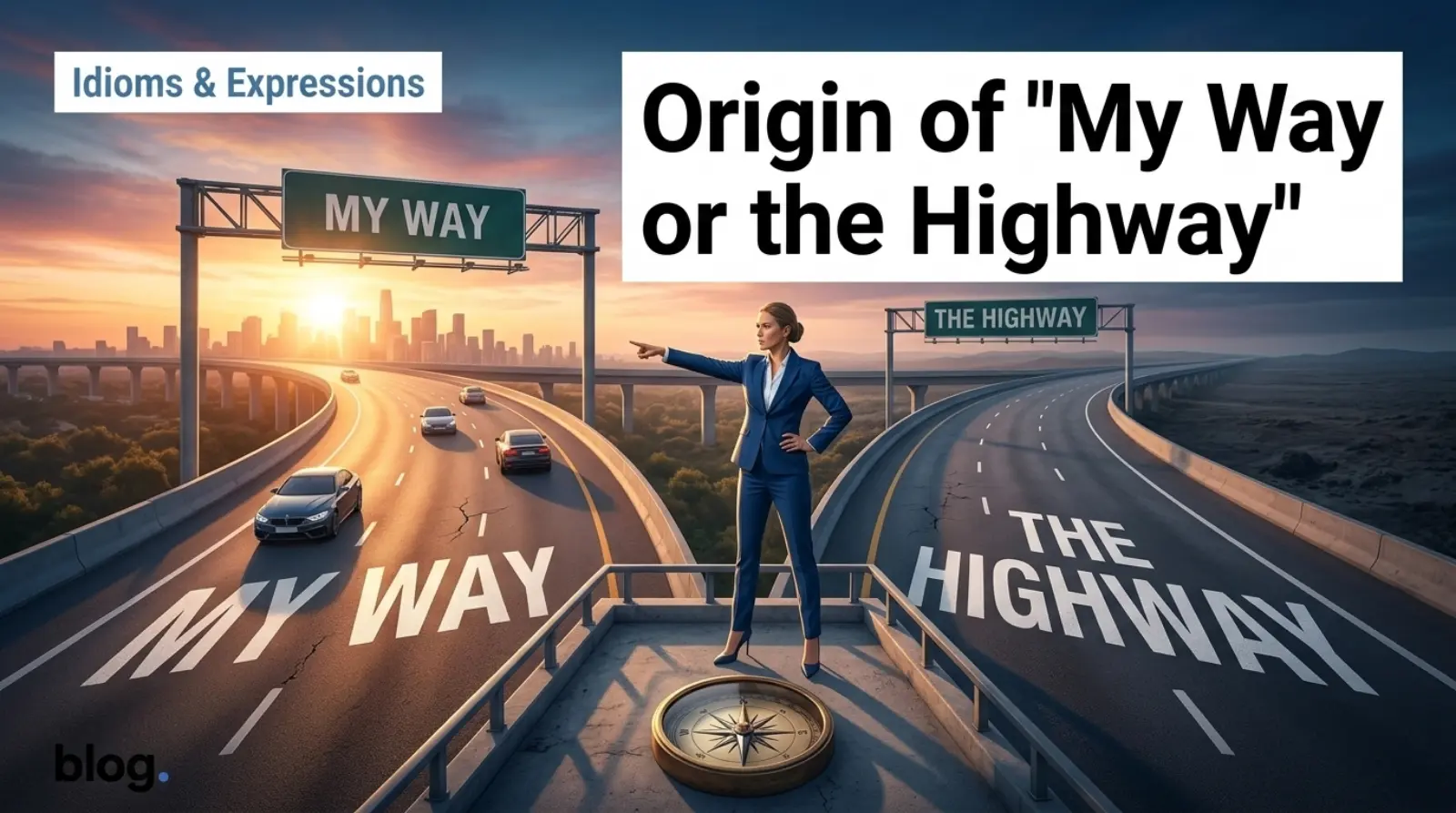
Origin of “My Way or the Highway”
The exact origin remains unclear.
However, the phrase became popular in the United States during the 1970s and 1980s.
Many language experts believe it developed from workplace and business culture. Leaders sometimes demanded complete obedience from employees.
Over time, the phrase spread into everyday English and became a common idiom.
Today, it appears in:
- Business discussions
- Movies
- Television shows
- Political debates
- Personal relationships
When Is “My Way or the Highway” Used?
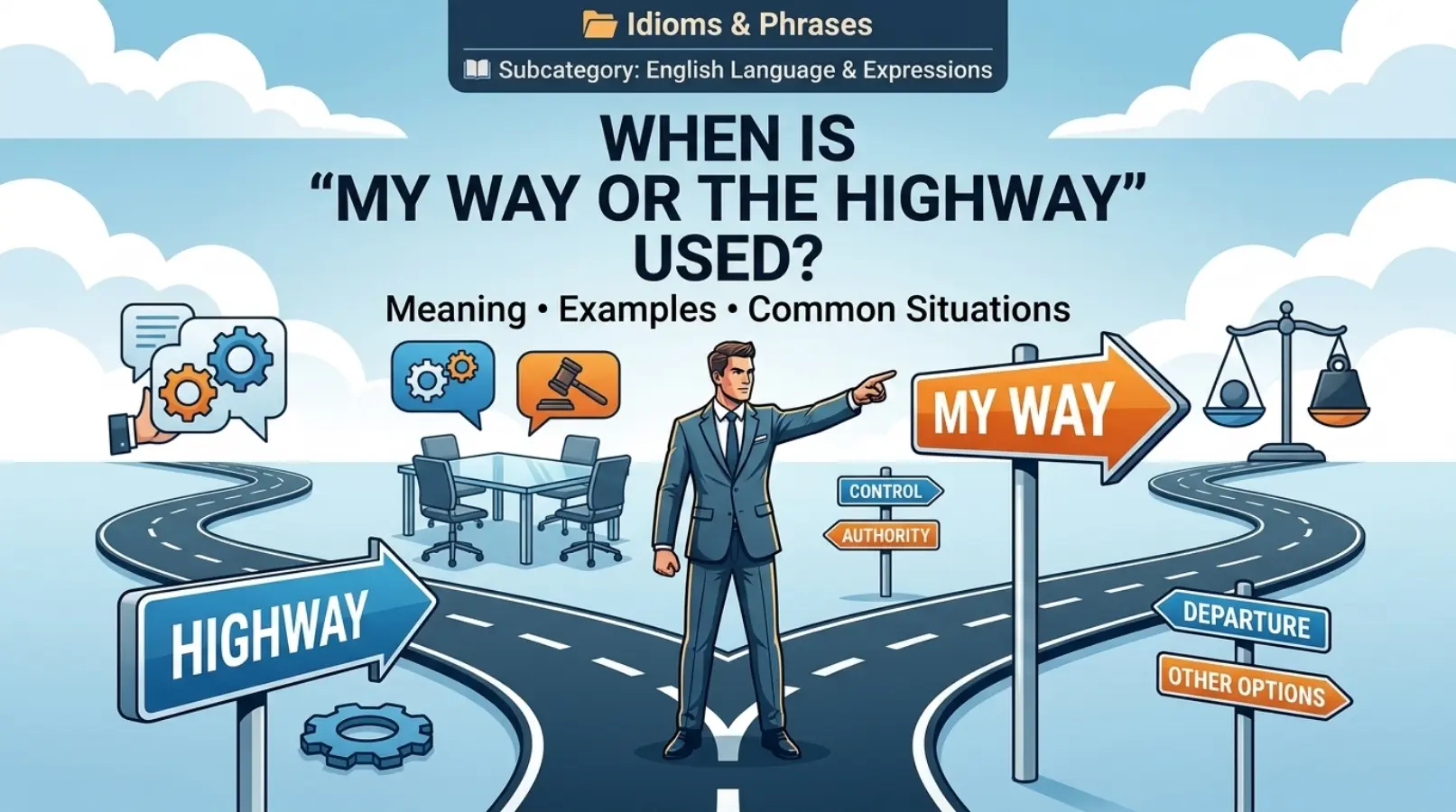
People use this expression when describing someone who refuses compromise.
Common Situations
Workplace
A manager rejects all suggestions.
Example:
“Our boss is my way or the highway.”
Relationships
One partner controls every decision.
Example:
“He chooses everything. It’s always my way or the highway.”
Sports
A coach expects total obedience.
Example:
“The coach runs the team with a my way or the highway style.”
Family
Parents may create strict rules.
Example:
“My father believed in my way or the highway parenting.”
Real-Life Examples of “My Way or the Highway”
Here are practical examples.
Example 1: Office Meeting
Employee: “Can we try a different strategy?”
Manager: “No. We will use my plan.”
Result: A my way or the highway approach.
Example 2: Group Project
One student ignores everyone’s ideas.
Result: The team feels frustrated.
Example 3: Relationship
One partner decides where to live, eat, and travel.
Result: The relationship becomes unbalanced.
Example 4: Business Leadership
A CEO rejects all feedback.
Result: Innovation may suffer.
My Way or the Highway vs Healthy Leadership
Many people confuse strong leadership with controlling leadership.
| Feature | Healthy Leadership | My Way or the Highway |
| Listens to Others | Yes | Rarely |
| Accepts Feedback | Yes | No |
| Encourages Discussion | Yes | No |
| Allows New Ideas | Yes | Rarely |
| Team Collaboration | High | Low |
| Flexibility | High | Very Low |
Key Difference
Strong leaders guide people.
My way or the highway leaders control people.

Signs of a “My Way or the Highway” Attitude
Watch for these warning signs:
- Rejects all suggestions
- Interrupts others often
- Refuses compromise
- Demands complete agreement
- Gets angry when challenged
- Believes only their ideas are correct
- Ignores team feedback
These behaviors can damage trust and teamwork.
Common Mistakes When Using the Phrase
Many learners misuse this idiom.
Mistake 1: Using It Positively
❌ “She is a great leader because she is my way or the highway.”
✅ “She is effective, but some people think her style is my way or the highway.”
Mistake 2: Taking It Literally
The phrase is figurative.
It does not refer to an actual highway.
Mistake 3: Using It in Formal Writing
The expression is informal.
Avoid it in academic papers unless discussing the idiom itself.
Synonyms
These phrases share a similar meaning.
Synonyms
- Take it or leave it
- No compromise
- Authoritarian attitude
- Dictatorial approach
- Unyielding behavior
- Rigid leadership
- Controlling mindset
- Hardline stance
How to Use “My Way or the Highway” Correctly
You can use the phrase as:
A Noun Phrase
- “His management style is my way or the highway.”
An Adjective Phrase
- “She has a my way or the highway attitude.”
Part of a Sentence
- “The owner believes it’s my way or the highway.”
Everyday Examples
- “The coach uses a my way or the highway strategy.”
- “The meeting failed because of a my way or the highway mindset.”
- “Employees dislike that management approach.”

Why This Attitude Can Be Harmful
While decisiveness matters, extreme control creates problems.
Negative Effects
- Reduces teamwork
- Lowers morale
- Creates stress
- Blocks innovation
- Damages relationships
- Increases conflict
People often perform better when they feel heard and respected.
Expert Insights: Why Understanding This Idiom Matters
Language reflects human behavior.
Understanding my way or the highway helps you:
- Recognize controlling behavior
- Improve communication skills
- Build stronger relationships
- Develop better leadership habits
- Understand workplace culture
Modern leadership research shows collaboration often produces better results than rigid control.
Successful leaders listen, adapt, and encourage feedback.
Tips for Avoiding a “My Way or the Highway” Mindset
Try these practical strategies:
Listen First
Allow others to share ideas.
Ask Questions
Seek understanding before deciding.
Welcome Feedback
Constructive criticism improves decisions.
Stay Flexible
Adapt when new information appears.
Focus on Solutions
Work together instead of controlling outcomes.
These habits build trust and cooperation.
Frequently Asked Questions (FAQs)
What does “my way or the highway” mean?
It means someone insists on doing things their way without compromise.
Is “my way or the highway” negative?
Yes. It usually describes controlling or stubborn behavior.
Is “my way or the highway” an idiom?
Yes. It is a common English idiom.
Can I use it in formal writing?
Generally, no. It works better in informal writing and conversation.
Who usually uses this phrase?
People use it when discussing strict leaders, managers, parents, or partners.
Is it common in business settings?
Yes. It often describes inflexible management styles.
What is another way to say “my way or the highway”?
You can say “take it or leave it” or “authoritarian approach.”
Why is compromise important?
Compromise encourages teamwork, trust, and better decision-making.
Conclusion
The phrase describes a person who demands complete agreement and refuses compromise. It often appears in workplaces, relationships, sports, and leadership discussions. Although confidence and decisiveness are valuable traits, extreme rigidity can create conflict and reduce teamwork.
Understanding this idiom helps you recognize controlling behavior and communicate more effectively. It also highlights the importance of flexibility, listening, and collaboration. Whether you encounter the phrase in conversation, books, or business settings, knowing its meaning will improve your understanding of modern English.
The key takeaway is simple: successful relationships and leadership often depend on cooperation, not a my way or the highway attitude.