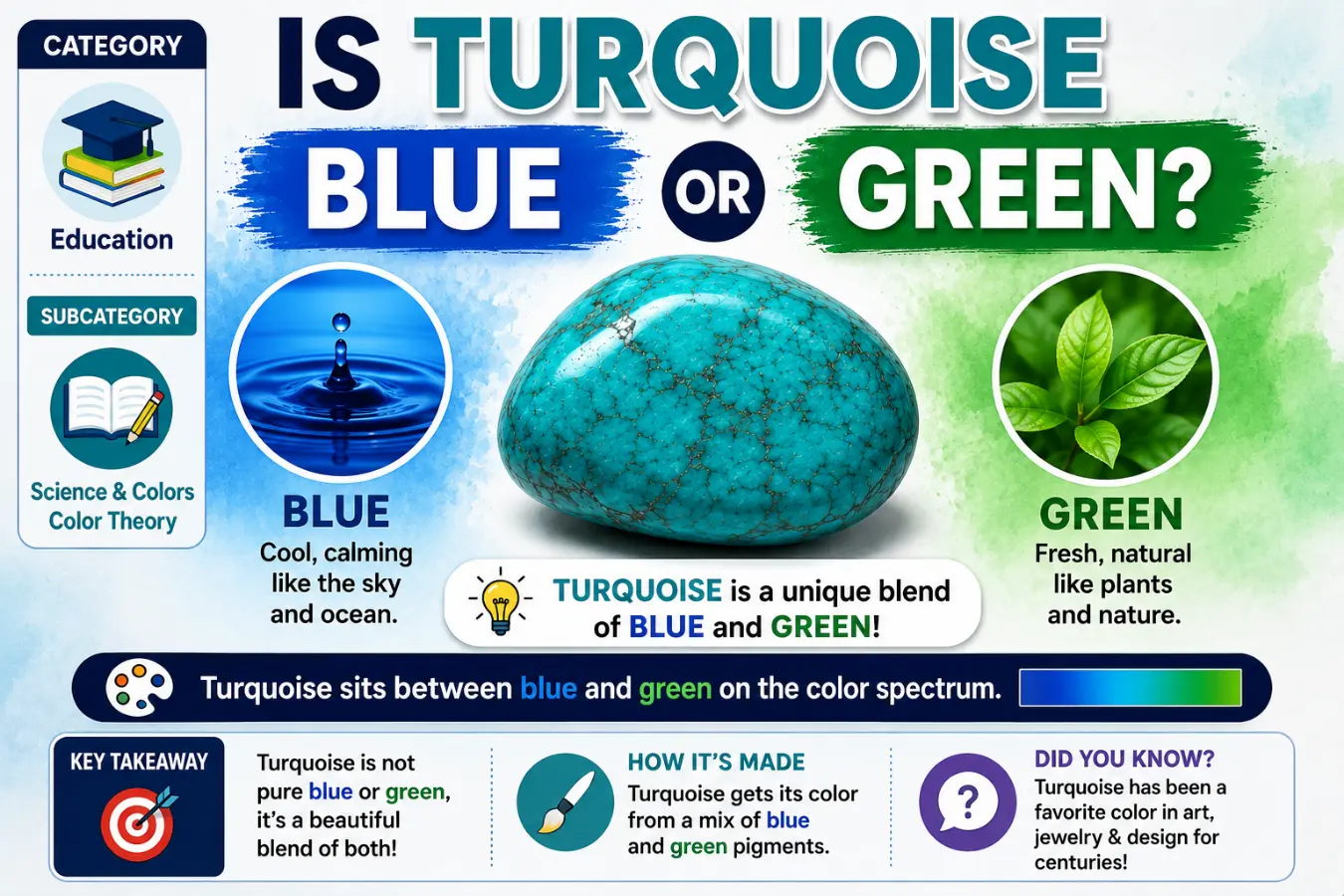
Is turquoise blue or green? This is a common question because turquoise sits between blue and green on the color spectrum. Many people see it as blue, while others notice its green tones.
Turquoise is a beautiful color inspired by the semi-precious turquoise gemstone. It combines the calm feeling of blue with the freshness of green. Because it contains both colors, its appearance can change depending on lighting, shades, and surrounding colors.
You can find turquoise in nature, fashion, home design, branding, and art. Some shades look more blue, while others appear greener. Understanding turquoise helps you choose colors more confidently for decorating, designing, or shopping.
In this guide, you’ll learn exactly what turquoise is, whether it is blue or green, and how to identify different turquoise shades in everyday life.
Quick Summary Box
- Turquoise is a mix of blue and green.
- Most color experts classify turquoise as a blue-green color.
- Some shades look more blue.
- Other shades appear more green.
- The exact appearance depends on the shade and lighting.
- Turquoise is named after the turquoise gemstone.
- It sits between blue and green on the color wheel.
What Is Turquoise?
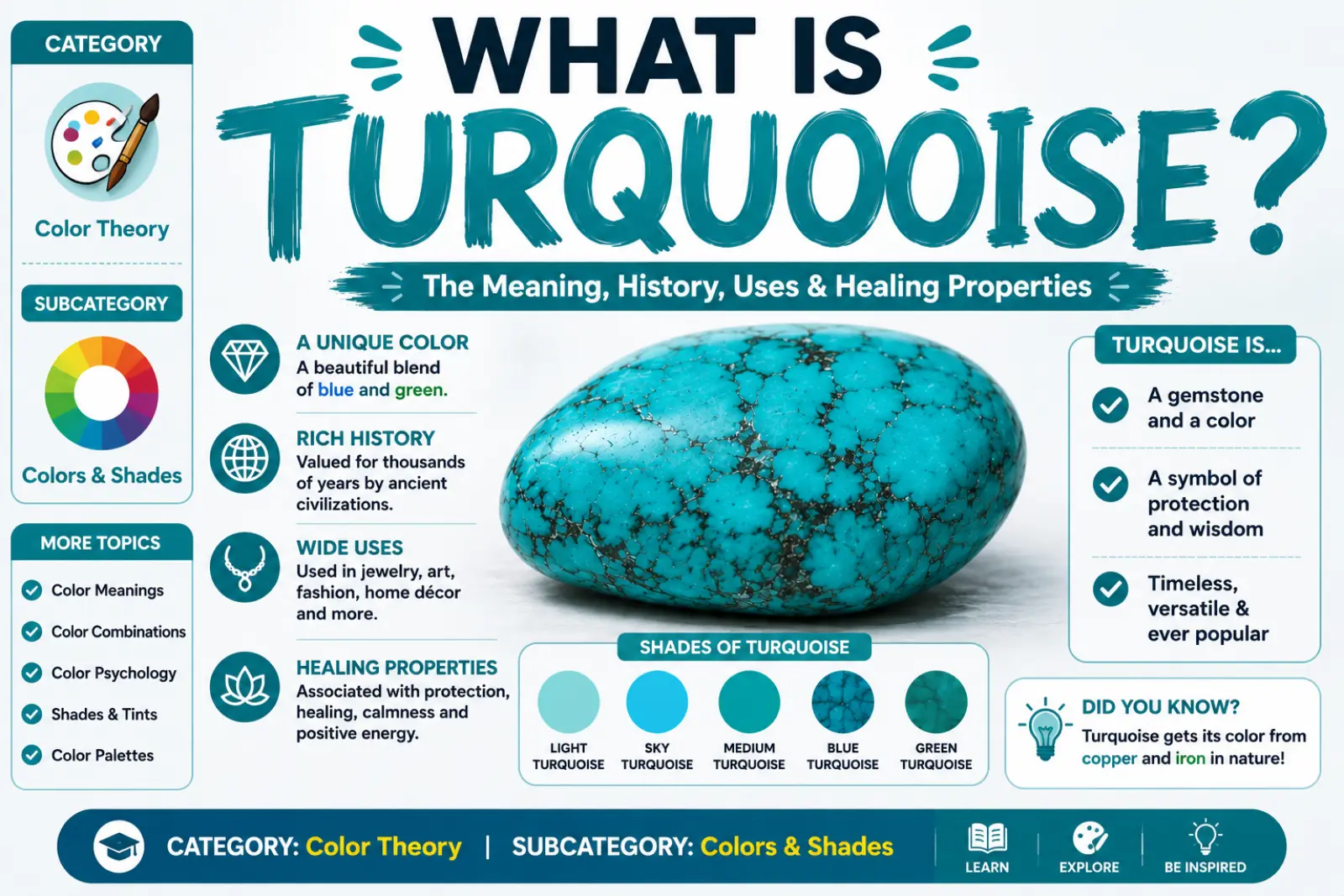
Turquoise is a color that blends blue and green.
It gets its name from the turquoise gemstone, which has been valued for thousands of years. The color is known for its bright, refreshing, and tropical appearance.
Turquoise often reminds people of:
- Clear ocean water
- Tropical beaches
- Blue lagoons
- Exotic gemstones
- Summer skies
Because it combines two colors, many people disagree about whether it is blue or green.
Is Turquoise Blue or Green?
The simple answer is:
Turquoise is both blue and green.
Color experts generally place turquoise between blue and green on the color wheel.
However:
- Blue-heavy turquoise looks mostly blue.
- Green-heavy turquoise looks mostly green.
- Balanced turquoise appears equally blue and green.
This unique balance is what makes turquoise special.
Why Do People Disagree About Turquoise?
People often see colors differently.
Several factors affect how turquoise appears:
Lighting
Natural sunlight may make turquoise look brighter and bluer.
Indoor lighting can make it appear greener.
Surrounding Colors
Next to navy blue, turquoise may seem green.
Next to lime green, it may appear blue.
Shade Variations
Some turquoise shades naturally contain more blue pigment.
Others contain more green pigment.
Personal Perception
Human eyes and brains process colors differently.
This can cause people to describe the same turquoise color differently.
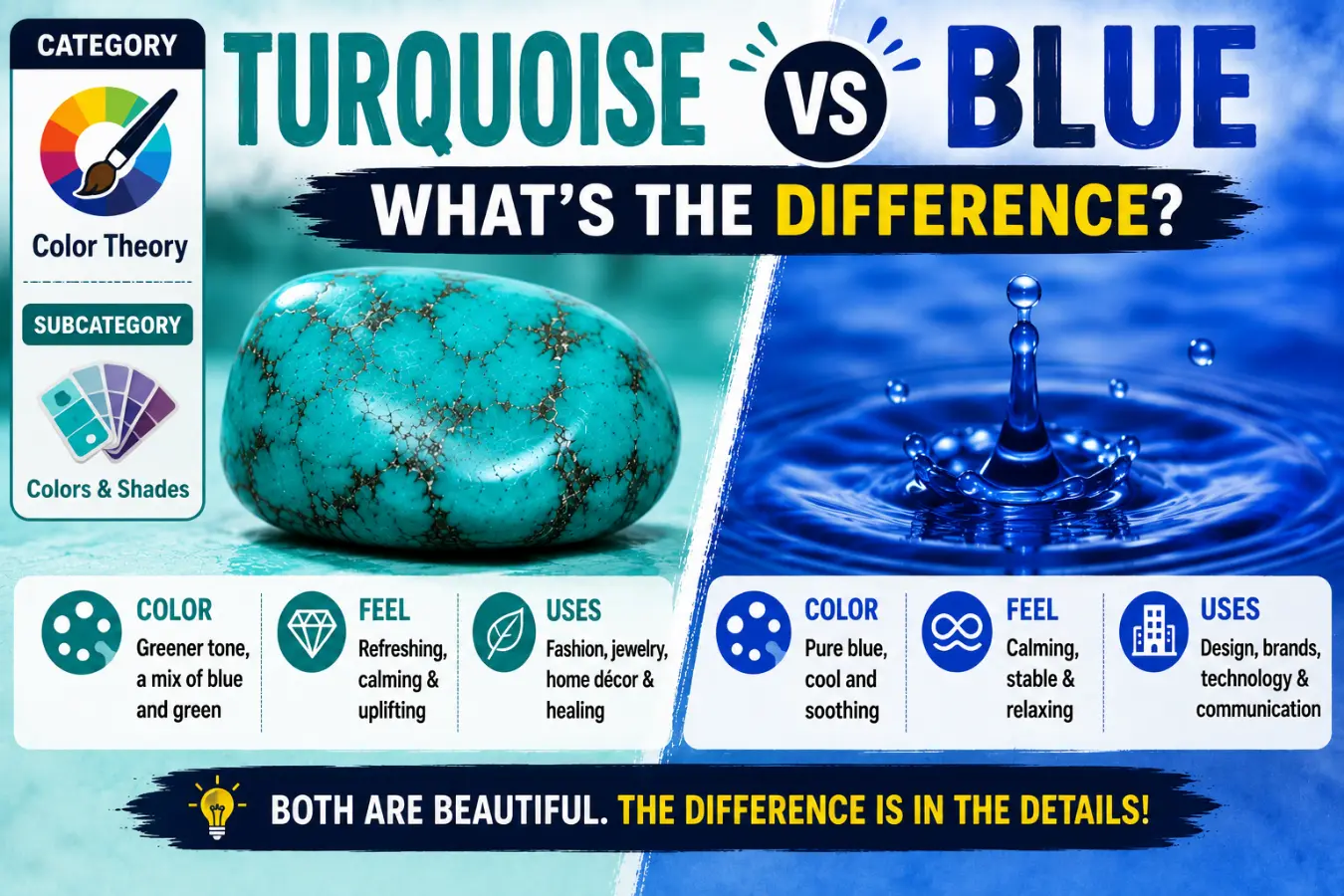
Turquoise vs Blue: What’s the Difference?
| Feature | Turquoise | Blue |
| Color Family | Blue-Green | Blue |
| Contains Green? | Yes | No |
| Brightness | Usually brighter | Varies |
| Appearance | Tropical and vibrant | Calm and classic |
| Examples | Ocean water | Sky |
Blue contains little or no green.
Turquoise always contains some green.
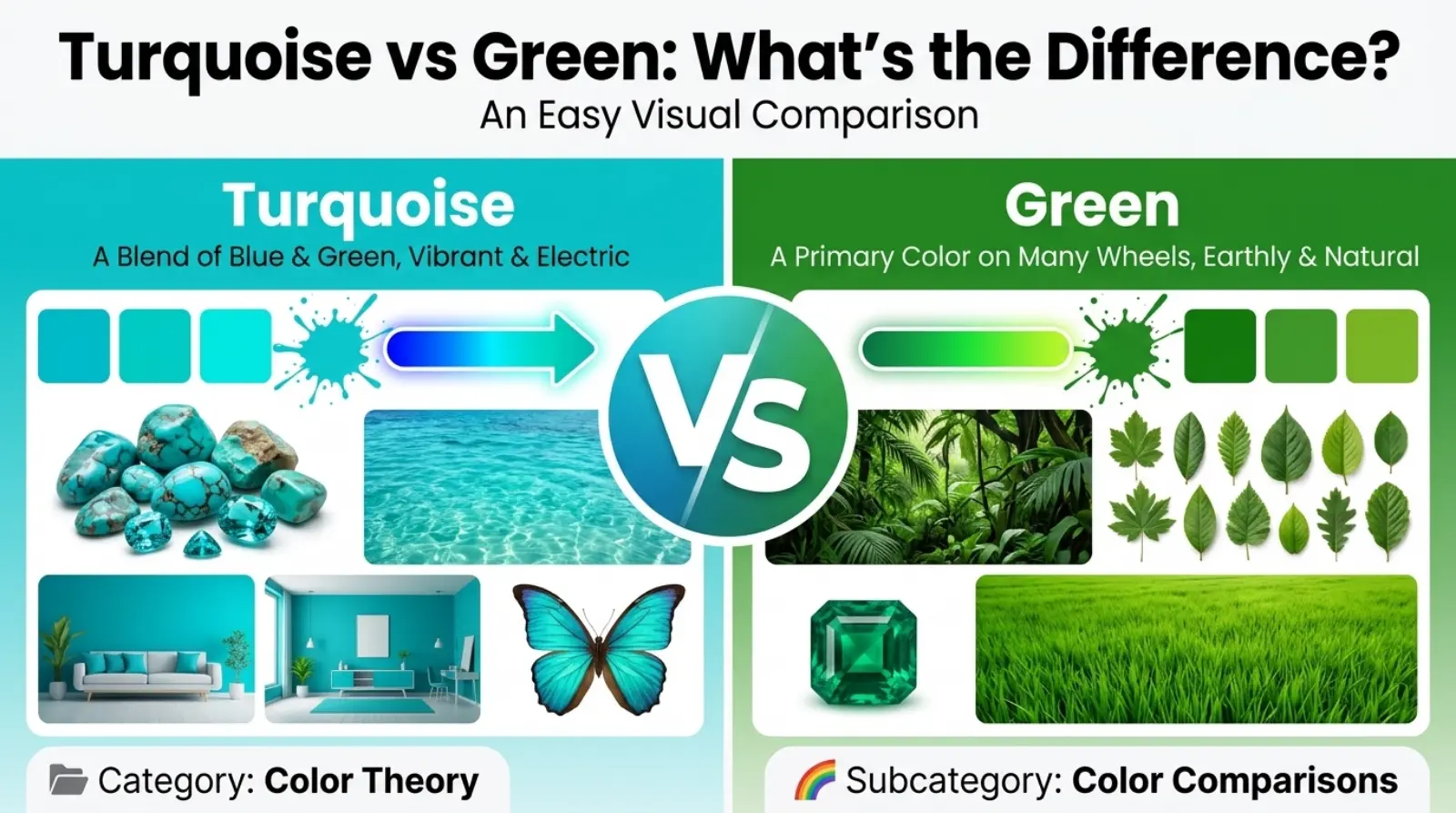
Turquoise vs Green: What’s the Difference?
| Feature | Turquoise | Green |
| Main Tone | Blue-Green | Green |
| Blue Content | High | Low |
| Nature Examples | Tropical water | Grass and leaves |
| Visual Feel | Fresh and energetic | Natural and earthy |
| Color Wheel Position | Between blue and green | Green section |
Green focuses on yellow and blue combinations.
Turquoise contains more blue than most green shades.
Where Does Turquoise Appear on the Color Wheel?
On the traditional color wheel, turquoise sits between:
- Blue
- Cyan
- Green
It acts as a bridge between cool blue tones and refreshing green tones.
This location explains why it can appear as either color depending on context.
Popular Shades of Turquoise
Turquoise comes in many beautiful variations.
Light Turquoise
- Soft and airy
- Often used in bedrooms
- Appears more blue
Dark Turquoise
- Rich and dramatic
- Common in luxury designs
- Contains deeper green tones
Bright Turquoise
- Vibrant and energetic
- Popular in fashion
- Strong blue-green balance
Tropical Turquoise
- Inspired by ocean water
- Bright and refreshing
- Common in travel branding
Pale Turquoise
- Gentle and calming
- Often used in spas
- Mostly blue with subtle green
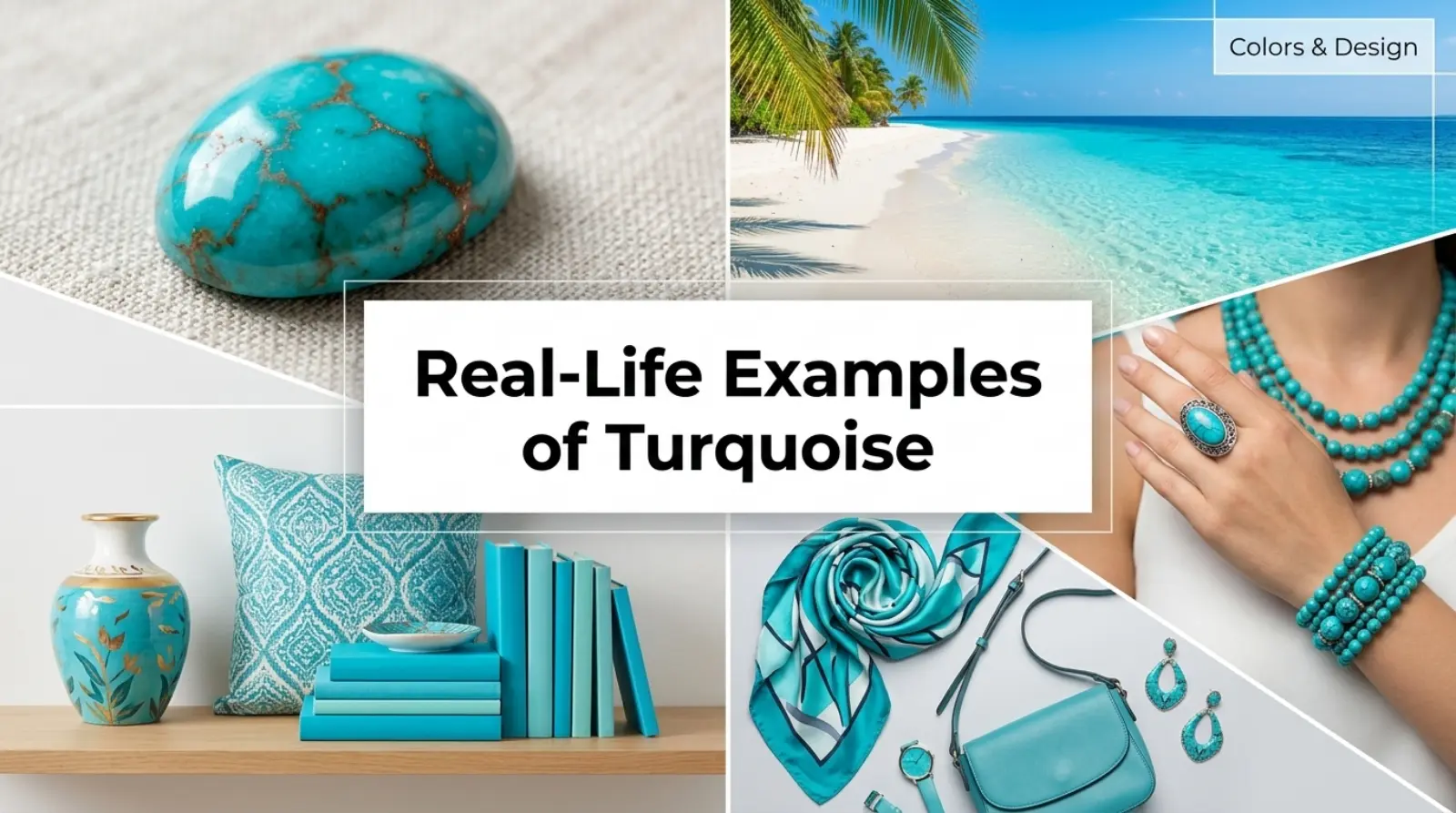
Real-Life Examples of Turquoise
You see turquoise more often than you think.
Nature
- Tropical oceans
- Coral reefs
- Certain minerals
- Some bird feathers
Fashion
- Jewelry
- Dresses
- Handbags
- Summer clothing
Home Design
- Accent walls
- Pillows
- Curtains
- Bathroom decor
Branding
Many companies use turquoise because it feels:
- Fresh
- Modern
- Friendly
- Trustworthy
Common Mistakes People Make About Turquoise
Mistake 1: Calling It Pure Blue
Turquoise always contains green.
Pure blue does not.
Mistake 2: Calling It Pure Green
Turquoise always contains significant blue.
Pure green lacks this balance.
Mistake 3: Confusing It With Teal
Teal is usually darker.
Turquoise is generally brighter.
Mistake 4: Ignoring Lighting
Lighting changes color perception dramatically.
Always view colors under natural light when possible.
Turquoise vs Teal vs Aqua
| Color | Blue Level | Green Level | Brightness |
| Turquoise | High | Medium | Bright |
| Teal | Medium | High | Darker |
| Aqua | Very High | Low | Very Bright |
These colors often get confused because they belong to the same family.
However, each has a distinct appearance.
How to Identify Turquoise Correctly
Use these simple tips:
Look for Blue First
Turquoise usually shows a noticeable blue base.
Check for Green Undertones
A true turquoise color contains visible green.
Compare It With Pure Blue
If it appears greener than blue, it may be turquoise.
Use Natural Light
Natural light gives the most accurate color view.
How Turquoise Is Used in Daily Life
Turquoise is popular because it feels both relaxing and energetic.
In Homes
People use turquoise for:
- Bedrooms
- Bathrooms
- Living rooms
In Clothing
Turquoise works well in:
- Summer outfits
- Accessories
- Jewelry
In Marketing
Brands use turquoise to communicate:
- Creativity
- Trust
- Freshness
- Innovation
In Art
Artists use turquoise to create depth and balance.
Expert Insights: Why Understanding Turquoise Matters
Color choices influence emotions and decisions.
Designers, artists, and marketers often use turquoise because it combines the strengths of blue and green.
Blue represents:
- Trust
- Stability
- Calmness
Green represents:
- Growth
- Nature
- Balance
Turquoise combines these qualities into one powerful color.
Understanding turquoise helps you:
- Choose better color combinations
- Improve design projects
- Shop confidently
- Communicate color preferences accurately
This knowledge is useful in everyday life and professional design work.
Frequently Asked Questions (FAQs)
Is turquoise more blue or green?
Most turquoise shades are slightly more blue than green, but it varies by shade.
Is turquoise considered a blue color?
Many color systems classify turquoise as a blue-green color rather than pure blue.
What color is closest to turquoise?
Aqua, cyan, and aquamarine are among the closest colors.
Is teal the same as turquoise?
No. Teal is usually darker and contains more green.
Why does turquoise look different in different lighting?
Light affects how your eyes perceive color, making turquoise appear bluer or greener.
What colors go well with turquoise?
White, navy, coral, gray, beige, and gold pair well with turquoise.
Is the turquoise gemstone blue or green?
Natural turquoise gemstones can range from blue to green depending on their mineral content.
Is turquoise a warm or cool color?
Turquoise is generally considered a cool color.
Conclusion
So, is turquoise blue or green? The answer is both. Turquoise is a beautiful blue-green color that sits between blue and green on the color wheel. Some shades lean more toward blue, while others appear greener. Lighting, surrounding colors, and specific shades can all influence how turquoise looks.
Its unique balance makes it one of the most versatile and popular colors in nature, fashion, interior design, and branding. Whether you’re decorating a room, choosing clothing, or working on a design project, understanding turquoise can help you make better color choices.
The easiest way to remember it is this: turquoise is not purely blue or purely green—it is a harmonious blend of both.