Happy New Year or Years is a common grammar question that appears every holiday season. Many people wonder whether they should write “Happy New Year” or “Happy New Years” in greetings, cards, emails, and social media posts.
The good news is that the answer is simple. However, many writers still make mistakes because the phrases sound similar.
In this guide, you will learn the correct usage, common grammar rules, real-life examples, and expert tips. By the end, you will know exactly which phrase to use in every situation.
Whether you are writing a greeting card, sending a text message, or creating business content, this article will help you avoid mistakes and write with confidence.
Quick Summary Box
- Happy New Year is the correct greeting.
- Happy New Years is usually incorrect.
- The phrase wishes happiness for the upcoming year.
- Most native English speakers use Happy New Year.
- Use it in cards, emails, texts, and social media posts.
- Adding an “s” to “year” changes the meaning.
- Grammar experts recommend Happy New Year in almost all situations.
What Does “Happy New Year” Mean?
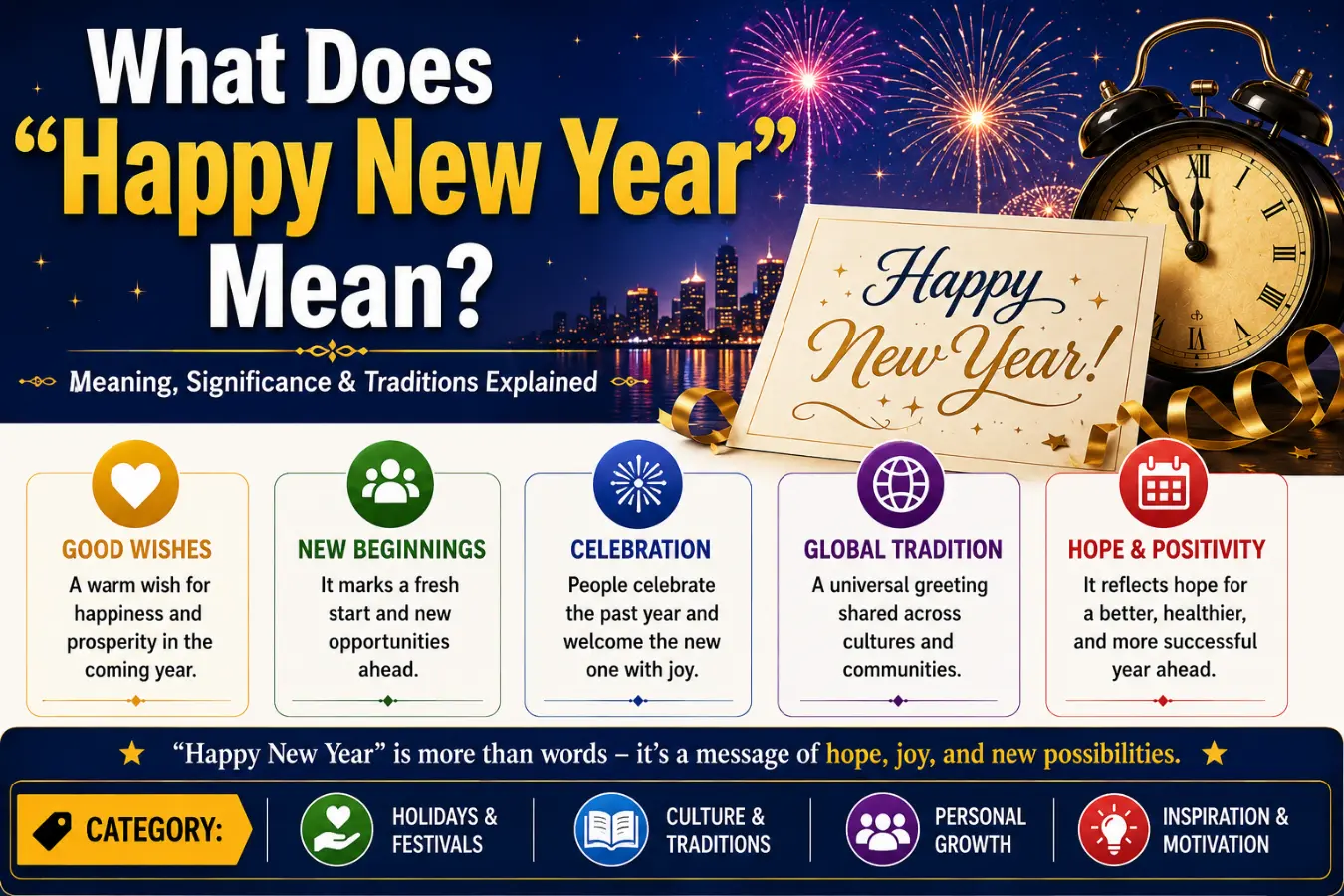
“Happy New Year” is a greeting people use at the end of one year and the beginning of another.
It means:
“I wish you happiness during the new year.”
People use this greeting to share good wishes, hope, and positivity.
Example
- Happy New Year, Sarah!
- We wish you a Happy New Year.
- Happy New Year to you and your family.
This phrase has become the standard New Year’s greeting in English.
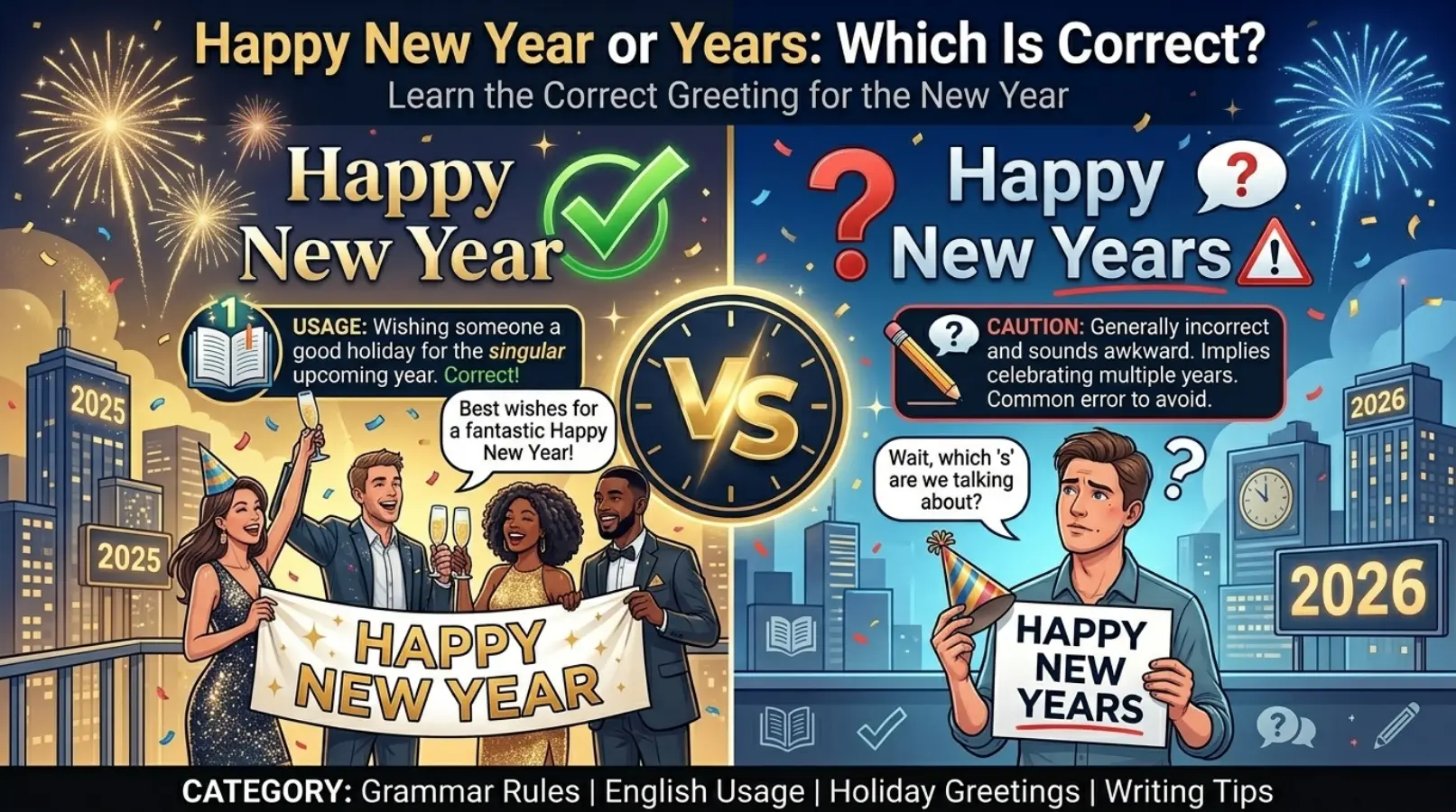
Is It Happy New Year or Happy New Years?
The correct phrase is:
Happy New Year
The incorrect phrase is:
Happy New Years
Why?
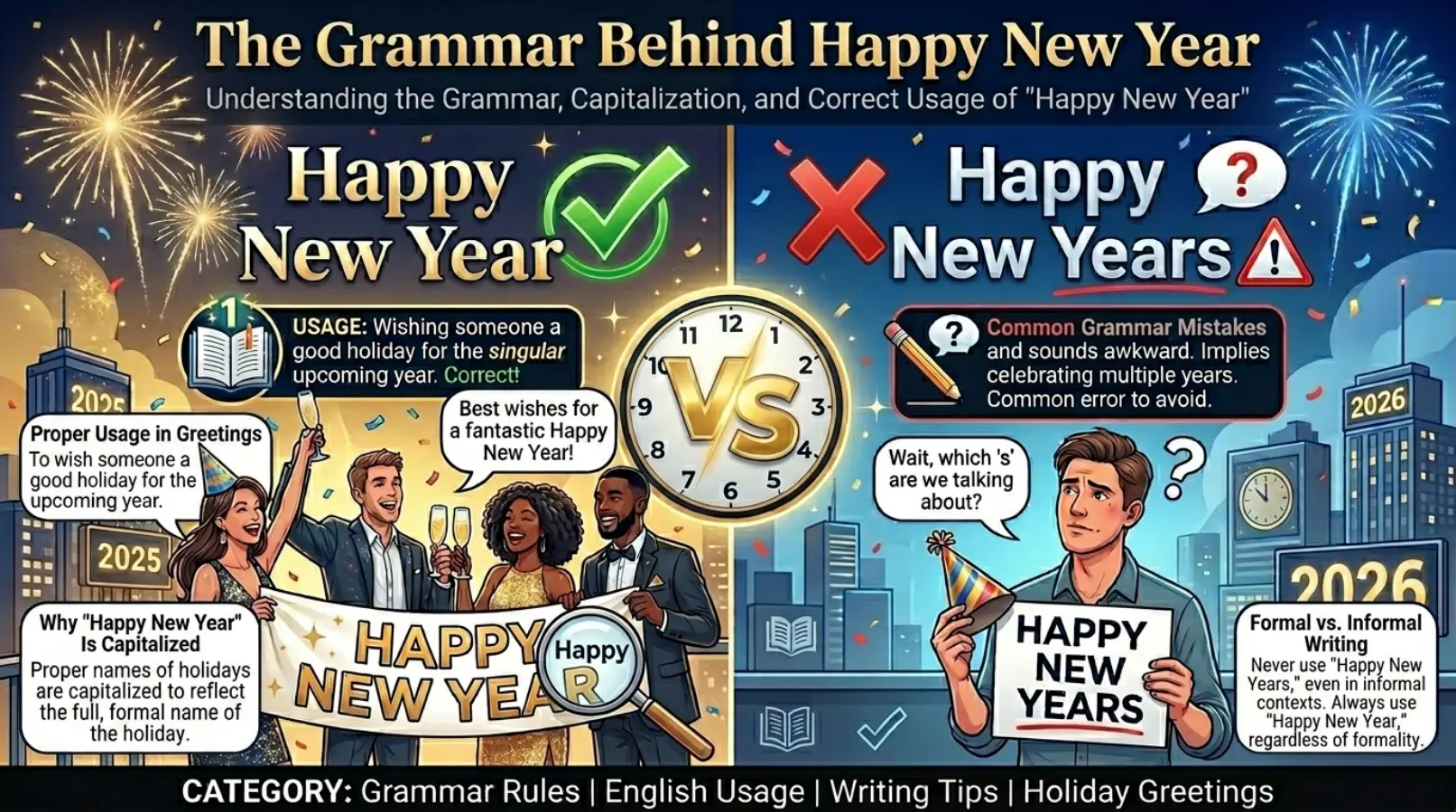
The greeting refers to one specific upcoming year.
For example:
- Happy New Year 2027
- Happy New Year 2028
Since you are talking about a single year, “year” remains singular.
Happy New Year vs Happy New Years
| Phrase | Correct? | Meaning |
| Happy New Year | Yes | Wishes happiness for the coming year |
| Happy New Years | Usually No | Grammatically incorrect greeting |
| Happy New Year’s | Sometimes | Refers to New Year’s Day or New Year’s Eve |
| Happy New Years’ | Rarely | Refers to multiple years |
Key Takeaway
Use Happy New Year when greeting someone during the holiday season.
Why Do People Say “Happy New Years”?
Many people add the extra “s” because:
- They hear others say it casually.
- They assume celebrations cover many years.
- They confuse spoken English with written grammar.
- Regional accents can make the phrase sound plural.
Even though some people say it, grammar experts still consider Happy New Year the standard form.
The Grammar Behind Happy New Year
Let’s break the phrase down.
Happy
An adjective that expresses joy or good wishes.
New
An adjective describing the year.
Year
A singular noun referring to the upcoming calendar year.
Together, the phrase means:
“May your new year be happy.”
Because only one year is being discussed, the singular noun is correct.
When Should You Use Happy New Year?
Use this phrase whenever you want to wish someone well for the upcoming year.
Common Situations
- Greeting cards
- Text messages
- Emails
- Social media posts
- Business newsletters
- Holiday advertisements
- Family gatherings
Examples
- Happy New Year, everyone!
- We wish you a Happy New Year.
- Happy New Year from our team.
Understanding Happy New Year’s
People often confuse Happy New Year with Happy New Year’s.
Happy New Year’s
This version uses an apostrophe.
It usually relates to:
- New Year’s Day
- New Year’s Eve
- New Year’s celebrations
Examples
- Happy New Year’s Eve!
- Enjoy the New Year’s party.
- We attended a New Year’s event.
Notice that these examples describe something belonging to New Year’s celebrations.
Real-Life Examples of Correct Usage
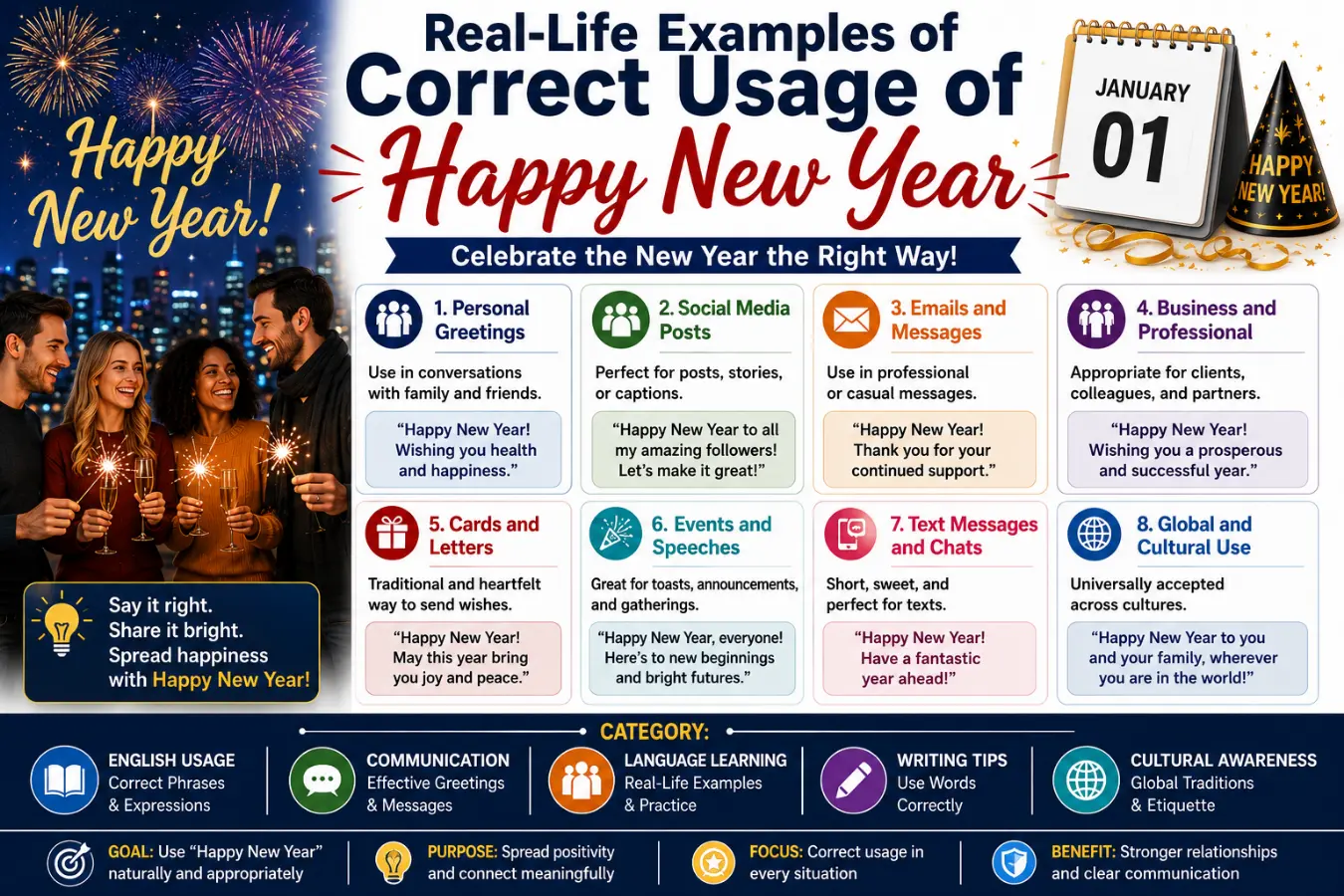
Here are examples you might see every day.
Greeting Card
“Happy New Year! Wishing you success and happiness.”
Business Email
“Happy New Year from all of us at the company.”
Social Media Post
“Happy New Year! May your dreams come true.”
Text Message
“Happy New Year! Have a wonderful year ahead.”
All these examples use the singular form.
Common Mistakes People Make
Mistake 1: Adding an Unnecessary “S”
❌ Happy New Years
✅ Happy New Year
Mistake 2: Using an Apostrophe Incorrectly
❌ Happy New Year’s!
✅ Happy New Year!
Mistake 3: Mixing Greetings
❌ Happy New Year’s to everyone.
✅ Happy New Year to everyone.
Mistake 4: Assuming Casual Usage Is Correct
Many people write “Happy New Years” online.
However, popularity does not make it grammatically correct.
Easy Trick to Remember the Correct Form
Think about this question:
How many upcoming years are you celebrating?
The answer is one.
Therefore:
Happy New Year
Not:
Happy New Years
This simple trick helps many writers avoid mistakes.
Happy New Year in Daily Life
You can use the phrase in many situations.
At Work
- Happy New Year, team!
- Happy New Year to our valued clients.
In School
- Happy New Year, students!
- Happy New Year, teachers.
With Family
- Happy New Year, Mom and Dad.
- Happy New Year to the whole family.
Online
- Happy New Year, everyone!
- Sending Happy New Year wishes.
The same grammar rule applies everywhere.

Expert Insights: Why Correct Grammar Matters
Correct grammar creates a positive impression.
It shows professionalism and attention to detail.
This is especially important for:
- Businesses
- Teachers
- Students
- Writers
- Content creators
Search engines also reward high-quality content. Proper grammar improves credibility and trust.
When millions of people see your greeting, using the correct phrase helps you communicate clearly.
That is why grammar experts consistently recommend Happy New Year.
Happy New Year Usage Around the World
English speakers across many countries use this greeting.
United States
Happy New Year
United Kingdom
Happy New Year
Canada
Happy New Year
Australia
Happy New Year
New Zealand
Happy New Year
Although accents differ, the written greeting remains the same.

Examples of Correct and Incorrect Sentences
| Sentence | Correct? |
| Happy New Year, everyone! | ✅ |
| We wish you a Happy New Year. | ✅ |
| Happy New Years to all. | ❌ |
| Sending Happy New Years wishes. | ❌ |
| Happy New Year from our family. | ✅ |
| Happy New Year’s Eve. | ✅ |
Frequently Asked Questions (FAQs)
Is Happy New Year grammatically correct?
Yes. It is the standard and correct New Year’s greeting.
Is Happy New Years wrong?
In most cases, yes. The greeting should use the singular word “year.”
Why doesn’t year have an s?
The greeting refers to one upcoming year, not multiple years.
Can I write Happy New Year’s?
Only when referring to New Year’s Day, New Year’s Eve, or related events.
Which phrase should I use in a greeting card?
Use Happy New Year.
Is Happy New Years acceptable in casual speech?
Some people say it casually, but it is not considered standard grammar.
What do grammar experts recommend?
Most style guides and grammar experts recommend Happy New Year.
Is Happy New Year used worldwide?
Yes. English speakers around the world use this greeting.
Internal Linking Suggestions
If you run a grammar blog, link this article to:
- Apostrophe Rules Guide
- Common English Grammar Mistakes
- New Year’s vs New Years Explained
- Holiday Greetings Grammar Guide
- Singular vs Plural Nouns
- Commonly Confused English Phrases
Conclusion
The answer to the Happy New Year or Years question is straightforward. The correct greeting is Happy New Year because it refers to one upcoming year. While many people mistakenly write Happy New Years, grammar rules support the singular form.
Understanding this difference helps you write more clearly in greeting cards, emails, business messages, and social media posts. It also ensures that your writing looks professional and polished.
Whenever you are unsure, remember the simple rule: you are celebrating one new year, not multiple years. Therefore, the correct choice is always Happy New Year.
Use this phrase with confidence and share your wishes the right way every holiday season.