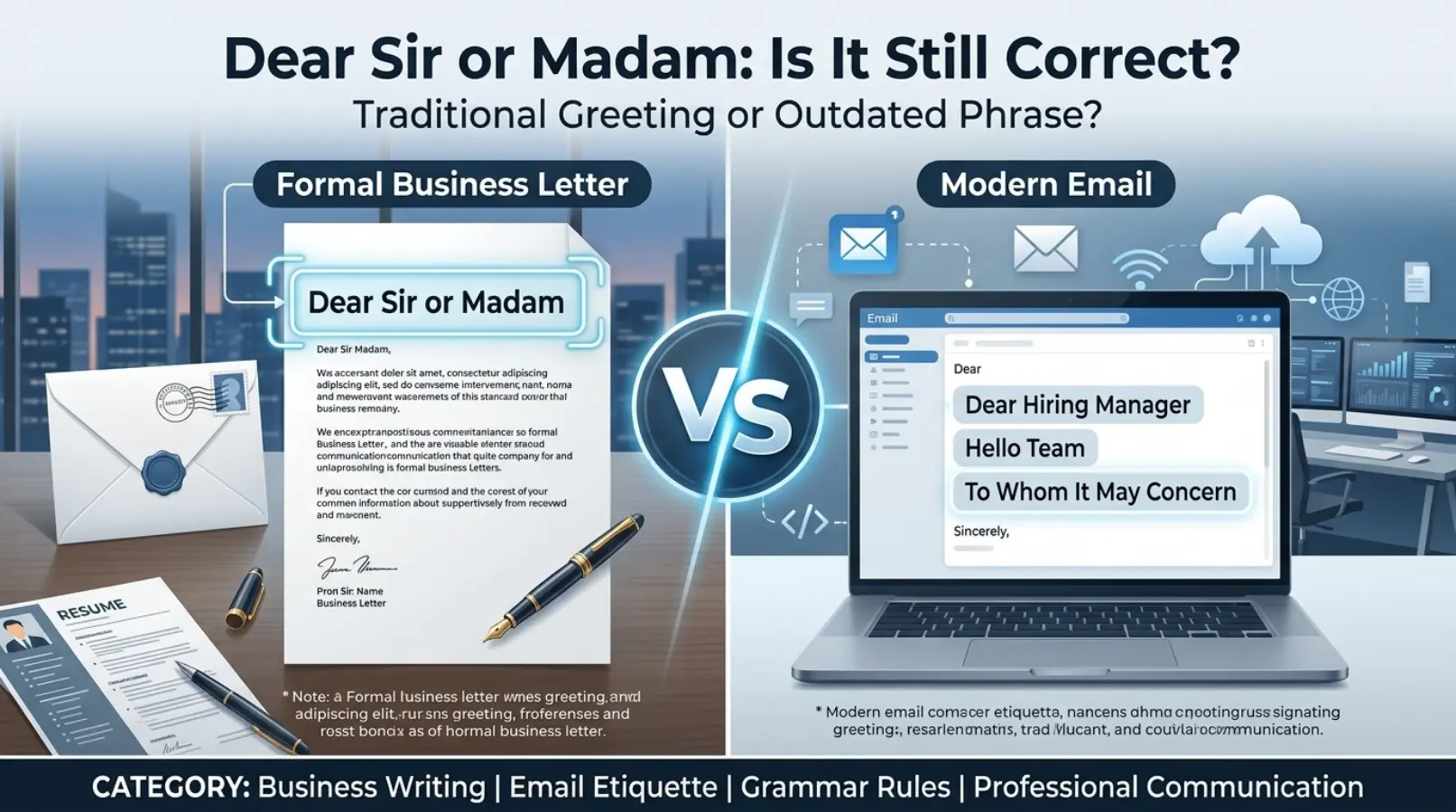
Dear Sir or Madam is a formal greeting often used in letters and emails. People use it when they do not know the name of the person receiving the message.
For many years, this greeting was common in business communication. However, modern workplaces now prefer more personal and direct greetings. As a result, many writers wonder if they should still use this phrase.
Understanding when to use this phrase can help you write professional messages. It can also prevent communication mistakes that may seem outdated or impersonal.
In this guide, you will learn the meaning of this phrase, when to use it, common mistakes to avoid, and better alternatives for modern communication.
Quick Summary Box
- It is a formal greeting.
- It is used when the recipient’s name is unknown.
- The phrase often appears in business letters and applications.
- Many modern workplaces prefer personalized greetings.
- It can sound outdated in some situations.
- Use it only when you cannot find the recipient’s name.
- Better alternatives exist for most emails and letters.
What Does Dear Sir or Madam Mean?
It is a polite salutation used at the beginning of a letter or email.
The phrase addresses an unknown person respectfully. It assumes the reader could be either a man or a woman.
Example
Dear Sir or Madam,
I am writing to inquire about your services.
In this example, the writer does not know who will read the message.
Explained in Simple Words
- Hello
- Greetings
- To whom it may concern
People use it when they cannot identify the recipient.
For example:
- Writing to a company department
- Sending a complaint letter
- Contacting an organization through a general email address
The greeting shows respect while keeping the message professional.
When Should You Use Dear Sir or Madam?
You should use this phrase only when you cannot find the recipient’s name.
Appropriate Situations
- Formal business letters
- Job application cover letters without a contact name
- Government correspondence
- Complaint letters
- Inquiry letters
Example
I would like information about your membership program.
This usage remains acceptable because the reader’s identity is unknown.
When Should You Avoid This Phrase ?
Modern communication values personalization.
Avoid using this greeting when you know the recipient’s name.
Better Option
✅ Dear Ms. Johnson
✅ Dear Mr. Ahmed
Using a specific name creates a stronger connection and shows effort.
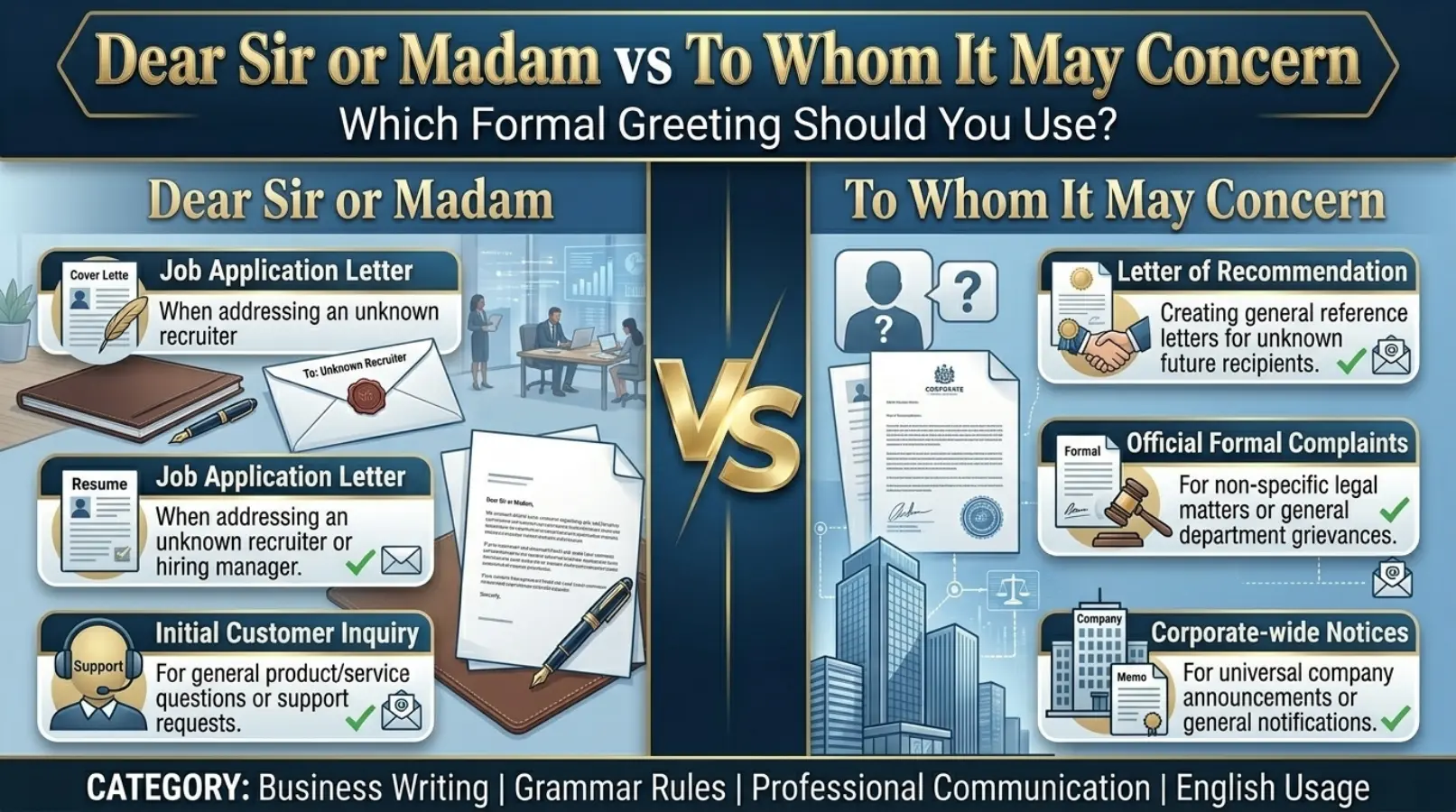
Dear Sir or Madam vs To Whom It May Concern
Many people confuse these two greetings.
| Feature | Dear Sir or Madam | To Whom It May Concern |
| Tone | Formal | Very formal |
| Personal Feel | Slightly personal | Less personal |
| Common Use | Letters and emails | Official documents |
| Modern Preference | Less common | Even less common |
| Professional Impact | Acceptable | Often outdated |
Example
Dear Sir or Madam, I am interested in your services.
To Whom It May Concern
To Whom It May Concern, I am submitting my complaint.
Both work, but personalized greetings are usually better.
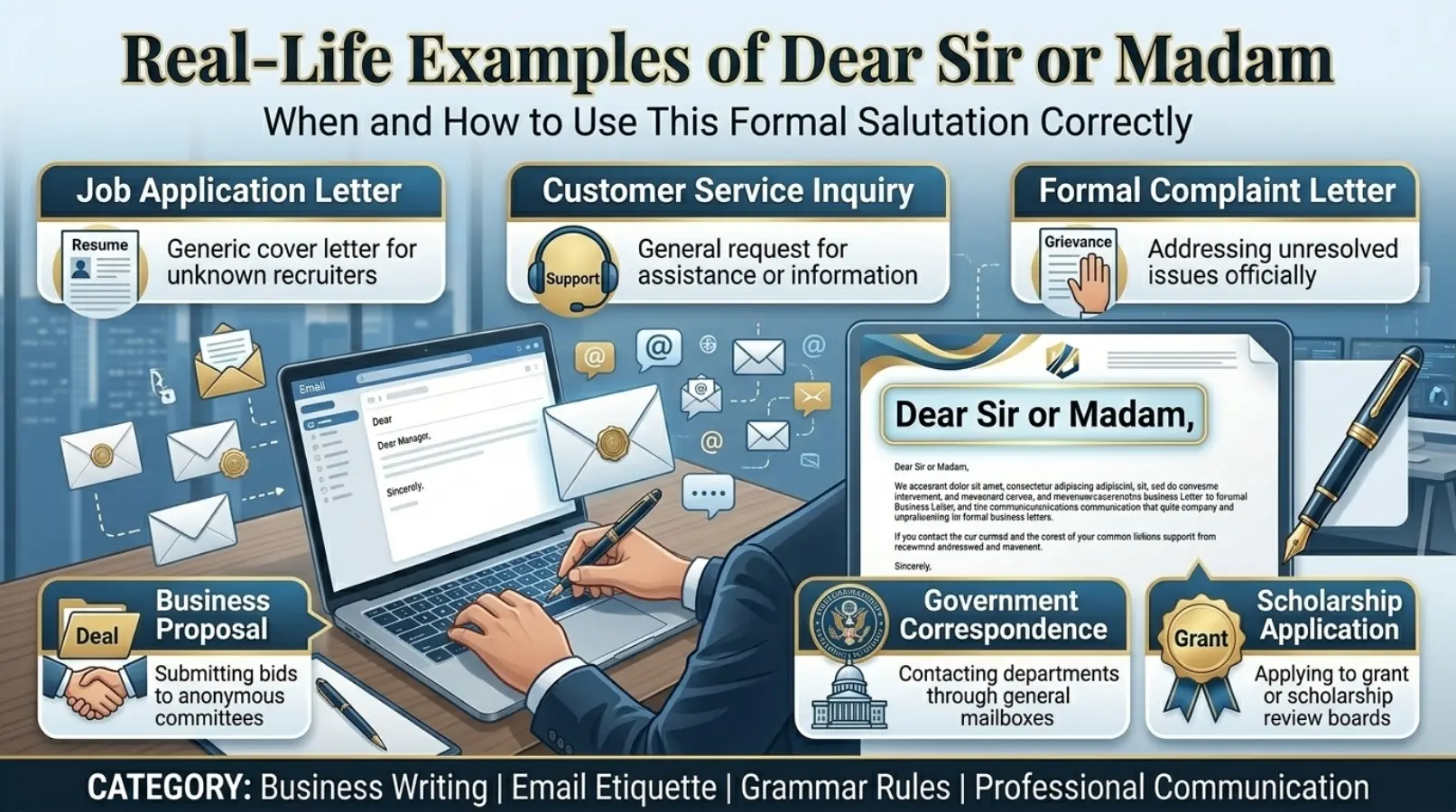
Real-Life Examples of Dear Sir or Madam
Example 1: Job Application
Dear Sir or Madam,
I am applying for the Marketing Assistant position.
Example 2: Customer Service Inquiry
Dear Sir or Madam,
I would like information about your refund policy.
Example 3: Business Proposal
Dear Sir or Madam,
Please review the attached proposal.
Example 4: Complaint Letter
Dear Sir or Madam,
I would like to report an issue with my recent order.
Common Mistakes When Using Dear Sir or Madam
Many writers make small errors with this phrase.
1. Using It When a Name Is Available
If you know the person’s name, use it.
✅ Dear Sarah Williams
2. Incorrect Capitalization
Always capitalize the words.
✅ Dear Sir or Madam
3. Missing Punctuation
Use a comma after the greeting.
✅ Dear Sir or Madam,
4. Using It in Casual Emails
This greeting sounds too formal for everyday communication.
Example
✅ Hello John,
Can you send me the file?
Better Alternatives
Many modern greetings sound friendlier and more professional.
Professional Alternatives
- Dear Hiring Manager
- Dear Customer Support Team
- Dear Admissions Office
- Dear Recruitment Team
- Dear Sales Department
- Dear Customer Service Representative
Less Formal Alternatives
- Hello
- Greetings
- Good Morning
- Good Afternoon
These options often feel more natural.
Why Many Companies Prefer Personalized Greetings
Companies receive thousands of emails.
A personalized greeting stands out.
Benefits
- Shows research effort
- Creates a stronger connection
- Feels more professional
- Improves response rates
- Demonstrates attention to detail
Hiring managers often notice these small details.
How to Find the Recipient’s Name
Before using Dear Sir or Madam, try to identify the recipient.
Check:
- Company website
- LinkedIn profiles
- Contact pages
- Job listings
- Email signatures
Spending a few minutes searching can improve your message significantly.
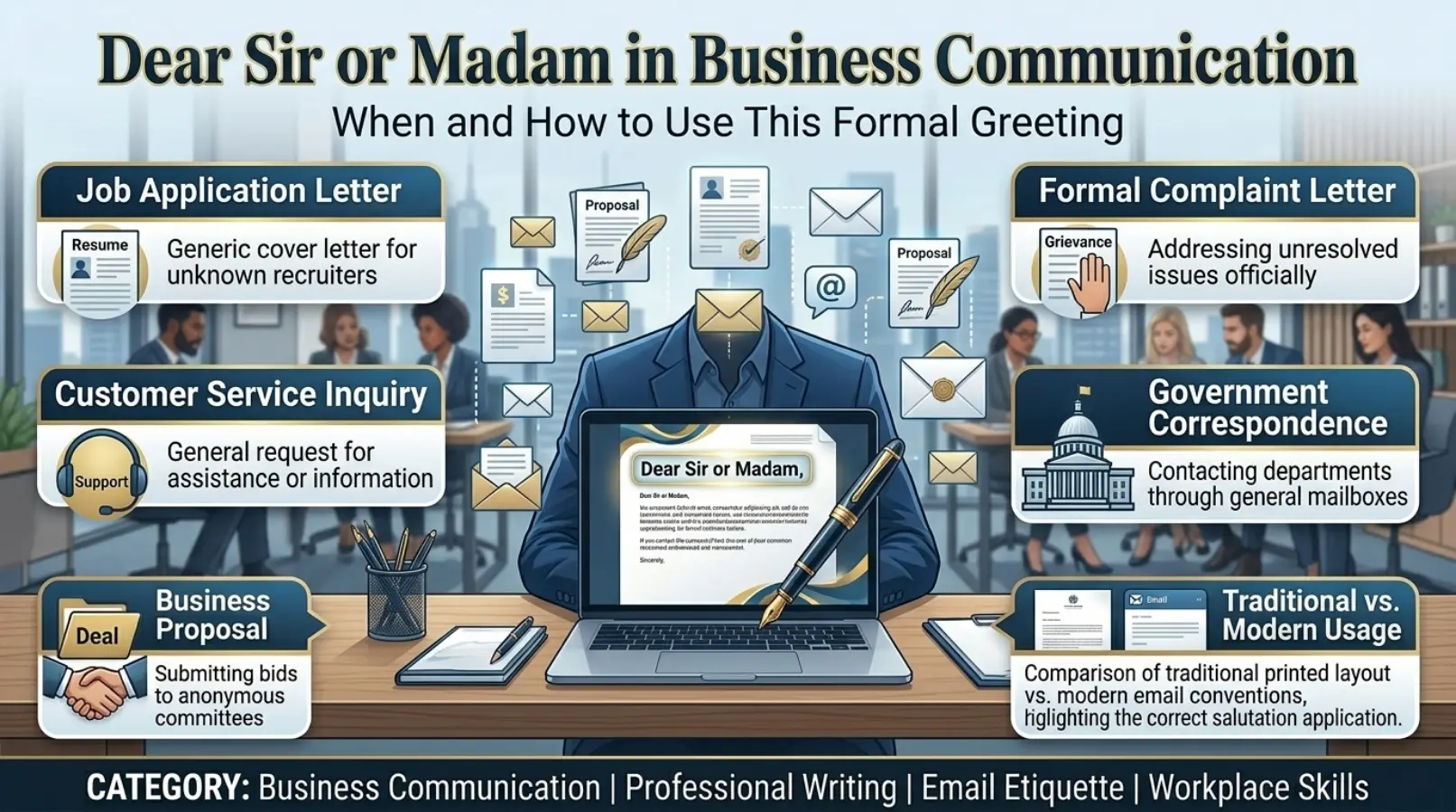
Dear Sir or Madam in Business Communication
The phrase still appears in many industries.
Common Areas
- Legal correspondence
- Government offices
- Academic institutions
- Traditional businesses
- Formal applications
However, many modern companies now prefer direct greetings.
Example
Dear Human Resources Team,
This sounds more current and relevant.
Tips for Using Dear Sir or Madam Correctly
1. Use It Only When Necessary
Try to find the recipient’s name first.
2. Keep the Tone Professional
Match the greeting with formal language.
3. Use Proper Formatting
Always write:
Dear Sir or Madam,
4. Consider Modern Alternatives
A department name often works better.
5. Review Before Sending
Check whether a more personal greeting is possible.
Expert Insights: Why Correct Greetings Matter
Professional communication starts with the greeting.
The opening line creates the first impression. A thoughtful greeting can make the reader more engaged.
Communication experts recommend using a specific name whenever possible. Personalized greetings often increase response rates and improve professional relationships.
While it remains acceptable, modern business writing favors accuracy and personalization.
The best approach is simple:
- Use a name if available.
- Use a department title if necessary.
This strategy keeps your communication current and professional.
Frequently Asked Questions (FAQs)
Is Dear Sir or Madam still correct?
Yes. It is grammatically correct and still acceptable in formal communication.
Is Dear Sir or Madam outdated?
Many professionals consider it somewhat outdated because personalized greetings are preferred today.
Can I use Dear Sir or Madam in an email?
Yes. However, try to find the recipient’s name first.
What is better than Dear Sir or Madam?
Options such as “Dear Hiring Manager” or “Dear Customer Service Team” are often better.
Do I need a comma after Dear Sir or Madam?
Yes.
Can I use Dear Sir or Madam for a job application?
Yes, but only if the hiring manager’s name is unavailable.
Is Dear Sir or Madam gender-neutral?
Not completely. Some organizations prefer more inclusive alternatives today.
Conclusion
Dear Sir or Madam is a traditional and respectful greeting used when the recipient’s identity is unknown. It remains grammatically correct and acceptable in formal letters, applications, and business correspondence. However, modern communication favors personalized greetings whenever possible.
Using a person’s name or department title often creates a stronger impression and shows professionalism. Before choosing this phrase take a moment to search for the recipient’s information. If no name is available, the phrase remains a safe and polite choice.
The key takeaway is simple: use specific greetings whenever possible, and reserve it for situations where no better option exists.