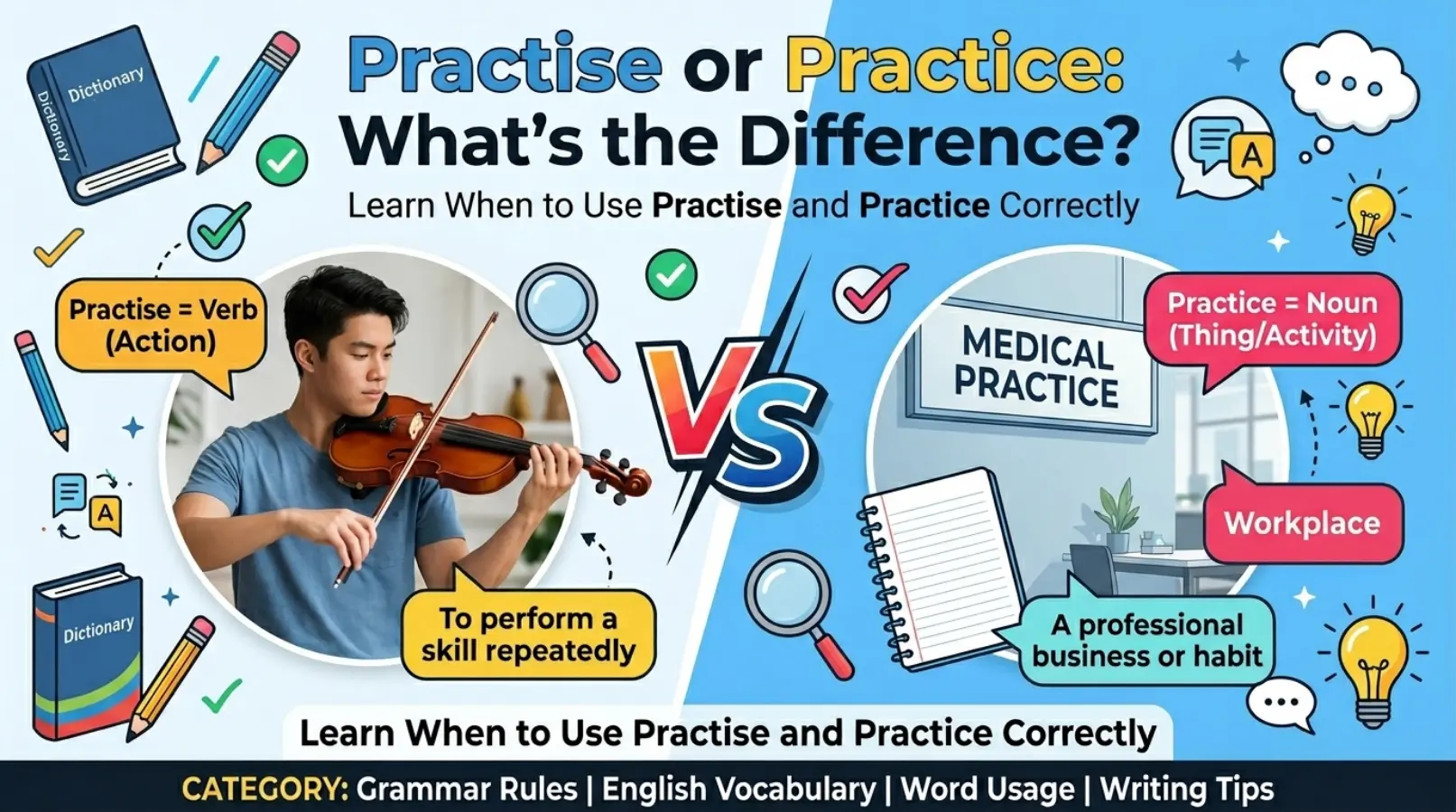
Practise or practice is a common grammar question that confuses many English learners and writers. The two words look almost the same. However, they do not always mean the same thing.
The difference depends on whether you use British English or American English. In some cases, one word is a noun, while the other is a verb. This simple rule can help you avoid mistakes.
Many people use these words incorrectly in emails, school assignments, and professional writing. Learning the correct usage can improve your writing and communication skills.
In this guide, you will learn the meaning of each word, their differences, examples, common mistakes, and expert tips. By the end, you will know exactly when to use practise and when to use practice.
Quick Summary Box
- Practice is a noun in British English.
- Practise is a verb in British English.
- In American English, practice is both the noun and the verb.
- British English: “I need more practice.”
- British English: “I practise every day.”
- American English: “I practice every day.”
- Knowing the difference improves grammar accuracy.
What Does Practice Mean?
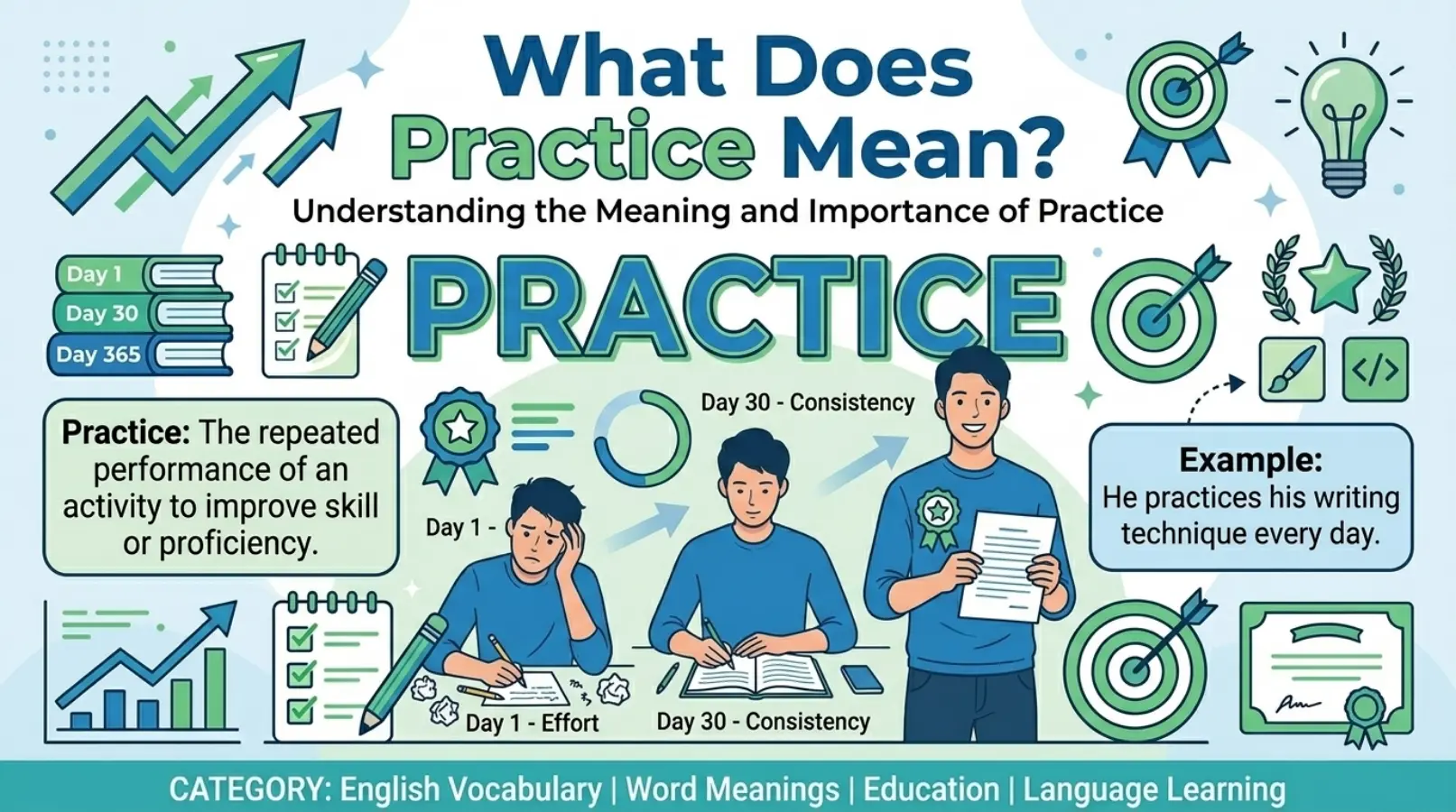
The word practice usually refers to an activity, habit, method, or repeated exercise.
Examples
- Daily practice improves your skills.
- Piano practice takes patience.
- Good business practices help companies grow.
- Football practice starts at 5 PM.
In British English, practice is always the noun form.
Example
✅ She needs more practice before the exam.
What Does Practise Mean?
Practise is the verb form in British English.
It means to perform an activity repeatedly to improve a skill.
Examples
- I practise English every day.
- She practises the guitar after school.
- They practise yoga each morning.
- We practise speaking before presentations.
Simple Rule
- Practice = Thing (Noun)
- Practise = Action (Verb)
Practise or Practice: Key Difference
The main difference comes down to grammar and regional spelling.
| Feature | Practice | Practise |
| Part of Speech | Noun | Verb |
| British English | Yes | Yes |
| American English | Noun and Verb | Rarely Used |
| Example | More practice helps. | I practise daily. |
Easy Memory Trick
Think of:
- Practice = Ice = Noun
- Practise = ise = Action
If someone does something, they practise.
If they need improvement, they need more practice.
British English vs American English
This is where most confusion happens.
British English
- Noun → Practice
- Verb → Practise
Examples:
- She attends football practice.
- She practises football every evening.
American English
Americans use practice for both noun and verb forms.
Examples:
- Football practice starts soon.
- I practice football every day.
Quick Comparison
| English Style | Noun | Verb |
| British English | Practice | Practise |
| American English | Practice | Practice |
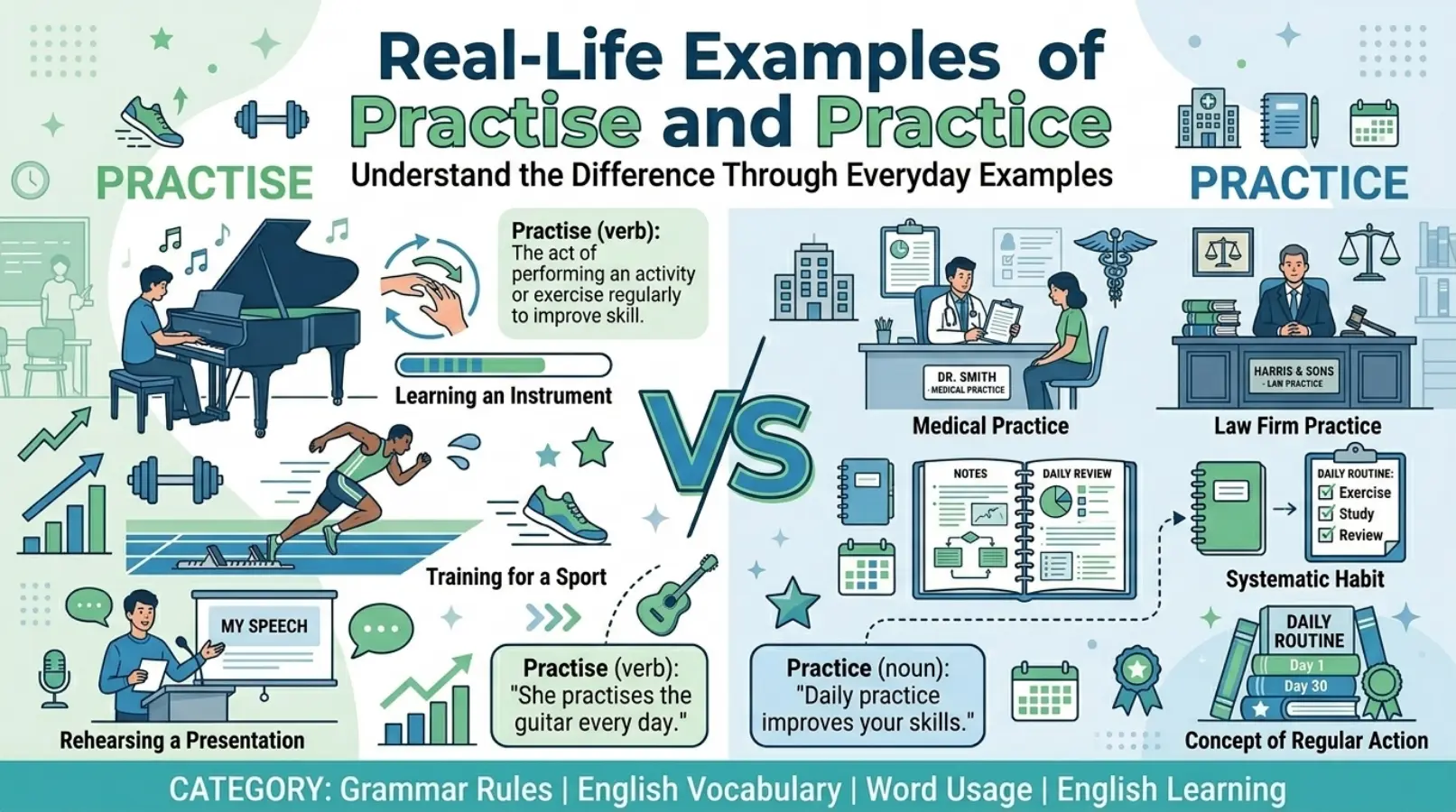
Real-Life Examples of Practise and Practice
At School
British English:
- Students practise writing essays.
- Essay practice improves grades.
American English:
- Students practice writing essays.
- Essay practice improves grades.
In Sports
British English:
- Athletes practise every morning.
- Daily practice builds strength.
American English:
- Athletes practice every morning.
- Daily practice builds strength.
At Work
British English:
- New employees practise presentations.
- Presentation practice boosts confidence.
American English:
- New employees practice presentations.
- Presentation practice boosts confidence.
When Should You Use Practice?
Use practice when referring to a thing, activity, method, or routine.
Examples
- Swimming practice starts tomorrow.
- Practice makes perfect.
- Good safety practices reduce accidents.
- More practice leads to better results.
Ask Yourself
Can you place “the” before the word?
- The practice was helpful.
If yes, you probably need the noun form practice.
When Should You Use Practise?
Use practise when describing an action in British English.
Examples
- I practise meditation daily.
- They practise speaking English.
- She practises piano every weekend.
- We practise teamwork exercises.
Quick Test
Can you replace it with another action word?
Example:
- I practise tennis.
- I play tennis.
Since it shows an action, use practise.
Common Mistakes People Make
Many writers mix these words because they sound identical.
Mistake 1
❌ I need to practice my guitar. (British English)
✅ I need to practise my guitar.
Mistake 2
❌ More practise is needed.
✅ More practice is needed.
Mistake 3
❌ The football practise starts at six.
✅ The football practice starts at six.
Mistake 4
❌ She attended piano practise.
✅ She attended piano practice.
Easy Tips to Remember the Difference
Tip 1: Use the Noun Rule
If it is a thing, use practice.
Example:
- Dance practice
Tip 2: Use the Action Rule
If it is an action, use practise in British English.
Example:
- I practise dancing.
Tip 3: Check Your Audience
Writing for Americans?
Use practice for both noun and verb.
Writing for British readers?
Use practice and practise correctly.
Tip 4: Read the Sentence Aloud
Often, you can identify whether the word acts as a noun or a verb.
Why Correct Usage Matters
Correct spelling improves credibility.
Readers notice grammar mistakes quickly.
Using the right word can:
- Improve professional writing
- Strengthen academic work
- Build reader trust
- Help SEO content appear more authoritative
Small grammar improvements create a stronger overall impression.
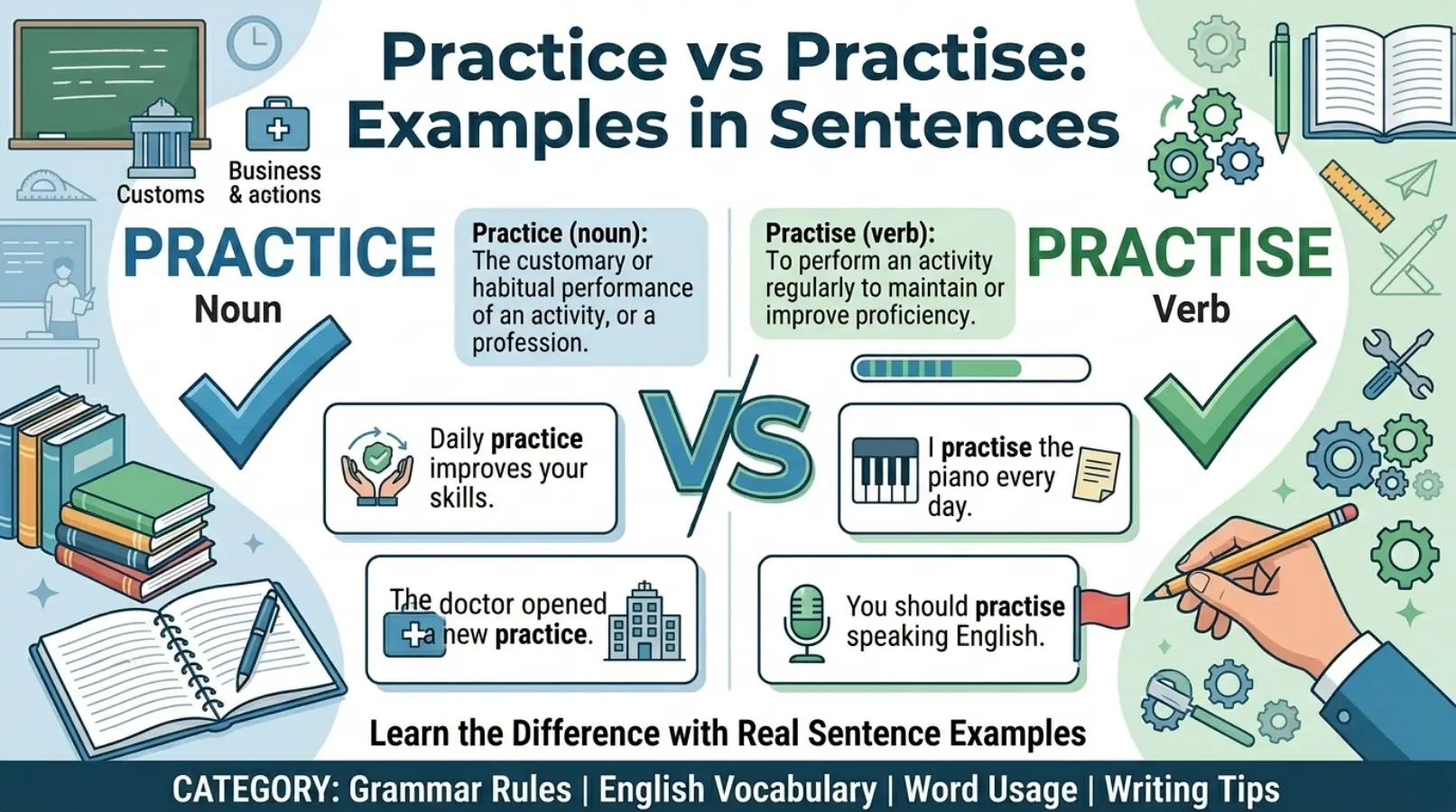
Practice vs Practise Examples in Sentences
| Sentence | Correct Word |
| I _____ piano every day. | Practise |
| Piano _____ improves skills. | Practice |
| They _____ yoga each morning. | Practise |
| More _____ is needed. | Practice |
| We _____ our speeches. | Practise |
| Debate _____ helps confidence. | Practice |
Expert Insights: Why Understanding Practise and Practice Matters
Grammar accuracy creates a better reading experience.
Many businesses lose credibility through simple spelling errors. Using the correct form shows attention to detail.
Professional writers, teachers, and editors follow these rules carefully. Search engines also favor high-quality content with proper language usage.
If you write for an international audience, understanding British and American spelling differences becomes even more important.
Good grammar helps readers focus on your message rather than your mistakes.
Frequently Asked Questions (FAQs)
Is it practise or practice in British English?
In British English, practice is the noun and practise is the verb.
Is practise used in American English?
No. American English generally uses practice for both noun and verb forms.
Is practice a noun or verb?
In American English, it can be both. In British English, it is mainly a noun.
How do I remember practise vs practice?
Remember: practice = noun, practise = verb in British English.
Why do both words sound the same?
They are homophones. They have the same pronunciation but different grammatical uses.
Which spelling should I use for international audiences?
Choose the spelling style that matches your target audience and stay consistent.
Is “practice makes perfect” correct?
Yes. Here, practice is a noun, so the phrase is correct.
Can I use practice as a verb in British English?
Formal British English prefers practise as the verb form.
Conclusion
The difference between practise or practice is simple once you understand the grammar rule. In British English, practice is the noun, while practise is the verb. In American English, practice serves both purposes.
Remember this easy rule: if it is something you do, use practise in British English. If it is the activity itself, use practice. American writers can use practice for both forms.
Learning this distinction improves writing accuracy and confidence. Whether you are writing emails, essays, blogs, or business documents, using the correct spelling helps your content look more professional. With regular practice—and by practising often—you will never confuse these words again.