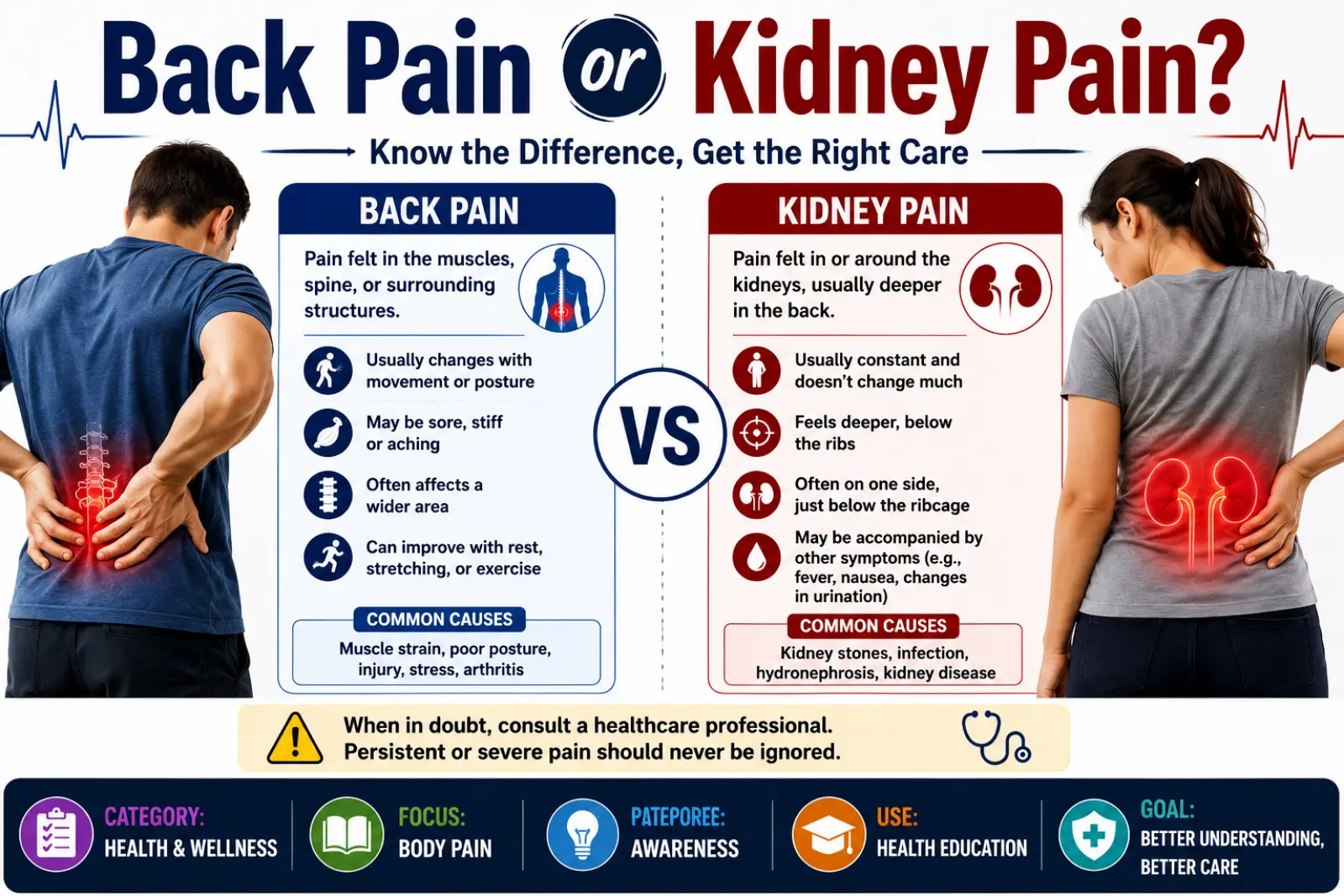
Back pain or kidney pain can feel similar at first. That is why many people get confused. Both types of pain may affect your lower back. However, they often have different causes and symptoms.
Back pain usually comes from muscles, joints, nerves, or the spine. Kidney pain often happens because of an infection, kidney stones, or other kidney problems.
Knowing the difference is important. It helps you decide when to rest at home and when to see a doctor. In some cases, kidney pain needs quick medical care.
This guide explains the key differences in simple words. You will learn the symptoms, causes, warning signs, and treatment options. By the end, you will know how to identify back pain or kidney pain more confidently.
Quick Summary Box
- Back pain usually comes from muscles, bones, joints, or nerves.
- Kidney pain comes from problems inside the kidneys.
- Back pain often changes with movement.
- Kidney pain often appears higher in the back.
- Fever may signal a kidney infection.
- Painful urination may point to kidney problems.
- Most muscle-related back pain improves with rest.
- Seek medical help if pain comes with fever, blood in urine, or severe symptoms.
What Is Back Pain or Kidney Pain?
These are two different conditions.
Back pain affects the muscles, ligaments, nerves, or spine. It is one of the most common health complaints worldwide.
Kidney pain comes from the kidneys. These bean-shaped organs filter waste from your blood and produce urine.
Although both can cause discomfort in the back area, their location and symptoms often differ.
Understanding Back Pain in Simple Words
Back pain happens when something affects the structures in your back.
Common causes include:
- Muscle strain
- Poor posture
- Heavy lifting
- Herniated disc
- Arthritis
- Sports injuries
- Sitting too long
Back pain may feel:
- Sharp
- Dull
- Achy
- Burning
- Stiff
The pain often gets worse during movement.
Example
A person lifts a heavy box incorrectly. The next morning, they feel soreness in the lower back. This is likely muscle-related back pain.
Understanding Kidney Pain in Simple Words
It usually signals a problem inside one or both kidneys.
Common causes include:
- Kidney infection
- Kidney stones
- Urinary tract infection (UTI)
- Kidney injury
- Kidney disease
It may occur:
- On one side
- Below the ribs
- Near the flank area
Example
A person develops a kidney infection. They feel pain in the side of the back and also have a fever and painful urination.
Key Differences
| Feature | Back Pain | Kidney Pain |
| Location | Lower back | Side of back under ribs |
| Cause | Muscles, spine, joints | Kidneys |
| Movement Effect | Changes with movement | Usually constant |
| Pain Type | Aching, sharp, stiffness | Deep, severe, dull |
| Fever | Rare | Common with infection |
| Urination Issues | Usually none | Often present |
| Nausea | Rare | Common with kidney stones |
| Blood in Urine | No | Possible |
| Treatment | Rest, stretching | Depends on kidney condition |
| Emergency Risk | Usually low | Can be serious |
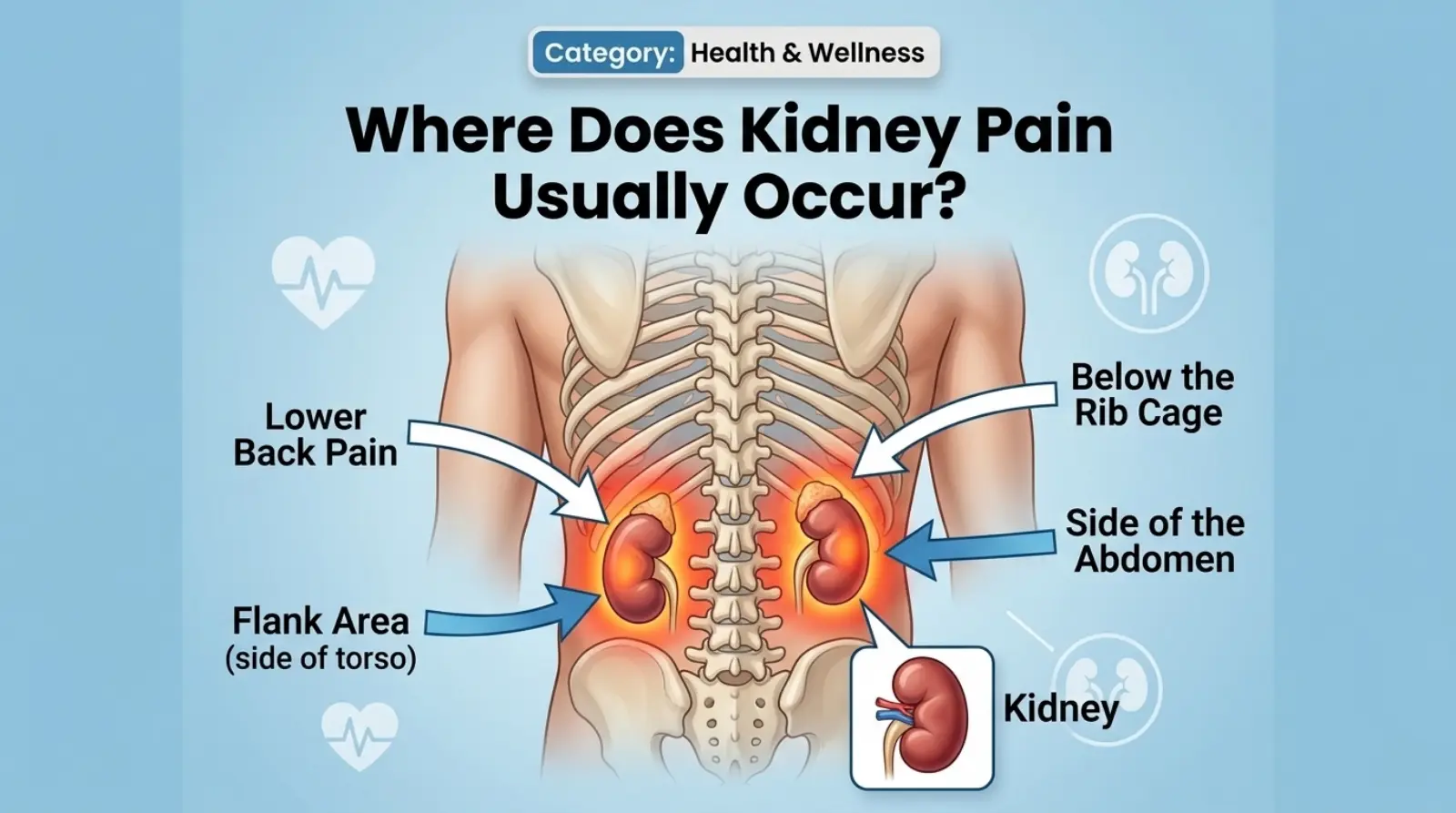
Where Does Kidney Pain Usually Occur?
Many people expect it to be in the lower back. That is not always true.
The kidneys sit higher than most people think.
It often appears:
- Under the rib cage
- On either side of the spine
- In the flank area
- Sometimes in the abdomen
- Sometimes in the groin
Pain may spread as the condition worsens.
Symptoms That Suggest Kidney Pain
Certain symptoms strongly suggest a kidney problem.
Watch for:
- Fever
- Chills
- Painful urination
- Frequent urination
- Cloudy urine
- Blood in urine
- Nausea
- Vomiting
- Severe side pain
These symptoms often occur together.
Symptoms That Suggest Back Pain
Back pain often involves physical activity.
Common signs include:
- Muscle tightness
- Pain after lifting
- Pain during movement
- Improved pain with rest
- Stiffness in the morning
- Limited flexibility
- Tender muscles

Real-Life Scenarios:
Scenario 1: Muscle Strain
Sarah moves furniture all day. Her lower back hurts the next morning.
Most likely: Back pain
Scenario 2: Kidney Stone
John suddenly develops severe pain on one side. He also feels nauseous.
Most likely: Kidney pain
Scenario 3: Poor Posture
Mark sits at a desk for ten hours daily. His back feels stiff every evening.
Most likely: Back pain
Scenario 4: Kidney Infection
Emma develops flank pain, fever, and burning during urination.
Most likely: Kidney pain
Common Causes of Back Pain
Many daily habits contribute to back pain.
Poor Posture
Slouching stresses the spine.
Heavy Lifting
Incorrect lifting techniques strain muscles.
Sedentary Lifestyle
Weak muscles provide less support.
Aging
The spine naturally changes with age.
Injuries
Falls and accidents often cause back pain.
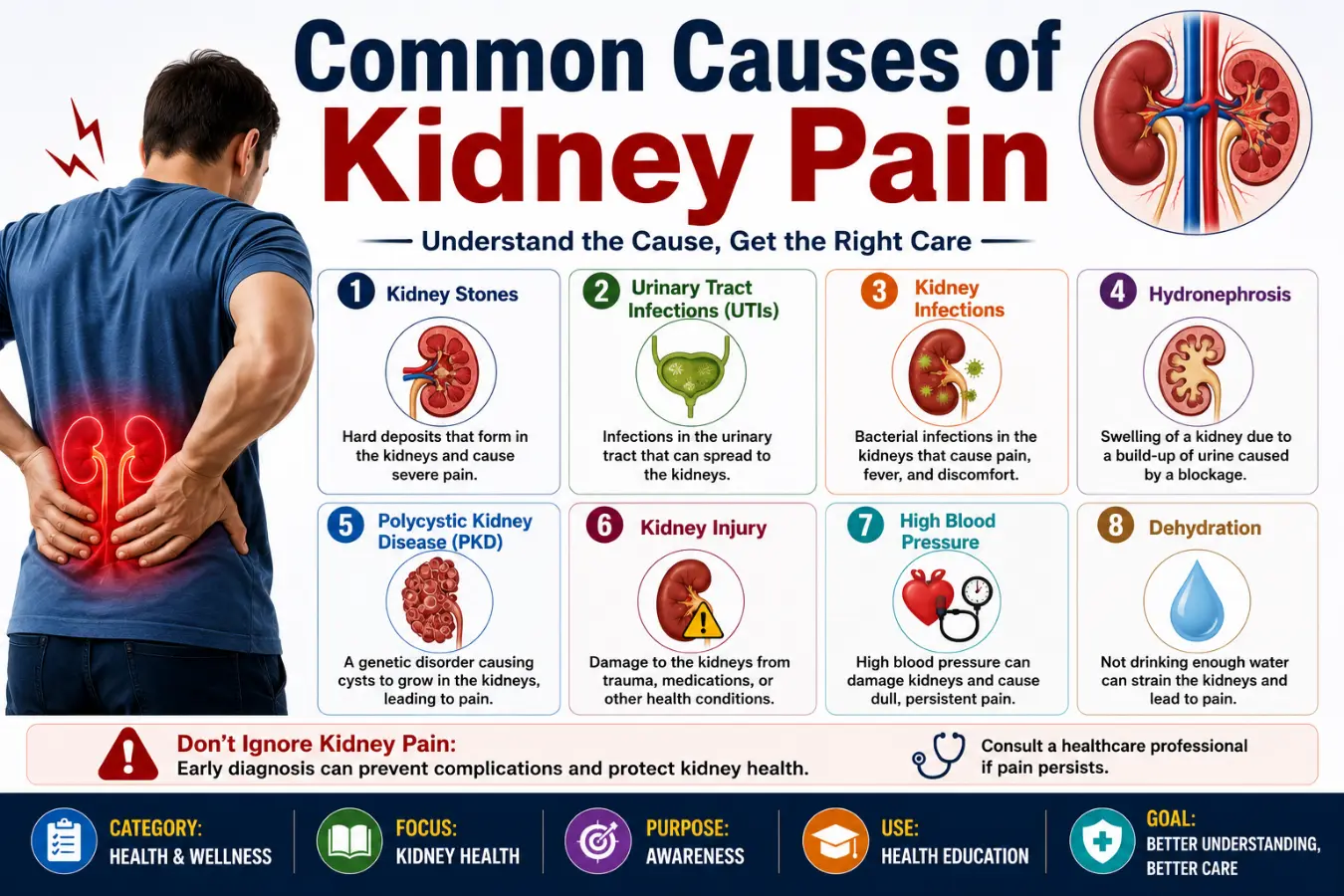
Common Causes of Kidney Pain
It usually signals an underlying medical issue.
Kidney Stones
Hard mineral deposits can block urine flow.
Kidney Infection
Bacteria may travel into the kidneys.
Urinary Tract Infection
Some UTIs spread upward to the kidneys.
Kidney Trauma
An injury can damage kidney tissue.
Polycystic Kidney Disease
Fluid-filled cysts may cause pain.
Common Mistakes When Identifying Back Pain or Kidney Pain
Many people misjudge the source of their discomfort.
Mistake 1: Assuming All Lower Back Pain Is Muscular
Some kidney problems cause pain near the back.
Mistake 2: Ignoring Urinary Symptoms
Changes in urination often point toward kidney issues.
Mistake 3: Waiting Too Long
Kidney infections can worsen quickly.
Mistake 4: Self-Diagnosing Severe Pain
Persistent pain deserves professional evaluation.
Tips to Prevent Back Pain
Simple habits can reduce your risk.
- Maintain good posture
- Exercise regularly
- Lift correctly
- Stretch daily
- Maintain a healthy weight
- Use supportive chairs
- Strengthen core muscles
Consistency matters more than intensity.
Tips to Support Kidney Health
Healthy kidneys help your whole body.
- Drink enough water
- Limit excess salt
- Manage blood pressure
- Control blood sugar
- Avoid smoking
- Exercise regularly
- Do not ignore urinary symptoms
Small lifestyle changes make a big difference.
Synonyms
Back Pain Synonyms
- Lower back pain
- Lumbar pain
- Spinal discomfort
- Muscle strain
- Backache
Kidney Pain Synonyms
- Flank pain
- Renal pain
- Side pain
- Kidney discomfort
- Renal discomfort
Expert Insights: Why Knowing the Difference Matters
Health experts stress early recognition of kidney problems.
Back pain often improves with rest and simple care.
Kidney pain may require medical treatment. Delayed treatment can increase the risk of complications.
Pay attention to symptoms beyond pain. Fever, nausea, and urinary changes provide important clues.
If symptoms seem unusual, seek medical advice promptly. Early treatment often leads to better outcomes.
When Should You See a Doctor?
Contact a healthcare professional if you experience:
- Severe pain
- Fever
- Chills
- Blood in urine
- Difficulty urinating
- Persistent pain
- Numbness or weakness
- Unexplained weight loss
These symptoms may require medical evaluation.
Frequently Asked Questions (FAQs)
1. How can I tell if it is back pain or kidney pain?
Back pain often changes with movement. Kidney pain usually stays constant and may include urinary symptoms.
2. Is kidney pain felt in the lower back?
Sometimes. However, it often occurs higher in the back under the ribs.
3. Can kidney stones feel like back pain?
Yes. Kidney stones often cause severe pain that may be mistaken for back pain.
4. Does kidney pain hurt when moving?
Usually not. It tends to remain steady regardless of movement.
5. Can dehydration cause kidney pain?
Severe dehydration may contribute to kidney problems and discomfort.
6. Does kidney pain come and go?
Kidney stone pain often comes in waves.
7. What are the first signs of a kidney infection?
Common signs include fever, chills, flank pain, and painful urination.
8. When is back pain considered serious?
Seek medical care if back pain comes with numbness, weakness, fever, or loss of bladder control.
Conclusion
Understanding the difference between can help you make better health decisions. While both conditions may cause discomfort near the back, they often have distinct symptoms and causes. Back pain usually results from muscle strain, poor posture, or spinal issues. Kidney pain often relates to infections, stones, or other kidney conditions.
The location of pain, urinary symptoms, fever, and response to movement can provide important clues. Never ignore severe pain or symptoms such as fever, blood in urine, or persistent discomfort.
When in doubt, consult a healthcare professional. Early diagnosis can prevent complications and provide peace of mind. Knowing the signs of back pain or kidney pain helps you take the right action at the right time.