Boy or girl kitten is a common question for new cat owners. Many people want to know if their kitten is male or female before bringing it home. The answer can affect behavior, care, and future planning.
However, telling a kitten’s gender is not always easy. Young kittens look very similar. Even experienced pet owners sometimes make mistakes.
In this guide, you will learn how to identify a boy or girl kitten. You will also discover the differences in behavior, appearance, and care needs. Plus, you’ll find expert tips to help you choose the best kitten for your family.
Whether you are adopting your first cat or adding another pet to your home, this guide will make the decision easier.
Quick Summary Box
- A boy kitten is a male cat.
- A girl kitten is a female cat.
- Gender is easiest to identify after a few weeks of age.
- Male kittens often have a larger distance between openings.
- Female kittens usually have openings closer together.
- Personality depends more on the individual cat than gender.
- Spaying and neutering influence behavior more than sex.
- Both male and female kittens make wonderful pets.
What Does Boy or Girl Kitten Mean?
A boy kitten is a young male cat. A girl kitten is a young female cat.
Many people ask this question when:
- Adopting a kitten
- Naming a kitten
- Planning future care
- Understanding behavior
- Preventing unwanted litters
Knowing a kitten’s sex helps owners provide proper care and make informed decisions.
How to Tell if a Kitten Is a Boy or Girl
The most reliable way is to examine the area under the tail.
Boy Kitten
A male kitten usually has:
- Two openings farther apart
- A round genital opening
- Space where testicles will develop
It often looks like a colon symbol (:).
Girl Kitten
A female kitten usually has:
- Two openings very close together
- A vertical slit below the anus
- No space for testicles
It often resembles a lowercase “i”.
Always handle kittens gently during inspection.
Boy vs Girl Kitten Comparison Table
| Feature | Boy Kitten | Girl Kitten |
| Gender | Male | Female |
| Genital Shape | Round opening | Vertical slit |
| Distance Between Openings | Larger | Smaller |
| Adult Size | Usually larger | Usually smaller |
| Territory Marking | More common if not neutered | Less common |
| Roaming Behavior | More common if intact | Less common |
| Heat Cycles | No | Yes |
| Personality | Varies by cat | Varies by cat |
| Spaying/Neutering Needed | Yes | Yes |
Physical Differences Between Male and Female Kittens
As kittens grow, physical differences become easier to notice.
Male Kittens
- Often grow larger
- Develop broader heads
- Gain more muscle mass
- May weigh more as adults
Female Kittens
- Usually stay smaller
- Often have finer facial features
- Mature earlier in some cases
These differences become clearer after several months.
Do Boy and Girl Kittens Behave Differently?
Many people believe gender determines personality. That is not always true.
Common Male Traits
- Playful
- Friendly
- Social
- Curious
Common Female Traits
- Independent
- Observant
- Gentle
- Protective
However, every kitten is unique. Breed, environment, and socialization play a larger role than gender.

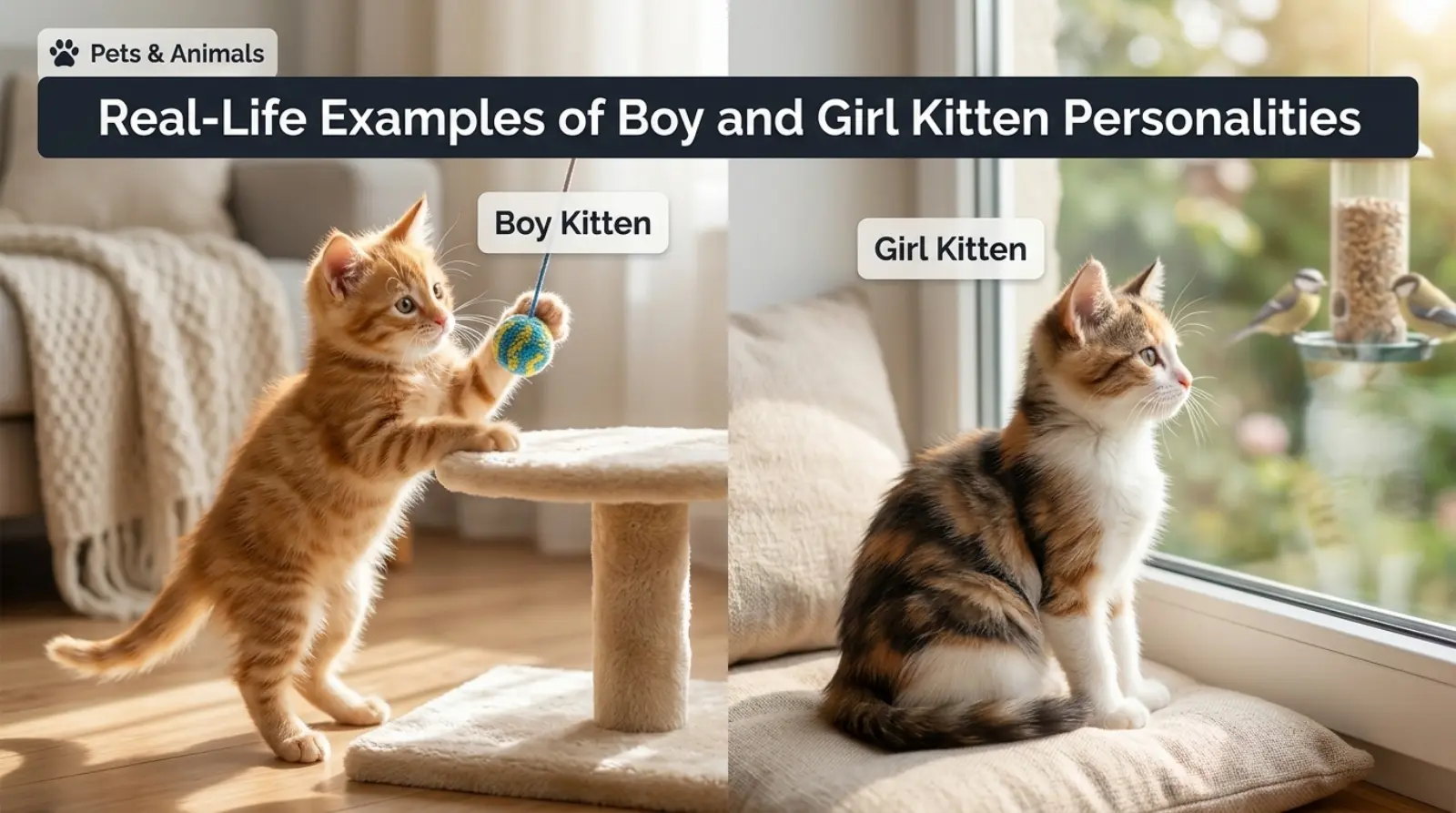
Real-Life Examples of Boy and Girl Kitten Personalities
Example 1: Friendly Male
Tom adopted a male kitten. The kitten followed him everywhere and loved attention.
Example 2: Independent Female
Sarah adopted a female kitten. She enjoyed cuddles but also liked quiet time.
Example 3: Opposite Personalities
Two siblings from the same litter showed completely different behaviors despite sharing the same gender.
These examples show that personality varies greatly.
Common Coat Color Clues
Coat color can sometimes provide hints about gender.
Orange Cats
Most orange cats are male.
Calico Cats
Almost all calico cats are female.
Tortoiseshell Cats
Most tortoiseshell cats are female.
These color patterns occur because coat color genes are linked to sex chromosomes.
However, exceptions exist.
Common Mistakes When Identifying a Kitten’s Gender
Many new owners make these mistakes.
Looking Too Early
Very young kittens can be difficult to identify correctly.
Not Comparing Littermates
Comparing siblings often makes differences easier to see.
Relying on Size
Size alone cannot determine gender.
Using Coat Color Only
Color can provide clues but does not guarantee gender.
Assuming Behavior Reveals Gender
Personality does not always match stereotypes.
Should You Choose a Boy or Girl Kitten?
The best choice depends on your preferences.
Choose a Boy Kitten If You Want
- A playful companion
- A social pet
- A larger adult cat
Choose a Girl Kitten If You Want
- A smaller cat
- An independent personality
- A calm companion
Remember that individual personality matters more than gender.
Importance of Spaying and Neutering
Spaying and neutering offer many benefits.
Benefits for Male Cats
- Less spraying
- Reduced roaming
- Fewer fights
- Better health
Benefits for Female Cats
- No heat cycles
- Lower cancer risks
- Prevention of unwanted litters
- Improved overall health
Most veterinarians recommend these procedures.

Tips for Choosing the Right Kitten
Observe Behavior
Spend time with the kitten before adoption.
Check Health
Look for:
- Bright eyes
- Clean ears
- Healthy coat
- Active behavior
Meet the Parents
Parent temperament can provide useful clues.
Ask the Breeder or Shelter
Experienced staff often know the kitten’s personality.
Consider Lifestyle
Choose a kitten that matches your household activity level.
Boy or Girl Kitten in Daily Life
Daily care remains similar for both genders.
You will need to provide:
- Quality food
- Fresh water
- Regular vet visits
- Toys and enrichment
- Safe indoor space
- Love and attention
Both male and female kittens thrive when owners meet these needs.

Expert Insights: Why Kitten Gender Matters
Animal experts suggest focusing on personality first.
Gender matters for:
- Reproductive planning
- Health decisions
- Spaying and neutering schedules
- Understanding development
However, temperament often depends more on socialization and care.
A well-socialized kitten usually becomes a loving companion regardless of gender.
This approach helps owners make better adoption choices.
Frequently Asked Questions
How can I tell if my kitten is a boy or girl?
Look under the tail. Male kittens have a larger gap between openings. Females have openings closer together.
At what age can you tell a kitten’s gender?
You can often tell by a few weeks of age. It becomes easier as the kitten grows.
Are male kittens friendlier than female kittens?
Not always. Personality varies by individual cat.
Do female kittens stay smaller?
In many cases, yes. Adult females are often smaller than males.
Are orange kittens usually male?
Yes. Most orange cats are male, though females exist.
Are calico kittens female?
Almost all calico cats are female.
Should I adopt a male or female kitten?
Choose based on personality, health, and compatibility with your lifestyle.
Does gender affect litter box habits?
After spaying or neutering, both genders generally have similar litter box habits.
Conclusion
Choosing a boy or girl kitten does not have to be difficult. The easiest way to identify gender is by examining the area under the tail. Male kittens usually have a larger distance between openings, while female kittens have openings closer together.
Although some physical and behavioral differences exist, personality matters more than gender. A loving, healthy kitten can become a wonderful companion regardless of sex. Proper socialization, nutrition, and veterinary care play a bigger role in shaping your cat’s future.
When selecting a kitten, focus on health, temperament, and how well the pet fits your lifestyle. With the right care, both boy and girl kittens can bring years of happiness and companionship.
Discover More Post:
Hunny or Honey: Which Is Correct and When Should You Use It?
Specially or Especially: What’s the Difference and When to Use it?