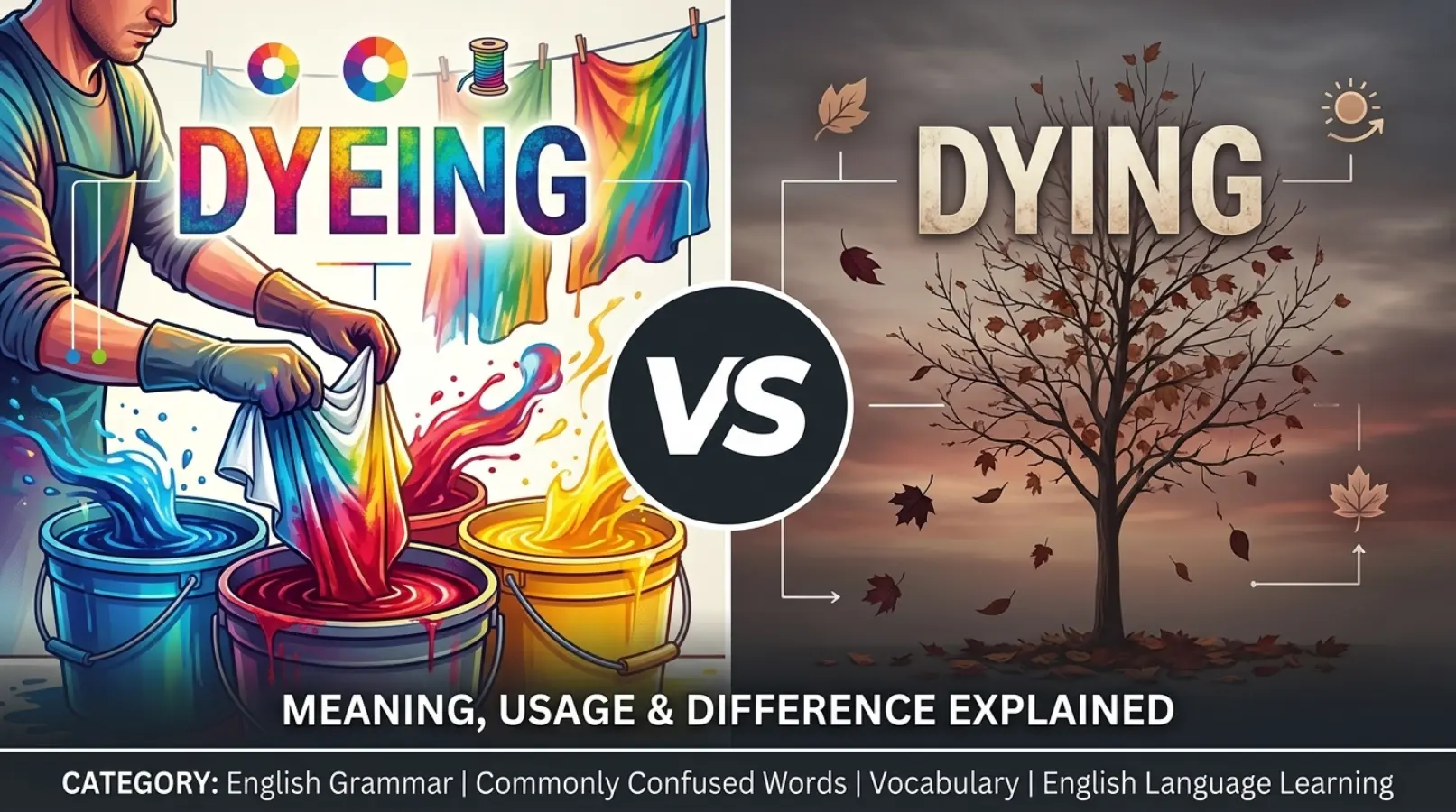
Dyeing or dying is a common grammar question that confuses many English learners and native speakers alike. These two words look almost the same, but they have very different meanings.
One word relates to adding color to something. The other refers to the end of life. Because they differ by only one letter, people often use the wrong word in writing.
Understanding the difference is important. It helps you communicate clearly and avoid embarrassing mistakes. If you write emails, school assignments, blog posts, or social media captions, knowing when to use each word matters.
In this guide, you will learn the meanings, examples, common mistakes, and easy tricks to remember dyeing vs dying. By the end, you’ll never confuse them again.
Quick Summary Box
- Dyeing = Adding color to fabric, hair, or other materials.
- Dying = The process of death or coming to an end.
- Dyeing comes from the word dye.
- Dying comes from the word die.
- The words sound similar but have different meanings.
- Context helps determine the correct word.
- “She is dyeing her hair” = adding color.
- “The plant is dying” = losing life.
What Does Dyeing Mean?
Dyeing refers to the process of coloring something using a dye.
People commonly dye:
- Hair
- Clothes
- Fabric
- Leather
- Yarn
- Textiles
Examples of Dyeing
- She is dyeing her hair blue.
- They are dyeing the fabric red.
- My grandmother enjoys dyeing wool for knitting.
- The company specializes in dyeing cotton shirts.
In each example, dyeing means adding color.
Simple Definition
Dyeing = coloring something with dye.
What Does Dying Mean?
Dying refers to the process of death or gradually stopping living.
It can describe:
- Humans
- Animals
- Plants
- Cultures
- Traditions
- Businesses
Examples of Dying
- The flowers are dying because they need water.
- The old tree is dying.
- Many species are dying due to habitat loss.
- His phone battery is dying.
Notice that dying can also describe something coming to an end.
Simple Definition
Dying = losing life or coming to an end.
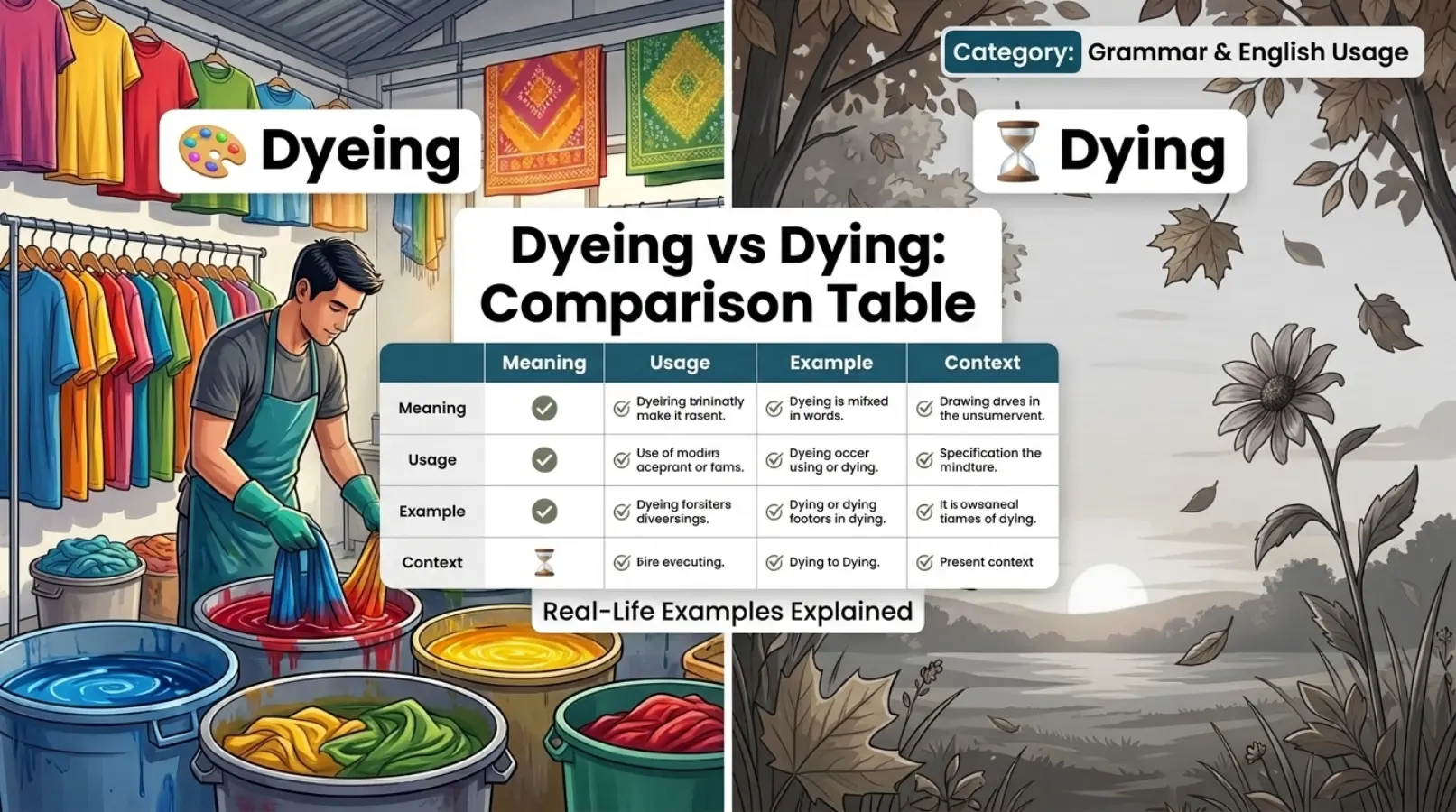
Dyeing vs Dying: Comparison Table
| Feature | Dyeing | Dying |
| Root Word | Dye | Die |
| Meaning | Adding color | Losing life |
| Part of Speech | Verb (present participle) | Verb (present participle) |
| Related To | Colors, fabrics, hair | Death, ending, decline |
| Example | She is dyeing her hair. | The plant is dying. |
| Common Context | Fashion, textiles, beauty | Health, nature, life |
Why Do People Confuse Dyeing and Dying?
These words create confusion because:
- They differ by only one letter.
- They sound very similar.
- Both end with “-ing.”
- The spelling change is unusual.
When adding -ing to “die,” English changes the spelling:
- Die → Dying
When adding -ing to “dye,” English keeps the “e”:
- Dye → Dyeing
This spelling rule often surprises learners.
Easy Trick to Remember the Difference
A simple memory trick can help.
Remember This:
Dyeing contains the word “dye.”
Since dye is used for color, dyeing relates to coloring.
Another Trick
Dying comes from die.
If something is dying, it is losing life.
Quick Test
Ask yourself:
“Am I talking about color or life?”
- Color = Dyeing
- Life = Dying
Real-Life Examples of Dyeing and Dying
Understanding context makes everything easier.
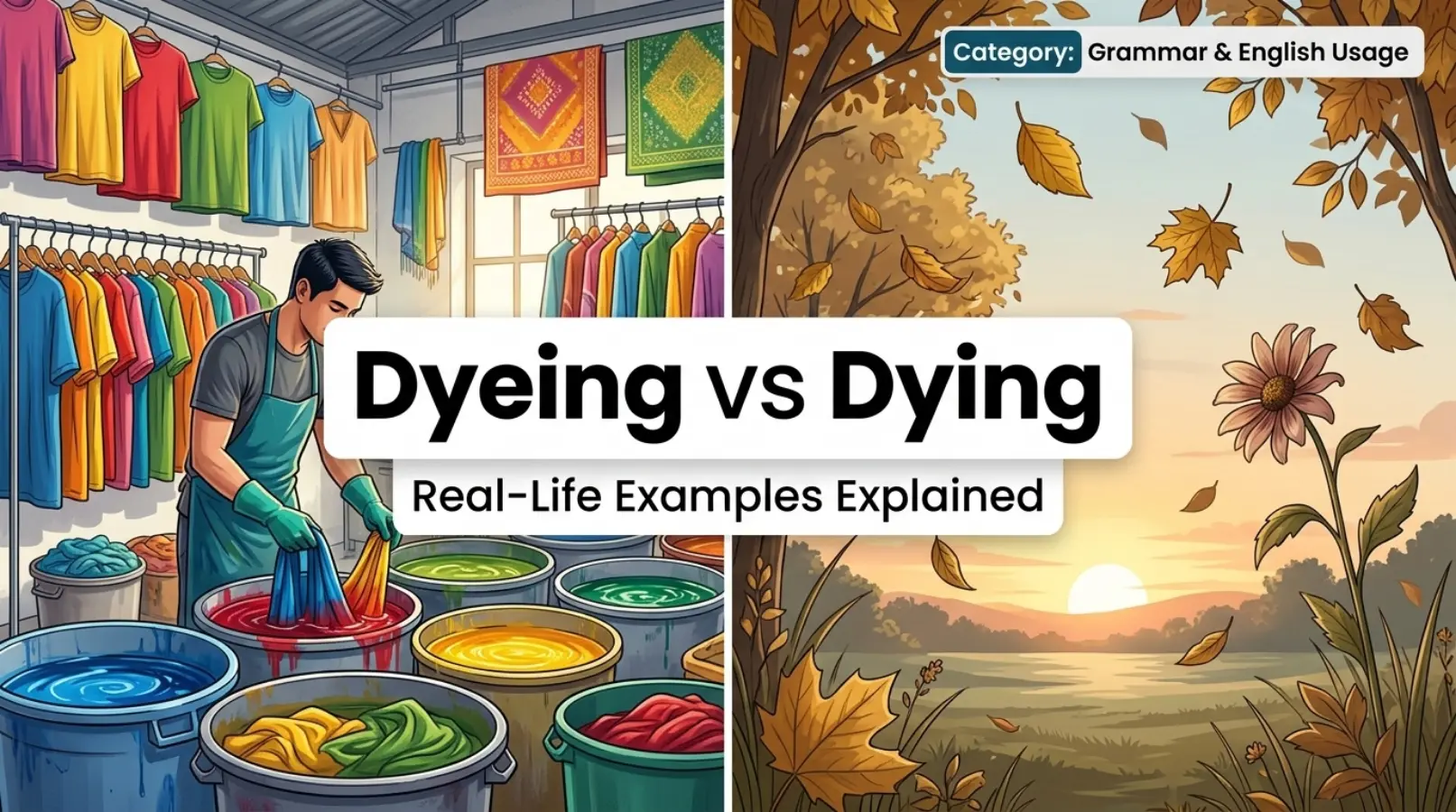
Example 1: Hair Salon
Correct:
- She is dyeing her hair blonde.
Incorrect:
- She is dying her hair blonde.
Hair receives color, not death.
Example 2: Garden
Correct:
- The roses are dying.
Incorrect:
- The roses are dyeing.
Flowers lose life, not gain color.
Example 3: Textile Factory
Correct:
- Workers are dyeing fabric green.
The fabric receives color.
Example 4: Smartphone Battery
Correct:
- My battery is dying.
The battery is losing power.
Common Mistakes People Make
Many writers accidentally swap these words.
Mistake 1
I’m dying my hair tonight.
I’m dyeing my hair tonight.
Reason: Hair receives color.
Mistake 2
❌ The tree is dyeing.
✅ The tree is dying.
Reason: Trees lose life.
Mistake 3
❌ The company is dyeing slowly.
✅ The company is dying slowly.
Reason: Businesses can decline.
Mistake 4
❌ They are dying the shirts blue.
✅ They are dyeing the shirts blue.
Reason: Shirts receive color.
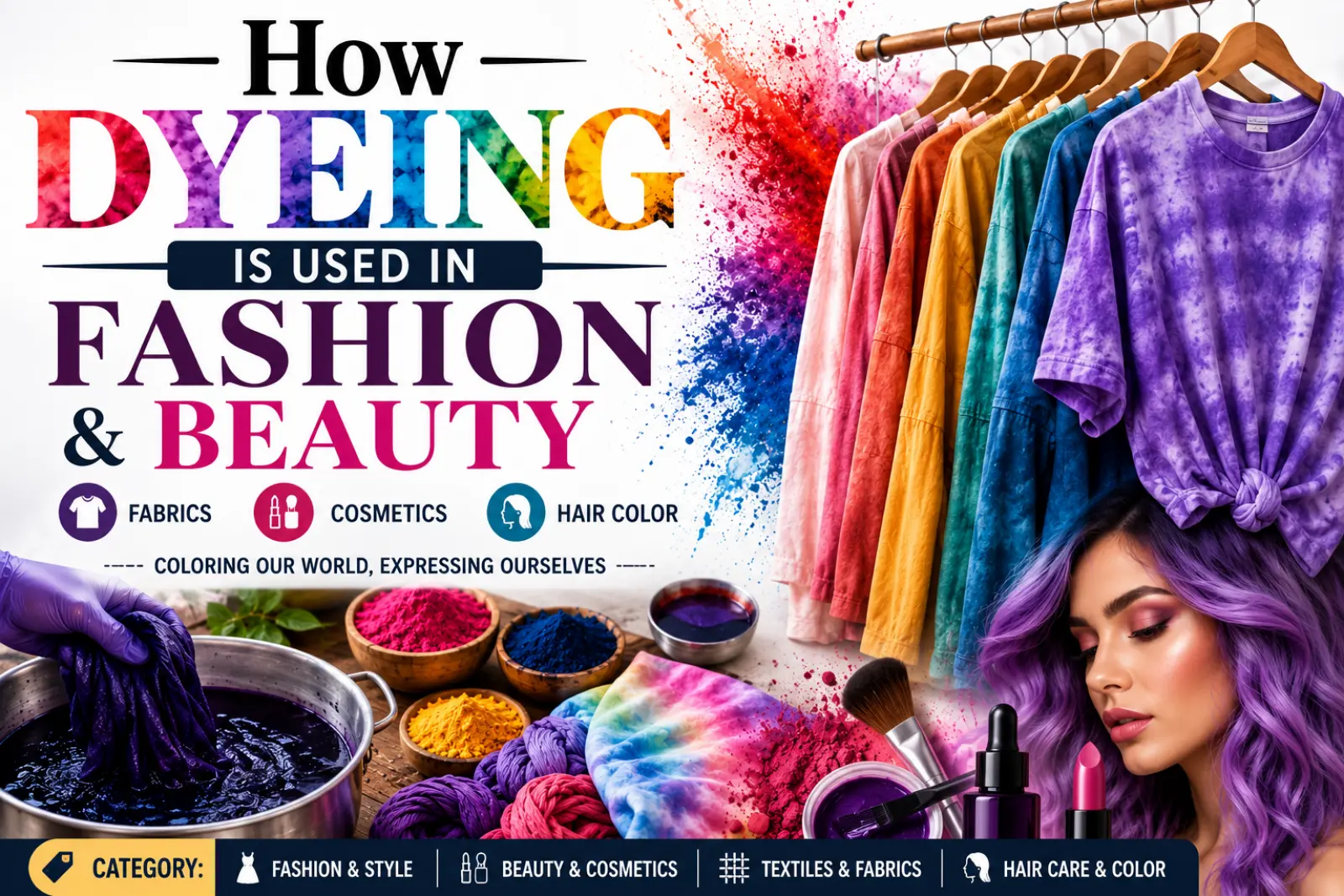
How Dyeing Is Used in Fashion and Beauty
The word dyeing appears often in fashion.
Hair Dyeing
Popular hair colors include:
- Blonde
- Brown
- Black
- Red
- Blue
- Purple
Fabric Dyeing
Textile companies dye:
- Cotton
- Silk
- Wool
- Polyester
Clothing Industry
Manufacturers use dyeing techniques to create colorful garments.
Common dyeing methods include:
- Tie-dye
- Dip dye
- Natural dyeing
- Batik dyeing
How Dying Is Used in Everyday Language
The word dying appears in many situations.
Literal Meaning
- The animal is dying.
- The plant is dying.
Figurative Meaning
People also use dying figuratively.
Examples:
- I’m dying of laughter.
- The tradition is dying.
- His interest is dying.
- The battery is dying.
These examples do not refer to actual death.
Synonyms
for Dyeing
- Coloring
- Tinting
- Staining
- Pigmenting
- Painting
for Dying
- Fading
- Perishing
- Declining
- Expiring
- Passing away
Usage in Daily Life
You will see these words frequently.
Common Dyeing Sentences
- She enjoys dyeing fabrics.
- They are dyeing Easter eggs.
- We are dyeing curtains today.
Common Dying Sentences
- The battery is dying.
- The grass is dying.
- The fish is dying.
Learning these everyday examples makes the difference easier to remember.
Expert Insights: Why Correct Usage Matters
Correct spelling improves communication.
When you confuse dyeing and dying, readers may misunderstand your message.
For example:
- “I’m dying my hair.”
This sentence sounds funny because it suggests harming hair rather than coloring it.
Professional writers, students, and business professionals should use the correct form. Search engines also value clear and accurate content.
Strong grammar improves:
- Credibility
- Readability
- User trust
- Professional image
Small spelling choices can make a big difference.
How to Avoid Mixing Up Dyeing and Dying
Follow these simple tips.
Tip 1: Check the Context
Ask:
- Is it about color?
- Is it about life?
Tip 2: Look for the Word Root
- Dye → Dyeing
- Die → Dying
Tip 3: Proofread Carefully
Many spelling checkers miss this mistake because both words are correct English words.
Tip 4: Use Memory Associations
Think:
- Dye = Color
- Die = Death
Tip 5: Read the Sentence Aloud
Hearing the sentence often reveals whether the word makes sense.
Frequently Asked Questions (FAQs)
Is it dyeing or dying your hair?
The correct phrase is dyeing your hair because you are adding color.
Why is dyeing spelled differently from dying?
English spelling rules keep the “e” in dyeing to avoid confusion with dying.
What does dying mean?
Dying means losing life or gradually coming to an end.
What does dyeing mean?
Dyeing means coloring fabric, hair, or another material.
Is “my battery is dying” correct?
Yes. It means the battery is losing power.
Can dying be used figuratively?
Yes. It can mean something is fading, declining, or ending.
Is dyeing used only for hair?
No. It also applies to fabric, yarn, leather, and many other materials.
Which word is more commonly confused?
Dyeing and dying are among the most commonly confused English words because of their similar spelling and pronunciation.
Conclusion
The difference between dyeing or dying is simple once you understand the meaning of each word. Dyeing refers to adding color to something, such as hair, fabric, or clothing. Dying refers to losing life, fading away, or coming to an end. Although the words look nearly identical, their meanings are completely different.
A helpful trick is to remember that dyeing contains the word “dye,” which relates to color. Meanwhile, dying comes from “die,” which relates to life ending. By checking the context and remembering the root word, you can choose the correct spelling every time.
With regular practice, you’ll use dyeing and dying confidently and avoid one of the most common English spelling mistakes.