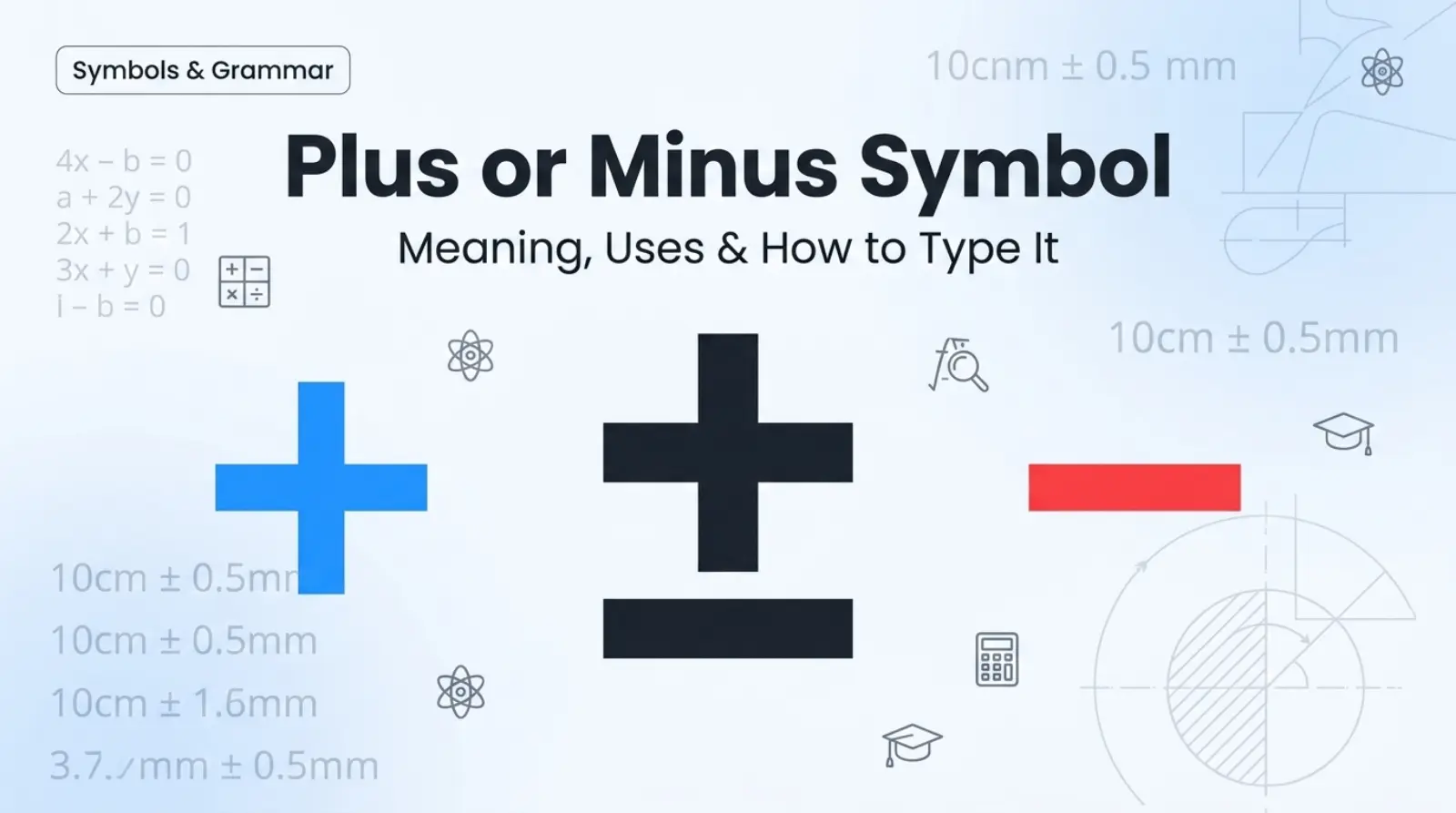
The plus or minus symbol (±) is a common math sign used around the world. It shows that a value can be either positive or negative. You often see it in mathematics, science, engineering, statistics, and everyday measurements. Learning how to use this symbol helps you read equations correctly and avoid mistakes. Many people also want to know how to type the symbol on Windows, Mac, Android, or iPhone. This guide explains everything in simple English. You will learn its meaning, keyboard shortcuts, real-life examples, common errors, and expert tips. By the end, you will know exactly when and how to use the symbol with confidence.
Quick Summary Box
- Symbol: ±
- Name: Plus or Minus Symbol
- Meaning: A value may be positive or negative.
- Unicode: U+00B1
- HTML Code: ± or ±
- Windows Alt Code: Alt + 0177
- Mac Shortcut: Option + Shift + =
- Common Uses: Math, science, engineering, statistics, measurements
- Opposite Symbol: Minus or Plus (∓)
What Is the Plus or Minus Symbol?
It means both positive and negative.
Instead of writing:
x = 5 or x = -5
You can write:
x = ±5
This saves space and makes equations easier to read.
The symbol tells readers that both answers are possible.
What Does the Plus or Minus Symbol Mean?
It has different meanings depending on where it appears.
| Usage | Meaning | Example |
| Mathematics | Positive or negative value | x = ±8 |
| Science | Measurement uncertainty | 50 ±2 cm |
| Engineering | Allowed variation | 100 ±5 mm |
| Statistics | Margin of error | 95% ±3% |
| Electronics | Positive and negative voltage | ±12V |
How to Read the Plus or Minus Symbol
Read the symbol as:
- Plus or minus
- Positive or negative
- Either plus or minus
For example:
10 ± 2
Read it as:
Ten plus or minus two.
This means:
- 12
- 8
Both answers are correct.
Where Is the Plus or Minus Symbol Used?
The symbol appears in many subjects.
1. Mathematics
Quadratic equations often use ±.
Example:
x = ±9
Possible values:
- 9
- -9
2. Science
Scientists show measurement accuracy.
Example:
25 ±1°C
The actual temperature is between:
- 24°C
- 26°C
3. Engineering
Engineers use tolerances.
Example:
100 ±0.5 mm
The acceptable size is:
- 99.5 mm
- 100.5 mm
4. Statistics
Researchers show margins of error.
Example:
70% ±4%
The actual value may be:
- 66%
- 74%
5. Electronics
Electrical systems use positive and negative voltage.
Example:
±15V power supply
It provides:
- +15V
- -15V
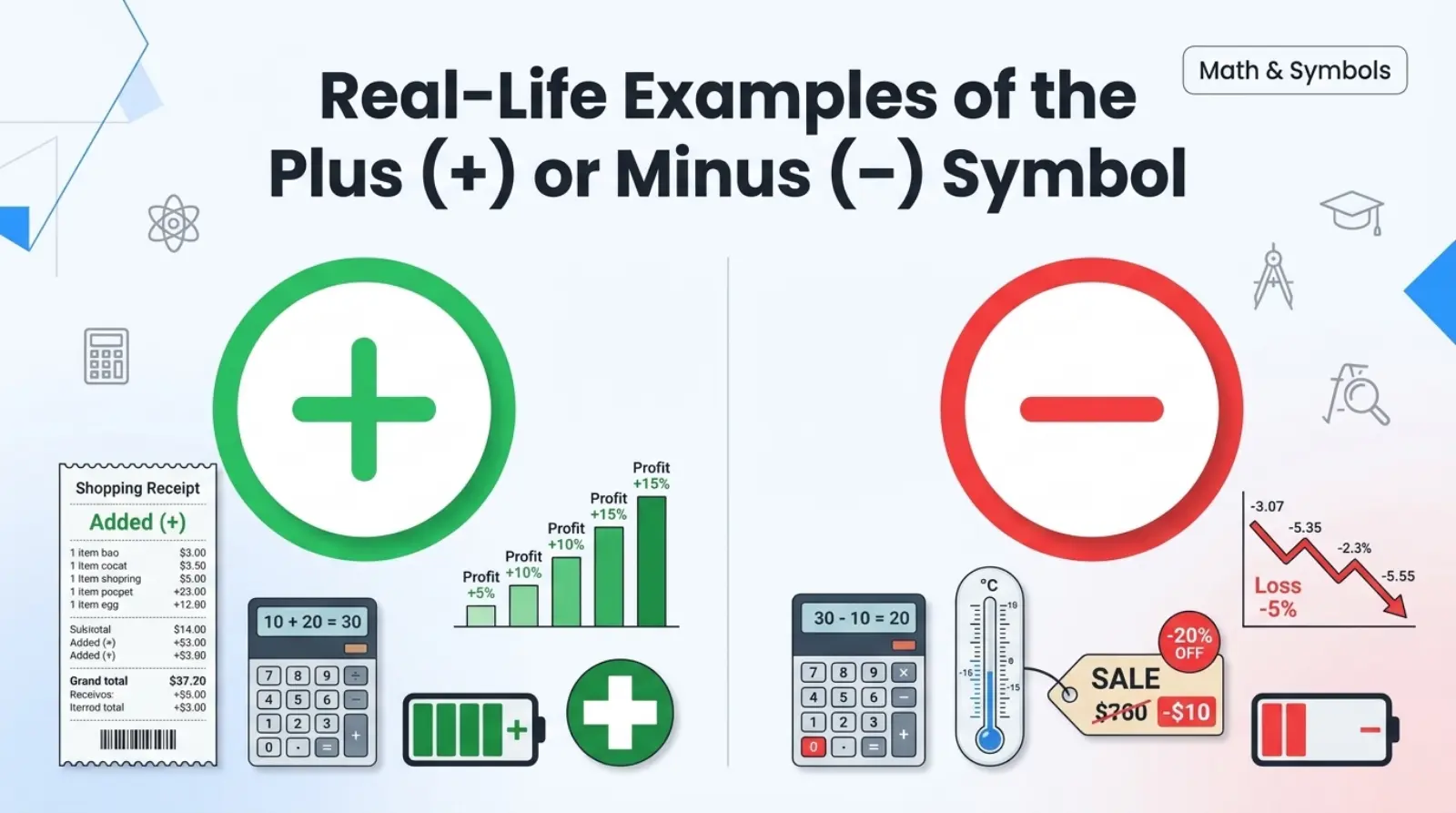
Real-Life Examples of the Plus or Minus Symbol
Here are simple examples.
Example 1
The box weighs:
20 ±1 kg
Actual weight:
- 19 kg
- 20 kg
- 21 kg
Example 2
A weather report says:
30 ±2°C
Temperature may be:
- 28°C
- 29°C
- 30°C
- 31°C
- 32°C
Example 3
Battery voltage:
±9V
It supports:
- Positive 9 volts
- Negative 9 volts
Example 4
Exam score:
80 ±5
Possible scores:
- 75
- 80
- 85
Plus or Minus Symbol vs Minus or Plus Symbol
Many people confuse these two symbols.
| Feature | Plus or Minus (±) | Minus or Plus (∓) |
| Symbol | ± | ∓ |
| Meaning | Plus first, then minus | Minus first, then plus |
| Common Use | Very common | Less common |
| Found In | Math and science | Advanced mathematics |
| Keyboard Support | Easy | Less common |
The ± symbol is much more common.
How to Type the Plus or Minus Symbol
Different devices use different methods.
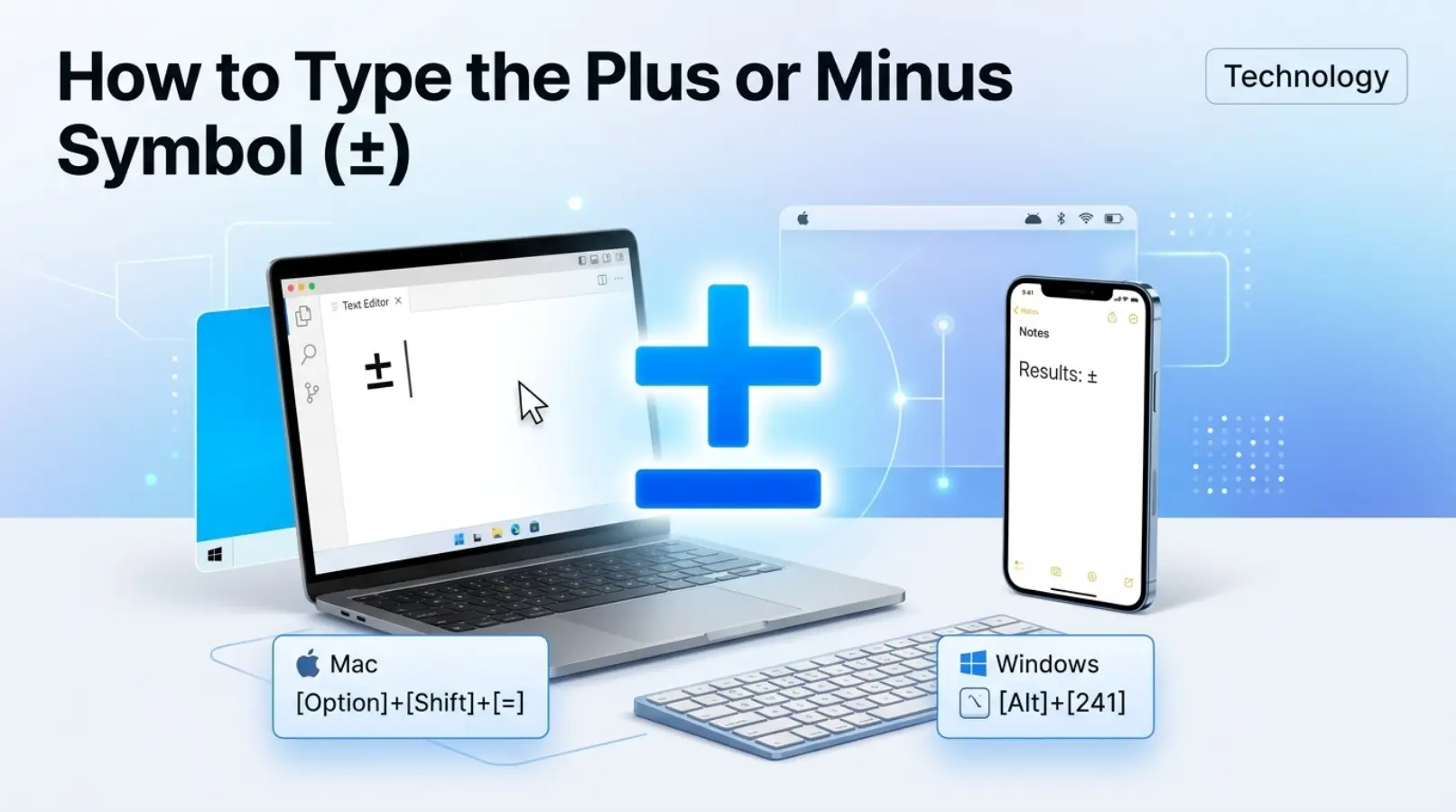
| Device | Shortcut |
| Windows | Alt + 0177 |
| Mac | Option + Shift + = |
| Linux | Compose + + – |
| HTML | ± |
| Unicode | U+00B1 |
| Microsoft Word | 00B1 then Alt + X |
How to Insert the Plus or Minus Symbol in Popular Apps
Microsoft Word
- Press Alt + 0177
- Or type 00B1
- Press Alt + X
Google Docs
- Click Insert
- Select Special Characters
- Search plus minus
Excel
Use:
- Alt + 0177
Or
Insert → Symbol
PowerPoint
Use the same shortcut as Microsoft Word.
HTML
Use:
±
or
±
Common Mistakes When Using the Plus or Minus Symbol
Avoid these errors.
Mistake 1
Using ± when only one value exists.
Incorrect:
5 ±
Correct:
5
Mistake 2
Confusing ± with +.
Incorrect:
5 ± 3 = 8
Correct:
5 + 3 = 8
Mistake 3
Using ± instead of the minus sign.
Incorrect:
10 ± 5 = 5
Correct:
10 − 5 = 5
Mistake 4
Ignoring uncertainty.
50 ±2 does not always mean exactly 50.
It means:
48 to 52.
Tips for Using the Symbol Correctly
- Learn the keyboard shortcut.
- Use it only when two values are possible.
- Do not replace normal addition with ±.
- Keep spacing consistent.
- Use the correct font.
- Double-check scientific measurements.
- Follow your style guide.
Synonyms
- plus minus sign
- ± symbol
- plus minus character
- mathematical symbols
- keyboard symbols
- Unicode plus minus
- Alt code for plus minus
- plus or minus shortcut
- uncertainty symbol
- tolerance symbol
- positive and negative sign
- mathematical notation
- engineering symbols
- statistical symbols
- scientific notation
Why the Plus or Minus Symbol Is Important
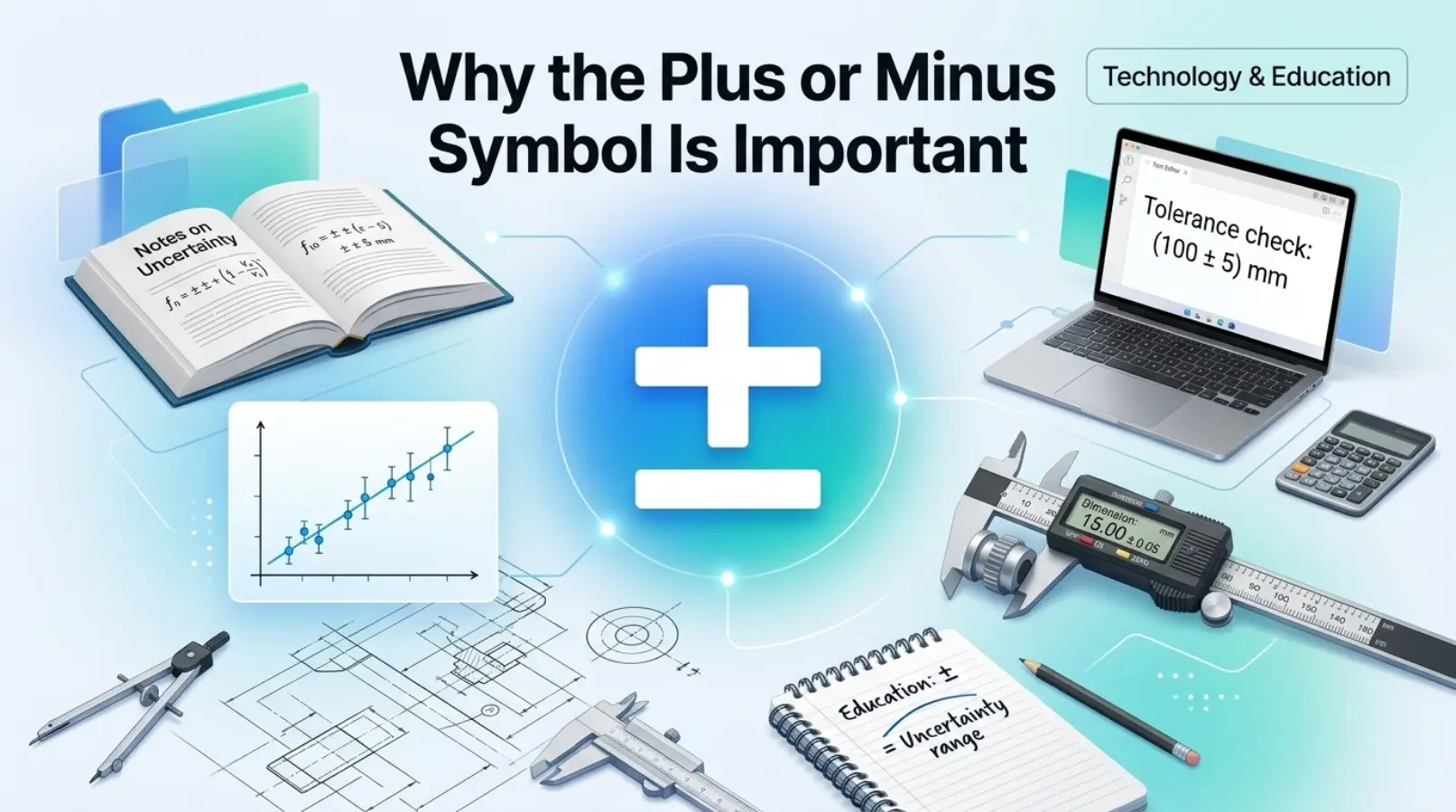
The symbol improves communication.
It saves writing time.
It makes equations shorter.
Scientists use it to show accuracy.
Engineers use it to define acceptable limits.
Students use it while solving equations.
Without this symbol, many formulas become longer and harder to read.
Expert Insights: Why Correct Use of the Plus or Minus Symbol Matters
The symbol is more than a keyboard character. It is a standard mathematical notation recognized worldwide. Using it correctly prevents misunderstandings in calculations, scientific reports, engineering drawings, and research papers. Writers should also use the proper Unicode or HTML code to ensure the symbol displays correctly across websites and devices. Accurate formatting improves readability, user experience, and professional credibility.
Frequently Asked Questions (FAQs)
What does the plus or minus symbol mean?
It means a value can be either positive or negative.
How do I type the plus or minus symbol on Windows?
Press Alt + 0177 using the numeric keypad.
What is the HTML code for the plus or minus symbol?
Use:
±
or
±
What is the Unicode for the plus or minus symbol?
The Unicode is U+00B1.
Is ± the same as +?
No.
The plus sign (+) means addition.
The ± symbol means either plus or minus.
Why is the plus or minus symbol used in science?
It shows measurement uncertainty or possible variation.
What is the opposite of ±?
The opposite symbol is ∓, called the minus or plus symbol.
Can I use the plus or minus symbol in Excel?
Yes.
Use Alt + 0177 or insert it from the Symbol menu.
Conclusion
The plus or minus symbol (±) is one of the most useful symbols in mathematics, science, engineering, and statistics. It represents both positive and negative values or shows measurement uncertainty in a simple way. Knowing when to use it makes equations easier to understand and improves the accuracy of technical writing. Whether you are a student, teacher, engineer, researcher, or content creator, learning the keyboard shortcuts and correct usage can save time and prevent mistakes. Keep this guide handy whenever you need to type or understand the plus or minus symbol. With regular practice, using ± will become quick, natural, and accurate.
Discover More Post:
Toward or Towards: What’s the Difference and Which You Use?
Led or Lead: What’s the Difference? Guide with Examples