
Ride or die meaning is simple, but many people use the phrase without knowing its true meaning. It describes someone who stays loyal through good and bad times. This person supports you, even during difficult moments.
You may hear this phrase in songs, movies, or everyday conversations. Friends, couples, and family members often use it to describe a strong bond. However, the phrase does not mean someone should accept unhealthy behavior. Instead, it celebrates trust, loyalty, and commitment.
In this guide, you will learn the meaning, origin, examples, and correct usage of ride or die. You will also discover common mistakes, related phrases, and expert tips. By the end, you will know exactly when and how to use this popular expression.
Quick Summary Box
- Ride or die meaning: A person who stays loyal no matter what.
- It describes deep trust and strong commitment.
- It is often used for close friends or romantic partners.
- The phrase became popular through hip-hop culture.
- Today, it usually means unwavering support.
- It should not encourage harmful or toxic relationships.
What Does Ride or Die Mean?
The phrase ride or die means someone who remains loyal and supportive during both good and bad times.
A ride-or-die person:
- Never gives up on you easily.
- Supports you during challenges.
- Celebrates your success.
- Stands beside you through difficult moments.
- Values trust and honesty.
Simple Definition
Ride or die refers to a person who stays committed and loyal regardless of the situation.
Ride or Die Meaning in Simple Words
Imagine your best friend helps you after everyone else leaves.
Or your partner supports your dreams even when life becomes difficult.
That person is your ride or die.
It does not mean they always agree with you.
Instead, they care enough to support you while also telling you the truth.
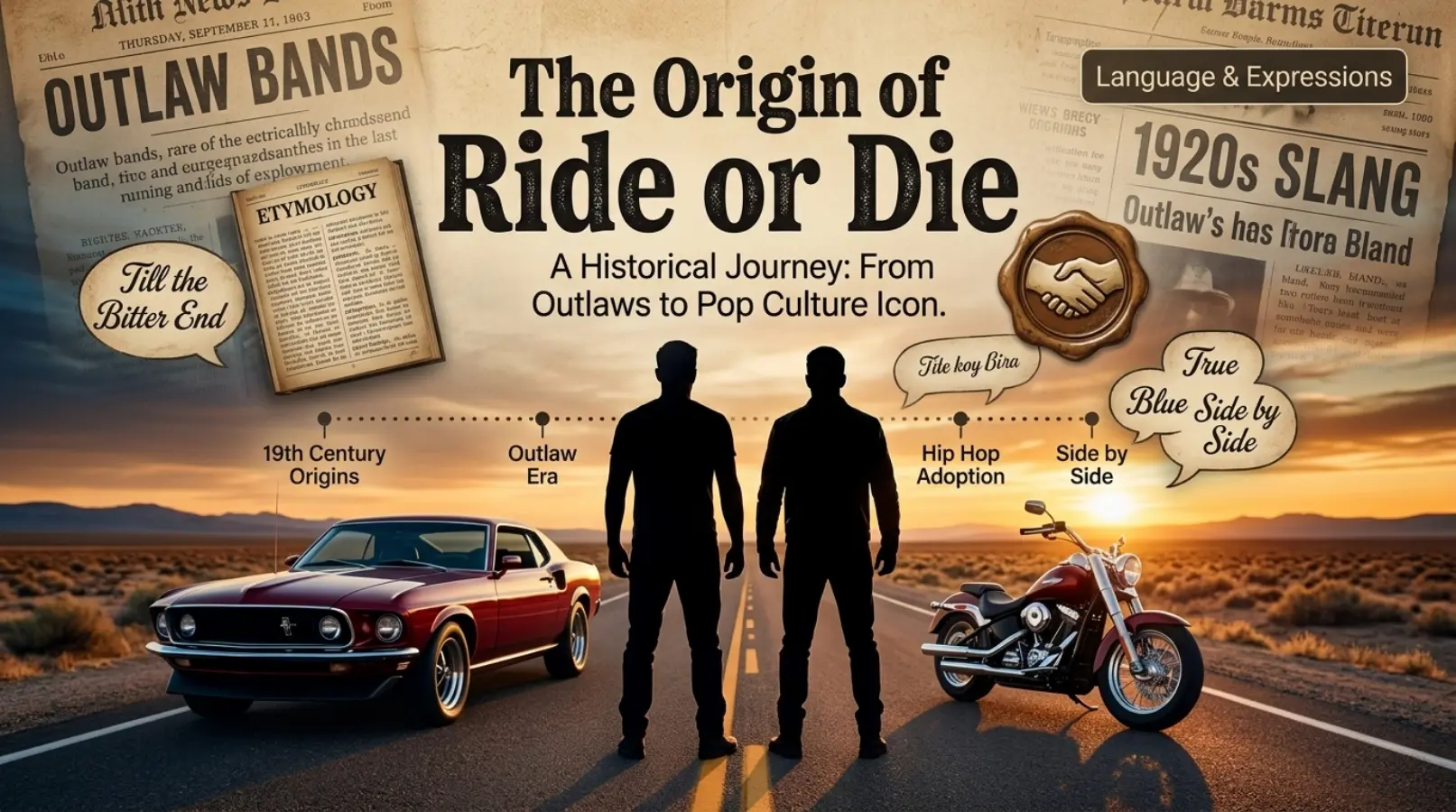
The Origin of Ride or Die
The phrase became popular in the 1990s.
It first gained attention in American hip-hop culture.
Originally, it described a romantic partner who would stay loyal even in dangerous situations.
Over time, the meaning became broader.
Today, people use it for:
- Best friends
- Husbands and wives
- Boyfriends and girlfriends
- Family members
- Loyal teammates
Now it simply represents strong loyalty rather than dangerous commitment.
Ride or Die in Modern Culture
Today, you will often hear this phrase in:
- Social media captions
- Movies
- TV shows
- Podcasts
- Music lyrics
- Everyday conversations
Examples include:
- “She’s my ride or die.”
- “He’s been my ride or die since high school.”
- “Everyone needs a ride or die friend.”
The phrase has become part of modern English slang.
Real-Life Examples of Ride or Die
Example 1
Sarah stayed with her friend during a difficult illness.
She truly became her friend’s ride or die.
Example 2
David supported his wife while she started her business.
He believed in her from day one.
He was her ride or die.
Example 3
Two friends worked together for twenty years.
They trusted each other completely.
People called them ride or die friends.
Example 4
A brother helped his sister through college.
His loyalty never changed.
He became her ride or die.

Ride or Die vs Loyal Friend
| Ride or Die | Loyal Friend |
| Extremely loyal | Loyal in most situations |
| Strong emotional bond | Good friendship |
| Supports during hard times | Offers regular support |
| Often used in slang | Common everyday phrase |
| Popular in pop culture | Formal and informal use |
Key Difference
Every ride-or-die person is loyal.
Not every loyal friend becomes your ride or die.
How to Use Ride or Die Correctly
Here are common ways to use the phrase.
As a noun
- She’s my ride or die.
- He’s my ride-or-die friend.
- My sister is my ride or die.
As an adjective
- They have a ride-or-die friendship.
- We share ride-or-die loyalty.
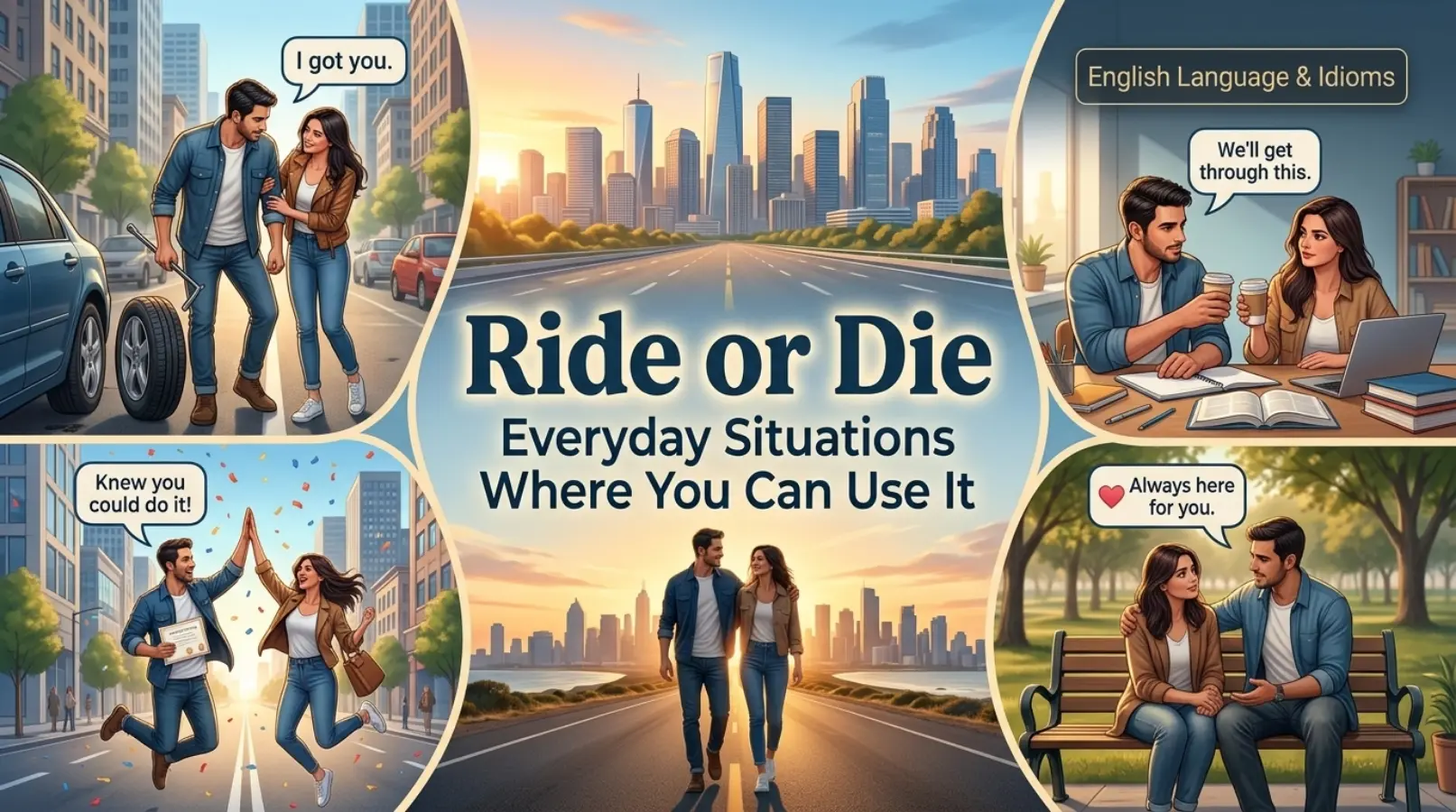
Everyday Situations Where You Can Use It
You can use the phrase when talking about:
Friendships
“My best friend is my ride or die.”
Relationships
“My husband has always been my ride or die.”
Family
“My brother is my ride or die.”
Teams
“Our teammates became ride or die after years together.”
Common Mistakes People Make
Many people misunderstand the phrase.
Mistake 1: Thinking It Means Blind Loyalty
Wrong.
A ride-or-die person still tells you when you’re wrong.
Healthy loyalty includes honesty.
Mistake 2: Using It for New Friends
The phrase usually describes long-term trust.
Avoid calling someone your ride or die after only a few days.
Mistake 3: Supporting Toxic Behavior
Ride or die never means accepting abuse.
Healthy relationships always include respect.
Mistake 4: Using It in Formal Writing
The phrase is informal.
Avoid using it in:
- Business reports
- Academic papers
- Legal documents
Synonyms
Here are similar expressions.
| Phrase | Meaning |
| Loyal friend | Faithful companion |
| Best friend | Closest friend |
| Trusted partner | Reliable companion |
| True companion | Someone dependable |
| Faithful supporter | Always supportive |
| Lifelong friend | Friend for many years |
| Reliable ally | Person you trust |
| Constant companion | Someone always present |
Tips for Using Ride or Die Naturally
Follow these simple tips.
- Use it in casual conversations.
- Reserve it for meaningful relationships.
- Do not overuse the phrase.
- Match it with genuine loyalty.
- Avoid using it sarcastically unless the context is obvious.
Why Ride or Die Matters Today
Modern life changes quickly.
People value trustworthy relationships more than ever.
A ride-or-die person offers:
- Emotional support
- Encouragement
- Honesty
- Stability
- Trust
These qualities help build lasting friendships and healthy relationships.
Expert Insights: Why Understanding Ride or Die Matters
Language changes over time.
Many slang expressions become part of everyday English.
Understanding ride or die meaning helps you:
- Communicate naturally.
- Understand movies and music.
- Interpret social media correctly.
- Avoid using the phrase in the wrong context.
- Build stronger conversations.
Remember that loyalty should always include honesty, respect, and healthy boundaries.
Frequently Asked Questions (FAQs)
What does ride or die mean?
It means someone who remains loyal and supportive through every situation.
Is ride or die positive?
Yes. It usually has a positive meaning when it describes healthy loyalty.
Is ride or die only for couples?
No.
People also use it for close friends, siblings, and trusted family members.
Where did ride or die come from?
The phrase became popular through American hip-hop culture during the 1990s.
Can ride or die describe friendship?
Yes.
Many people call their lifelong best friend their ride or die.
Does ride or die mean blind loyalty?
No.
Healthy ride-or-die relationships include honesty and accountability.
Is ride or die slang?
Yes.
It is an informal English slang expression.
Can I use ride or die at work?
Usually no.
Choose more professional words like trusted colleague or reliable teammate in formal settings.
Conclusion
Understanding ride or die meaning helps you use one of today’s most popular English expressions correctly. The phrase describes a person who remains loyal, supportive, and trustworthy through life’s ups and downs. While it began as slang in hip-hop culture, it now appears in everyday conversations, social media, movies, and music. Remember that true loyalty never means accepting harmful behavior. Instead, it combines trust, honesty, respect, and commitment. If you use the phrase for a best friend, family member, or romantic partner, it should reflect a healthy and meaningful relationship. Use it naturally, reserve it for people who have truly earned your trust, and you’ll communicate its powerful meaning with confidence.
Discover More Post:
Who or Whom: What’s the Difference and When Should You Use?
Toward or Towards: What’s the Difference and Which You Use?