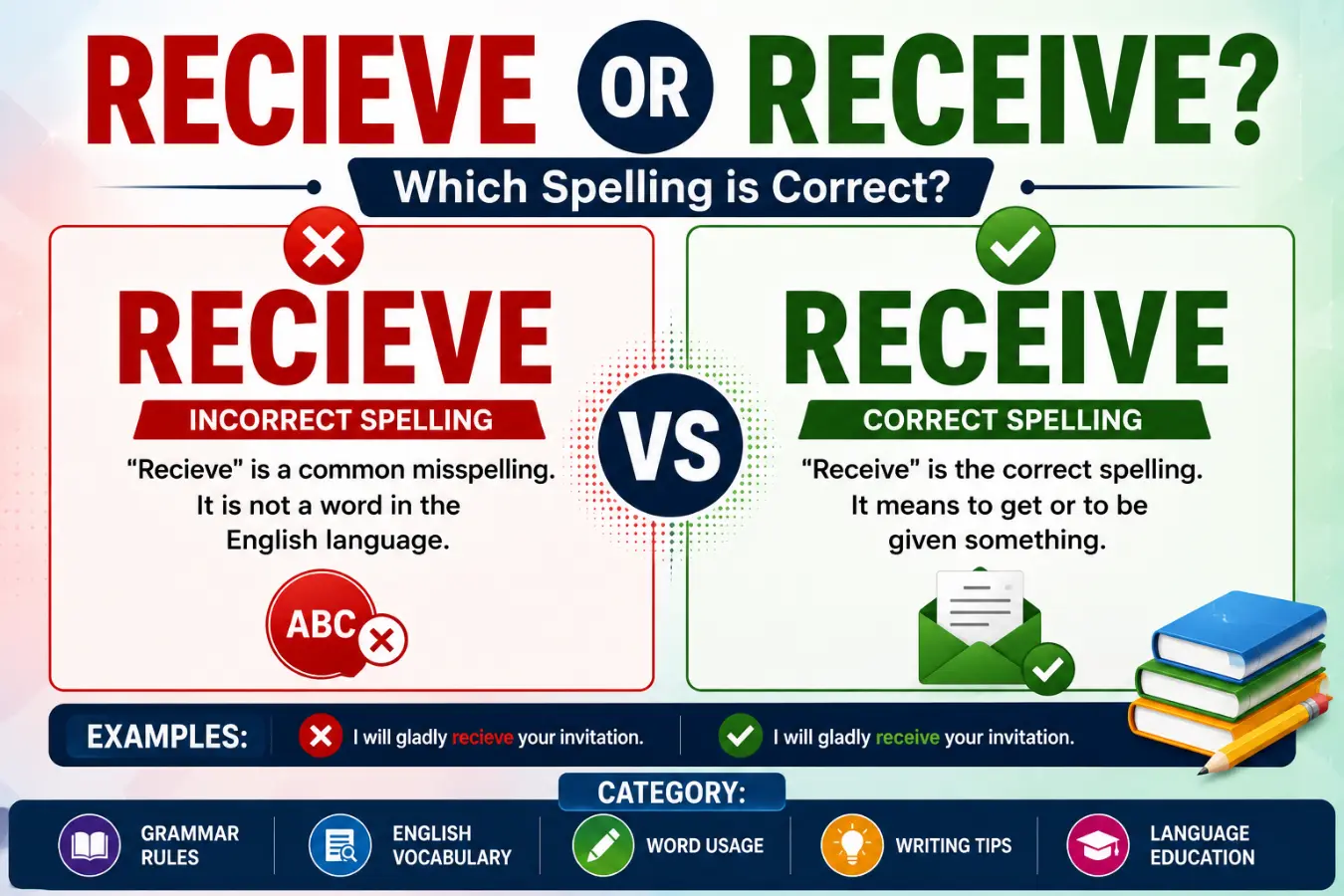
Recieve or receive is a common spelling question that confuses many English learners and native speakers. Both words may look correct at first glance. However, only one spelling is accepted in standard English.
Spelling mistakes can affect school work, emails, business writing, and online content. A simple typo may change how readers view your writing. That is why learning the correct spelling matters.
In this guide, you will learn the difference between recieve and receive, their meanings, examples, memory tricks, common mistakes, and expert writing tips. By the end, you will know exactly which spelling to use and how to avoid this mistake in the future.
Quick Summary Box
- Correct spelling: Receive
- Incorrect spelling: Recieve
- Meaning: To get, accept, or obtain something
- Receive follows the rule: “I before E except after C”
- Recieve is a spelling mistake
- Use receive in formal and informal writing
- Common examples: receive a gift, receive an email, receive payment
What Does Receive Mean?
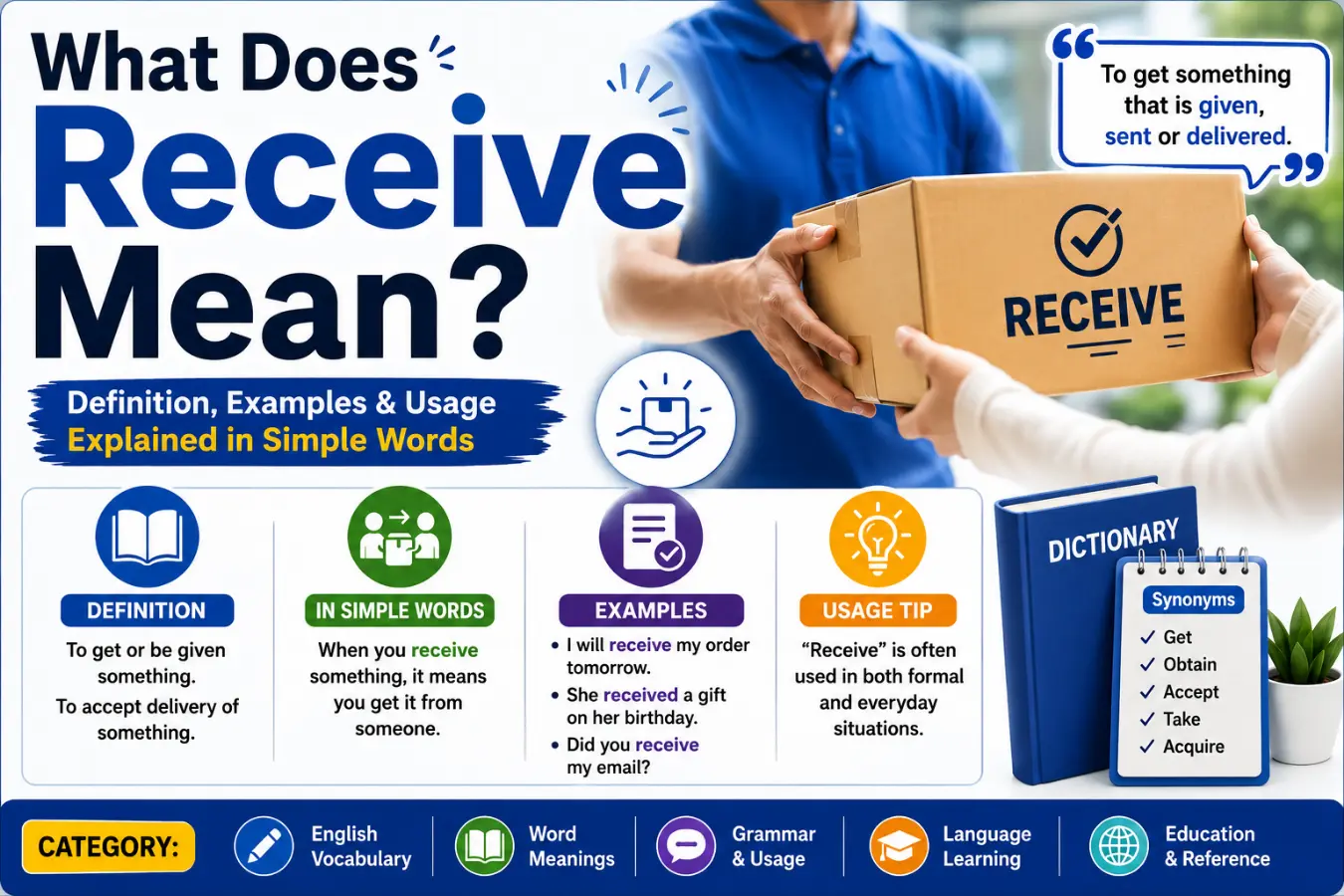
The word receive means to get, accept, or take something that is given, sent, or delivered.
Simple Definition
Receive = to get something
Examples
- I received a birthday gift.
- She received an email from her teacher.
- We received good news today.
- The company received payment yesterday.
- They received support from friends.
In each example, someone gets something from another person or source.
Is It Recieve or Receive?
The correct spelling is receive.
The spelling recieve is incorrect.
| Word | Correct or Incorrect? |
| Receive | Correct |
| Recieve | Incorrect |
Why?
Many people accidentally switch the positions of i and e.
The correct order is:
r-e-c-e-i-v-e
Not:
r-e-c-i-e-v-e
Why Do People Misspell Receive?
English spelling rules can be confusing.
Many words use ie, such as:
- believe
- achieve
- field
- piece
Because of these examples, people often write recieve instead of receive.
However, receive follows a different spelling pattern.
The Famous Rule
“I before E except after C.”
Since the letter c comes before the vowel pair, the correct spelling becomes:
receive
Other examples include:
- receive
- deceive
- perceive
- ceiling
Recieve vs Receive Comparison Table
| Feature | Recieve | Receive |
| Spelling Status | Incorrect | Correct |
| Dictionary Entry | No | Yes |
| Accepted in English | No | Yes |
| Used in Professional Writing | No | Yes |
| Used in Academic Writing | No | Yes |
| Meaning | None | To get or accept something |
Quick Answer
If you must choose between recieve or receive, always choose receive.
How to Remember the Correct Spelling
Learning memory tricks can help you avoid mistakes.
Trick 1: Follow the Rule
Remember:
I before E except after C
Since receive has a c, the spelling becomes ei.
Trick 2: Break the Word
Look at the pattern:
rec + eive
This makes it easier to remember the correct letter order.
Trick 3: Practice Common Phrases
Write these phrases often:
- receive an email
- receive a package
- receive payment
- receive information
- receive a gift
Repeated use helps build memory.
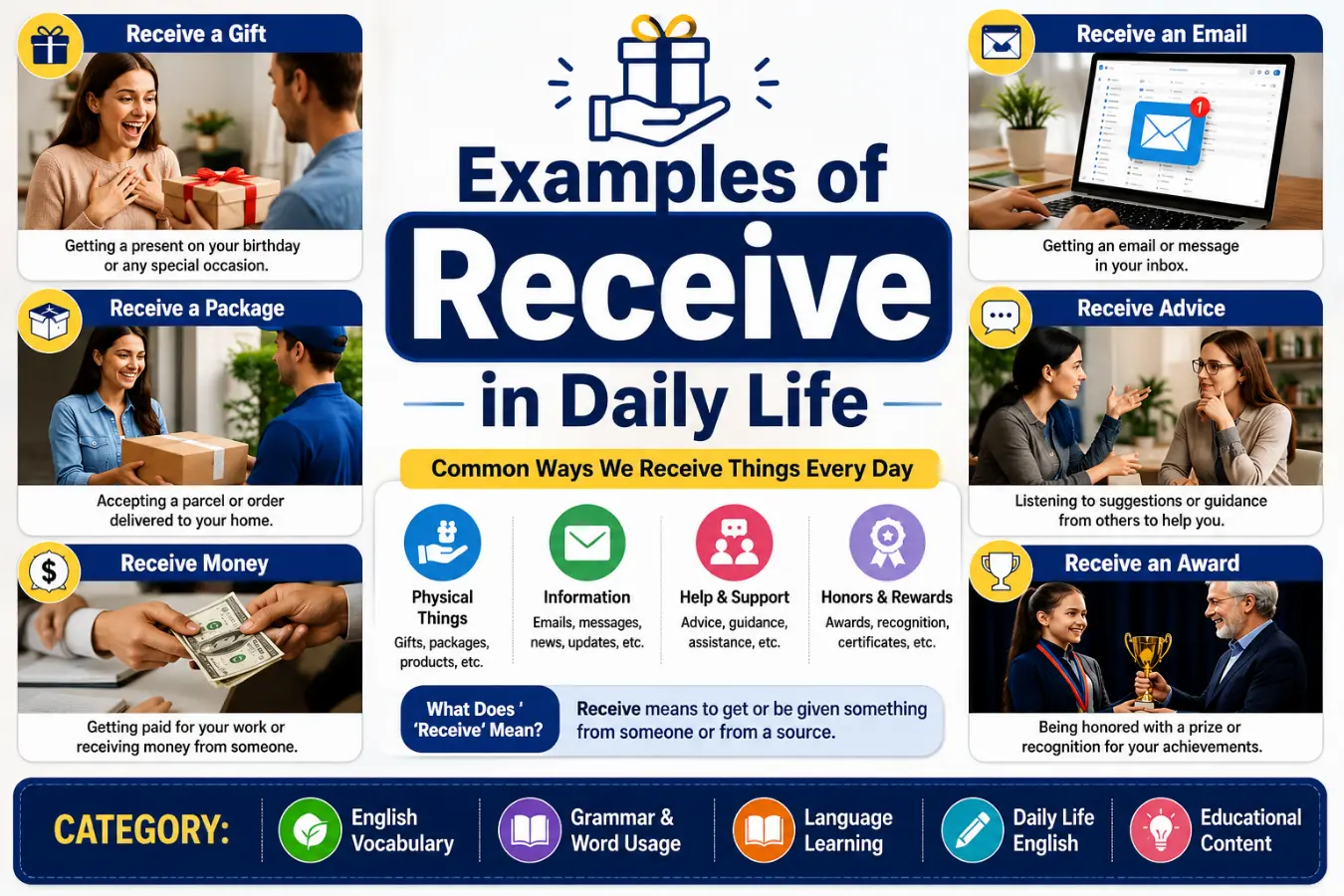
Examples of Receive in Daily Life
You probably use the word receive every day.
School
- Students receive grades.
- Teachers receive assignments.
Work
- Employees receive salaries.
- Companies receive orders.
Home
- Families receive mail.
- Children receive presents.
Online
- Users receive notifications.
- Customers receive confirmation emails.
The word appears in many everyday situations.
Common Mistakes People Make
Many writers make similar spelling errors.
Mistake 1: Writing Recieve
❌ I will recieve the package tomorrow.
✅ I will receive the package tomorrow.
Mistake 2: Typing Too Fast
People often reverse the letters without noticing.
Mistake 3: Ignoring Spell Check
Modern tools often highlight mistakes. However, writers sometimes overlook warnings.
Mistake 4: Confusing Similar Words
Words like believe and achieve may cause confusion because they use ie.
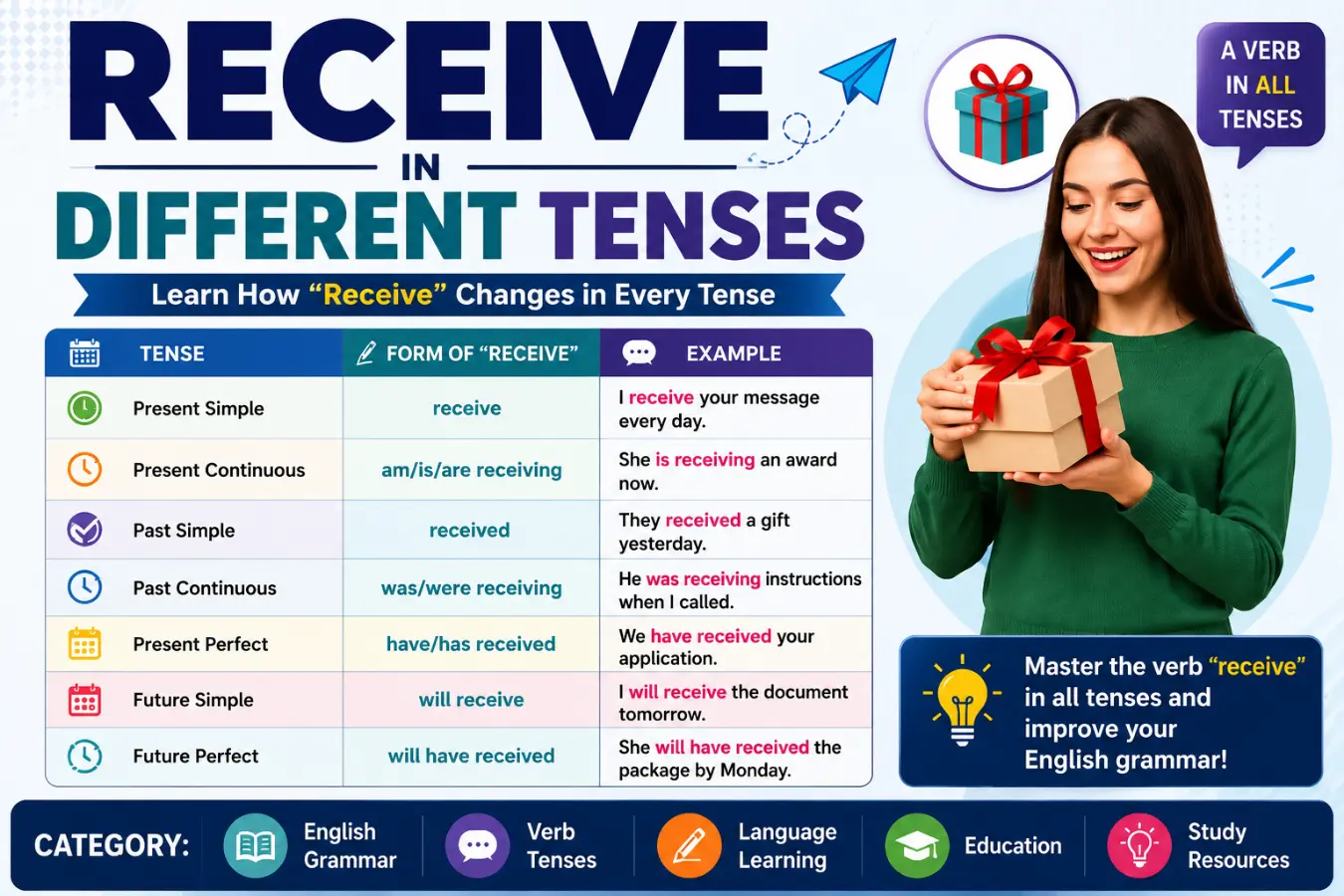
Receive in Different Tenses
Understanding verb forms improves writing accuracy.
| Tense | Form |
| Base Form | Receive |
| Past Tense | Received |
| Past Participle | Received |
| Present Participle | Receiving |
| Third Person Singular | Receives |
Examples
- I receive many emails.
- She receives good feedback.
- We received the package.
- They are receiving guests.
Synonyms of Receive
Using synonyms improves writing variety.
Common Synonyms
- Get
- Accept
- Obtain
- Acquire
- Gain
- Collect
- Take
- Welcome
Examples
Instead of:
- I received a gift.
You can write:
- I got a gift.
- I accepted a gift.
- I obtained a gift.
Choose the synonym that fits the context..
Real-Life Scenarios Using Receive
Scenario 1: Job Offer
You receive a job offer through email.
Correct:
I received a job offer today.
Incorrect:
I recieved a job offer today.
Scenario 2: Online Shopping
You receive a package at your home.
Correct:
We received the package this morning.
Scenario 3: School Results
Students receive exam results.
Correct:
She received excellent grades.
These examples show how often the word appears in daily communication.
Expert Insights: Why Correct Spelling Matters
Correct spelling improves credibility.
Readers trust content that looks professional. Small spelling mistakes can reduce confidence in your writing.
Benefits of Correct Spelling
- Improves communication
- Creates a professional image
- Helps academic success
- Enhances SEO content quality
- Reduces misunderstandings
Professional writers, teachers, and editors always recommend checking common spelling errors before publishing.
Tips to Never Misspell Receive Again
Use Spell Check
Most writing tools detect spelling errors automatically.
Read Your Writing Aloud
Reading slowly helps spot mistakes.
Memorize Common Exceptions
Remember that receive follows the “except after C” rule.
Practice Frequently
Write the word several times:
- receive
- receive
- receive
Repetition improves memory.
Keep a Personal Word List
Save commonly misspelled words for review.
Frequently Asked Questions (FAQs)
1. Is recieve a real word?
No. Recieve is an incorrect spelling.
2. Which is correct, recieve or receive?
Receive is the correct spelling.
3. What does receive mean?
Receive means to get, accept, or obtain something.
4. Why is receive spelled with “ei”?
It follows the spelling rule: I before E except after C.
5. How do I remember the spelling of receive?
Remember that the letter c comes before ei.
6. Is receive used in formal writing?
Yes. It is commonly used in business, academic, and professional writing.
7. What is the past tense of receive?
The past tense is received.
8. Can receive mean accept?
Yes. In many situations, receive means to accept something given or sent.
Conclusion
The debate over recieve or receive has a simple answer. Receive is the only correct spelling, while recieve is always incorrect. The word means to get, accept, or obtain something. Although many people make this mistake, remembering the rule “I before E except after C” can help you spell it correctly every time.
Whether you write emails, school assignments, blog posts, or business documents, using the correct spelling improves your credibility and communication. Practice the word regularly, use spell-check tools, and review common spelling rules. With these simple habits, you will never confuse recieve and receive again.