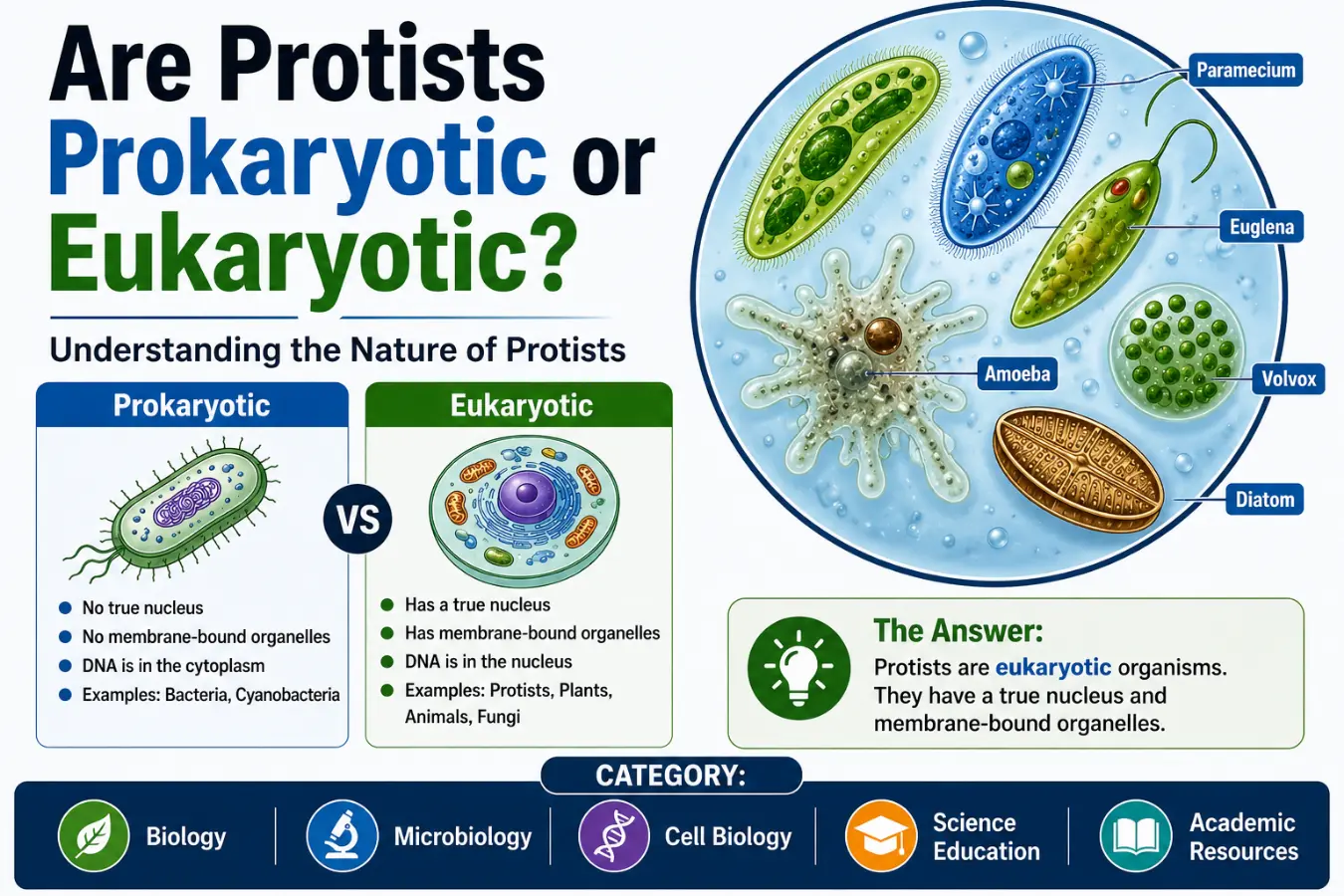
Are protists prokaryotic or eukaryotic? The simple answer is that protists are eukaryotic organisms. They have cells with a true nucleus and other specialized structures.
Many students confuse protists with bacteria because some protists are tiny and live in water. However, protists belong to a completely different group. Their cells are more complex than prokaryotic cells.
Learning about protists helps you understand how living things are classified. It also makes it easier to distinguish between bacteria, plants, animals, and fungi.
In this guide, you will learn what protists are, why they are eukaryotic, how they compare to prokaryotes, and where you can find them in daily life. The explanations use simple language and real-life examples to make the topic easy to understand.
Quick Summary Box
- Protists are eukaryotic organisms.
- They have a true nucleus inside their cells.
- Their cells contain membrane-bound organelles.
- Protists are not bacteria.
- Bacteria are prokaryotic, while protists are eukaryotic.
- Examples include amoeba, paramecium, and algae.
- Most protists live in water or moist environments.
- Protists can be single-celled or multicellular.
- They belong to the Kingdom Protista.
What Are Protists?
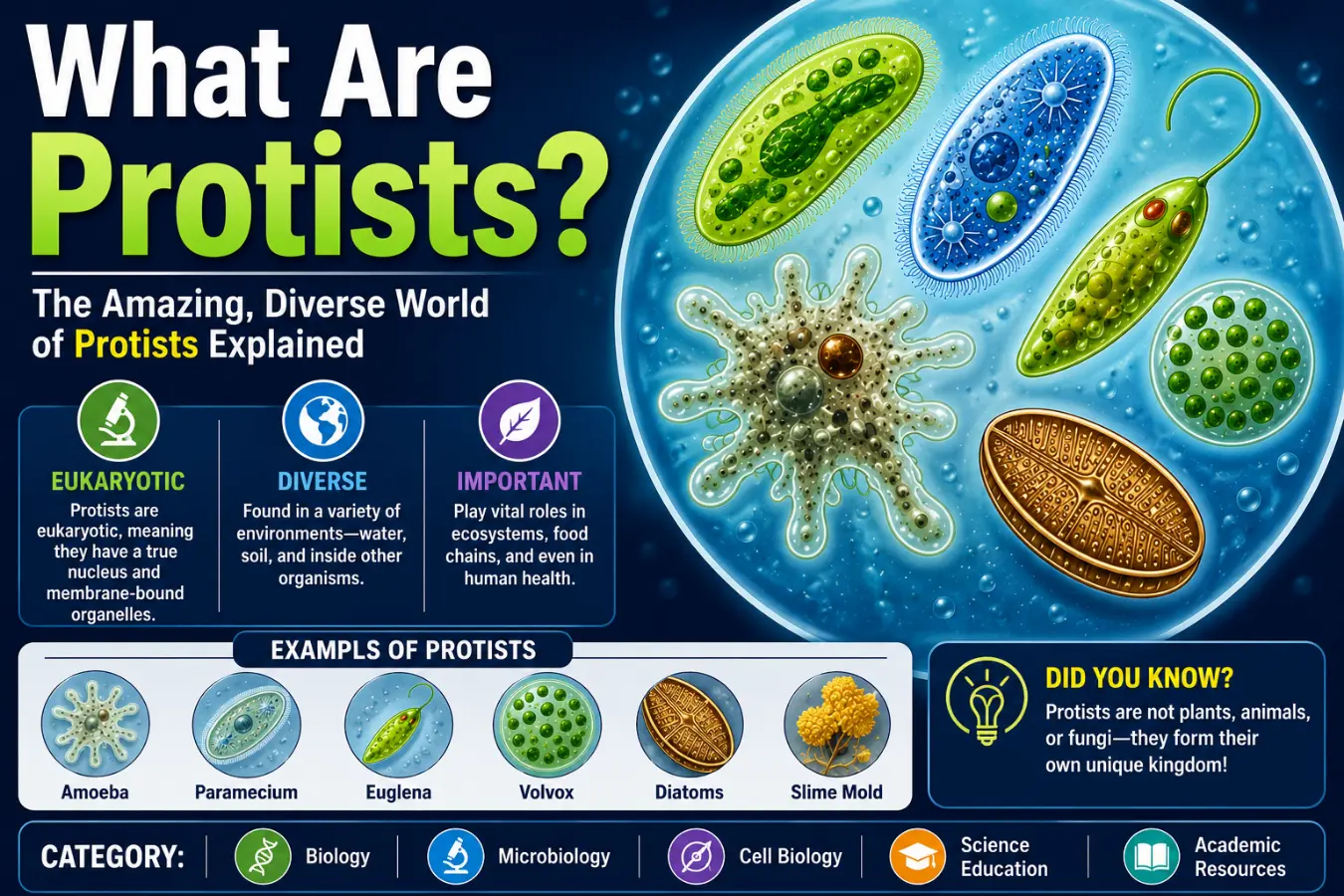
Protists are a diverse group of organisms that do not fit into the plant, animal, or fungi kingdoms.
Most protists are microscopic. However, some types of algae can grow very large.
Protists can:
- Move from place to place
- Make their own food
- Absorb nutrients from their environment
- Live alone or in groups
Scientists place them in the Kingdom Protista because they share similar cell structures.
Examples of protists include:
- Amoeba
- Paramecium
- Euglena
- Diatoms
- Kelp
Are Protists Prokaryotic or Eukaryotic?
Protists are eukaryotic.
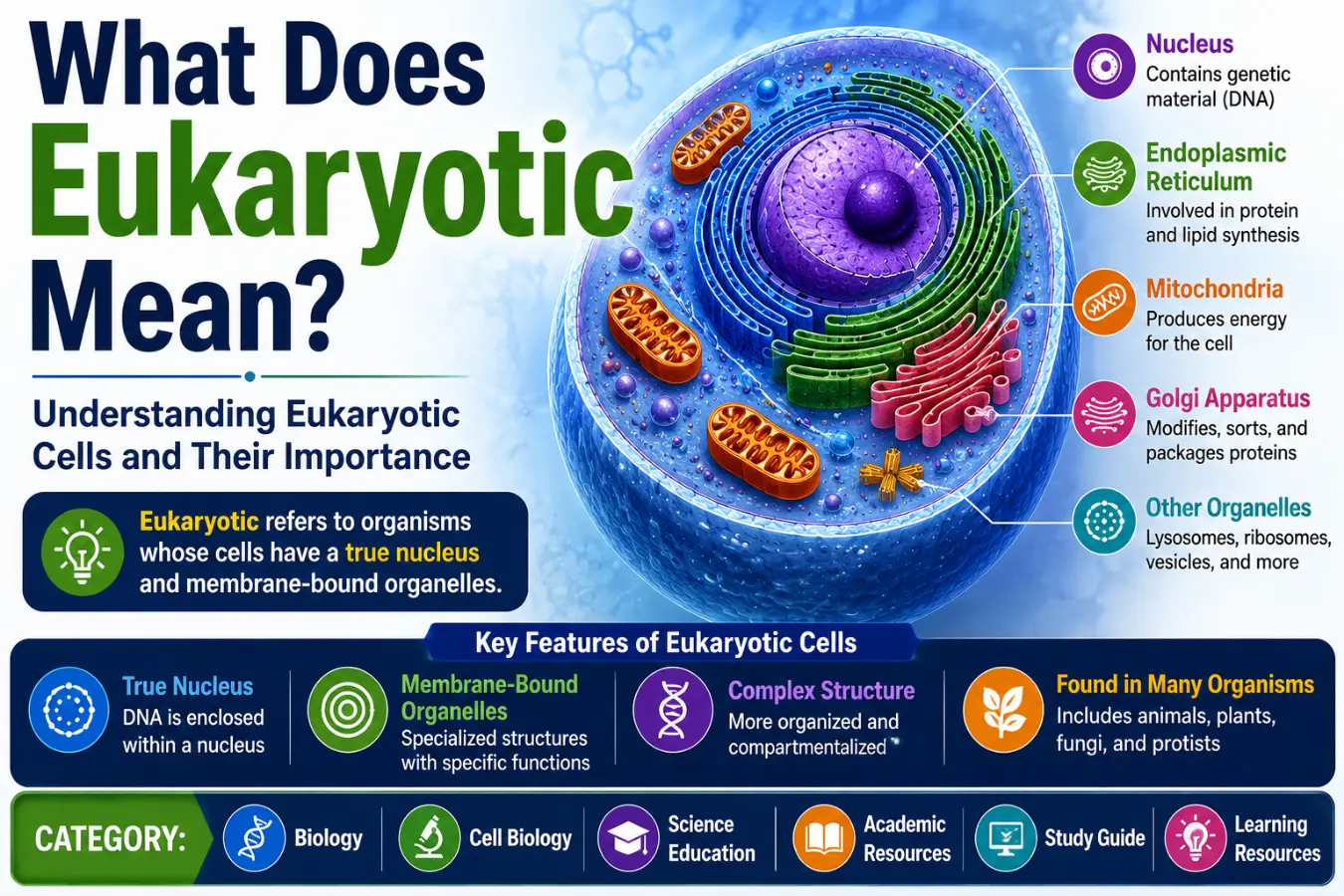
A eukaryotic cell contains:
- A nucleus
- Mitochondria
- Endoplasmic reticulum
- Golgi apparatus
- Other membrane-bound organelles
These structures help the cell perform complex functions.
Prokaryotic cells do not have these features.
Because protists have a nucleus and organelles, scientists classify them as eukaryotes.
Featured Snippet Answer
Protists are eukaryotic organisms because their cells contain a true nucleus and membrane-bound organelles. Unlike prokaryotes such as bacteria, protists have complex cell structures that support specialized functions.
What Does Eukaryotic Mean?
The word “eukaryotic” means “true nucleus.”
In eukaryotic cells:
- DNA stays inside a nucleus.
- Organelles perform specific tasks.
- Cells are generally larger.
- Cell organization is more complex.
Humans, plants, animals, fungi, and protists are all eukaryotes.
This shared feature connects protists with other complex organisms.
What Does Prokaryotic Mean?
Prokaryotic organisms have simpler cells.
Their DNA floats freely inside the cell.
They do not have:
- A nucleus
- Mitochondria
- Golgi apparatus
- Endoplasmic reticulum
Examples of prokaryotes include:
- Bacteria
- Archaea
These organisms are usually smaller than eukaryotic cells.
Protists vs Prokaryotes: Comparison Table
| Feature | Protists | Prokaryotes |
| Cell Type | Eukaryotic | Prokaryotic |
| Nucleus | Present | Absent |
| Organelles | Present | Absent |
| Cell Size | Larger | Smaller |
| DNA Location | Inside nucleus | Free in cell |
| Complexity | More complex | Simpler |
| Examples | Amoeba, Euglena, Algae | Bacteria, Archaea |
| Kingdom | Protista | Bacteria and Archaea |
This table clearly shows why protists are not prokaryotic.
Why Are Protists Classified as Eukaryotes?
Scientists classify organisms based on cell structure.
Protists meet all major eukaryotic requirements.
They have:
1. A True Nucleus
The nucleus protects genetic material.
2. Membrane-Bound Organelles
These structures perform specialized functions.
3. Complex Cell Organization
Protist cells contain many working parts.
4. Advanced Cellular Processes
Protists use complex systems for energy production and reproduction.
These characteristics make them eukaryotic.
Real-Life Examples of Eukaryotic Protists
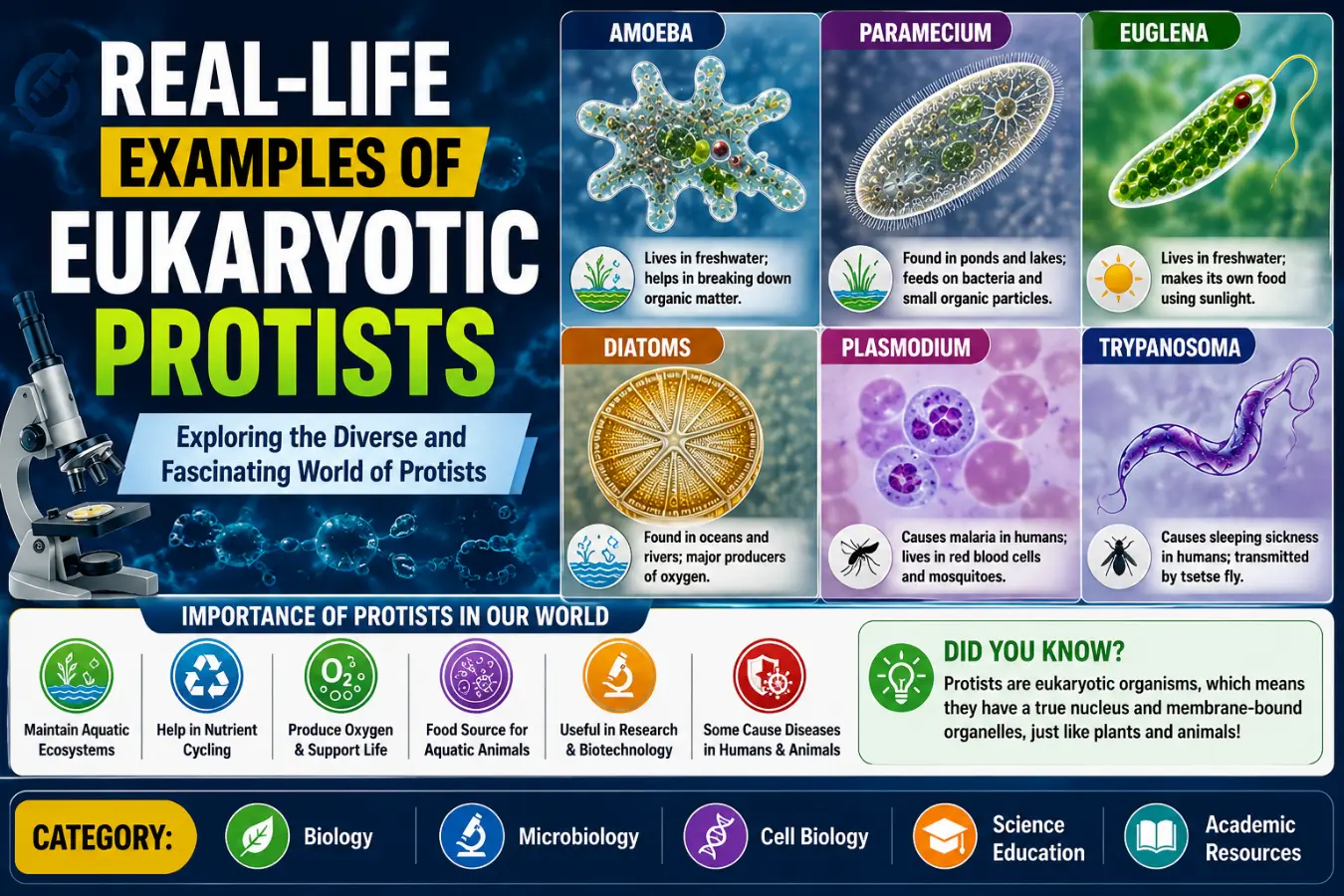
Amoeba
An amoeba changes shape while moving.
It uses pseudopodia, or “false feet,” to travel and catch food.
Paramecium
Paramecium moves using tiny hair-like structures called cilia.
It lives in ponds and freshwater habitats.
Euglena
Euglena shows both plant-like and animal-like traits.
It can make food through photosynthesis.
Algae
Many algae are protists.
They produce oxygen and support aquatic ecosystems.
These organisms all contain eukaryotic cells.
Where Do Protists Live?
Protists need moisture to survive.
Common habitats include:
- Ponds
- Lakes
- Oceans
- Wet soil
- Swamps
- Inside other organisms
Some protists are beneficial.
Others can cause disease.
Their environments vary greatly depending on the species.
How Protists Differ From Plants, Animals, and Fungi
Protists share traits with other kingdoms.
However, they remain distinct.
| Group | Main Characteristic |
| Protists | Mostly simple eukaryotes |
| Plants | Photosynthetic multicellular organisms |
| Animals | Multicellular consumers |
| Fungi | Absorb nutrients from surroundings |
Protists often display characteristics from more than one kingdom.
This diversity makes them unique.
Common Mistakes About Protists
Many learners misunderstand protists.
Here are common mistakes:
Mistake 1: Thinking Protists Are Bacteria
Bacteria are prokaryotic.
Protists are eukaryotic.
Mistake 2: Assuming All Protists Are Single-Celled
Some protists are multicellular.
Large algae are examples.
Mistake 3: Believing Protists Are Plants
Only some protists perform photosynthesis.
Many do not.
Mistake 4: Ignoring Cell Structure
The nucleus is the key feature that identifies protists as eukaryotes.
Easy Trick to Remember Protists Are Eukaryotic
Use this memory trick:
“P for Protist, P for Possesses a nucleus.”
Although the words do not directly match, this phrase helps students remember that protists contain a nucleus.
Another shortcut:
If it has a nucleus, it is eukaryotic.
Since protists have nuclei, they are eukaryotes.
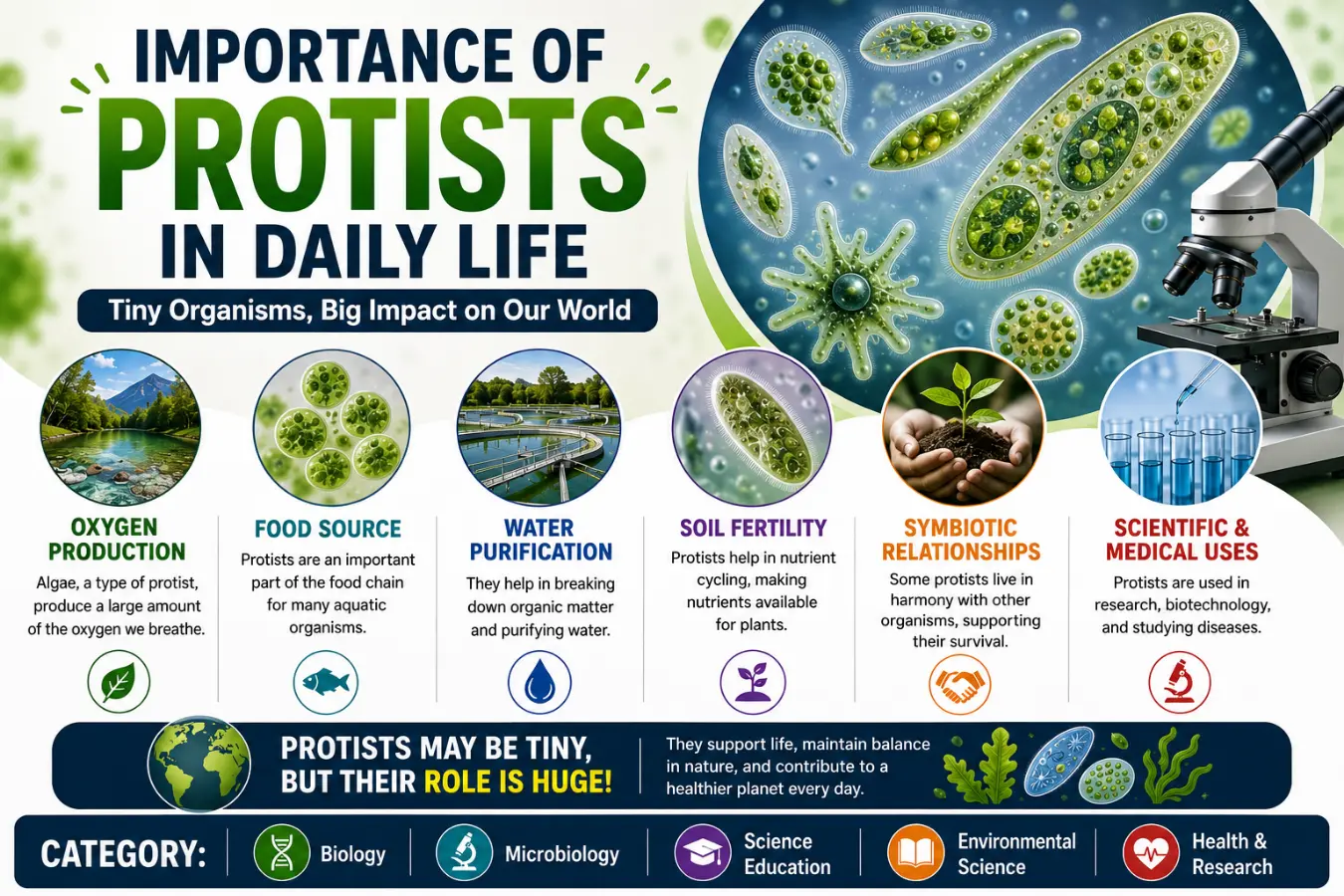
Importance of Protists in Daily Life
Protists affect everyday life more than many people realize.
Oxygen Production
Many algae produce oxygen.
Food Chains
Protists form the base of many aquatic food webs.
Scientific Research
Researchers study protists to understand cell biology.
Medicine
Some disease-causing organisms are protists.
Examples include malaria parasites.
Environmental Balance
Protists help recycle nutrients in ecosystems.
Their role is essential for life on Earth.
Expert Insights: Why This Topic Matters
Understanding whether protists are prokaryotic or eukaryotic builds a strong foundation in biology.
Students often encounter this question in school exams and competitive tests.
Experts recommend focusing on cell structure first. The presence of a nucleus immediately identifies a cell as eukaryotic.
When comparing organisms, always examine:
- Nucleus presence
- Organelles
- Cell complexity
These features make classification easier and more accurate.
A strong understanding of protists also helps when studying genetics, microbiology, ecology, and evolution.
Frequently Asked Questions (FAQs)
Are protists prokaryotic or eukaryotic?
Protists are eukaryotic because their cells contain a true nucleus and membrane-bound organelles.
Do protists have a nucleus?
Yes. All protists have a nucleus.
Are bacteria protists?
No. Bacteria are prokaryotic organisms, while protists are eukaryotic.
Is amoeba a protist?
Yes. Amoeba is a classic example of a protist.
Can protists be multicellular?
Yes. Some algae are multicellular protists.
Why are protists not classified as prokaryotes?
They possess nuclei and organelles, which prokaryotes lack.
Are all protists microscopic?
No. Some algae grow large enough to be seen easily.
What kingdom do protists belong to?
Protists belong to the Kingdom Protista.
Conclusion
So, are protists prokaryotic or eukaryotic? The answer is clear: protists are eukaryotic organisms. Their cells contain a true nucleus and membrane-bound organelles, making them much more complex than prokaryotes. This key feature separates protists from bacteria and archaea.
Protists include organisms such as amoeba, paramecium, euglena, and many types of algae. They play important roles in ecosystems, food chains, oxygen production, and scientific research. Understanding their classification helps students and biology enthusiasts grasp the basics of life science.
The easiest takeaway is simple: if an organism has a nucleus, it is eukaryotic. Since protists have nuclei, they are eukaryotes.