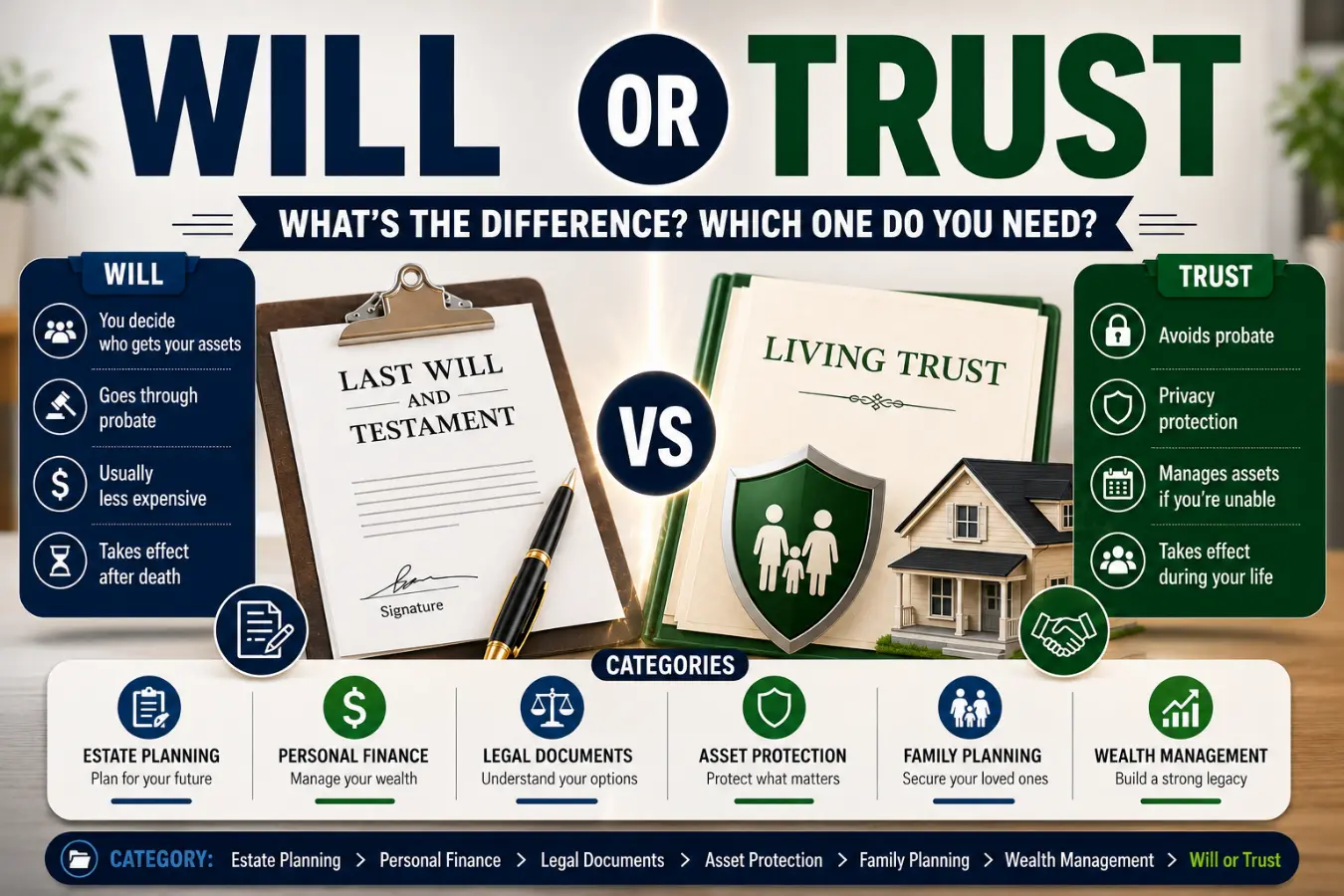
Will or trust is a common question for anyone planning their estate. Both tools help protect your assets and loved ones. However, they work in different ways.
A will explains how you want your property distributed after death. A trust holds and manages assets for beneficiaries. Each option offers unique benefits.
Many people think a will and a trust do the same thing. That is not true. Understanding the differences can help you make better decisions.
This guide explains wills and trusts in simple terms. You will learn how they work, their pros and cons, and when to use each one. By the end, you will know which option may fit your needs best.
Quick Summary Box
Will or Trust at a Glance
- A will is a legal document that states your final wishes.
- A trust is a legal arrangement that manages assets for beneficiaries.
- A will takes effect after death.
- A trust can take effect during your lifetime.
- Trusts often help avoid probate.
- Wills usually go through probate court.
- A trust offers more privacy than a will.
- Many estate plans use both a will and a trust.
- The best choice depends on your assets and goals.
What Is a Will?
A will is a legal document that explains what happens to your property after you die.
It can:
- Name beneficiaries
- Appoint guardians for children
- Distribute assets
- Specify funeral wishes
- Name an executor
The executor follows the instructions in the will and manages the estate process.
Simple Example
Sarah owns a house, savings account, and car. Her will states that her house goes to her daughter and her car goes to her son.
What Is a Trust?
A trust is a legal arrangement that holds assets for beneficiaries.
A trustee manages the assets according to the trust’s instructions.
Trusts can become active while you are alive or after your death.
Simple Example
John places his home and investments into a living trust. When he dies, the trustee transfers the assets directly to his children.
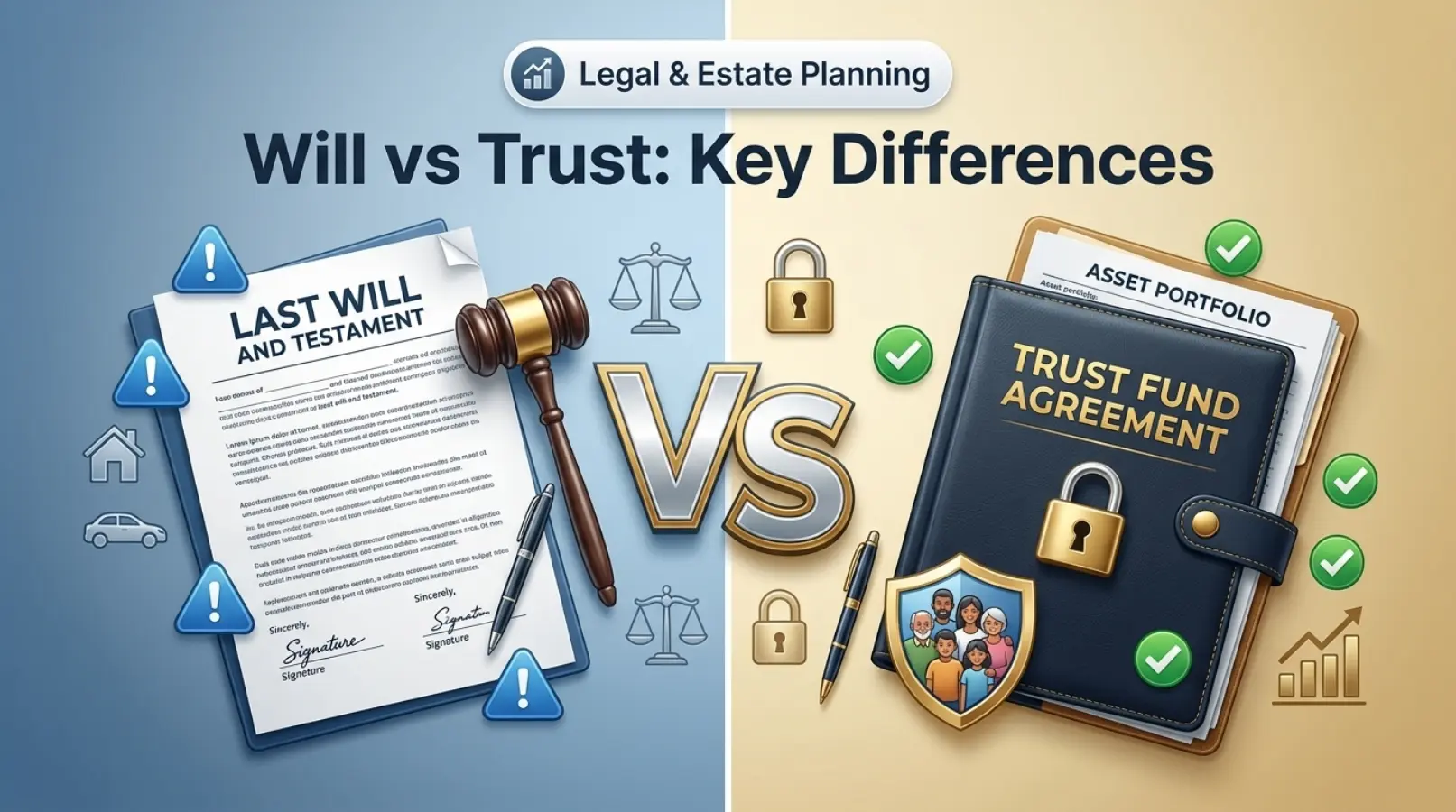
Will vs Trust: Key Differences
| Feature | Will | Trust |
| Takes Effect | After death | During life or after death |
| Probate Required | Usually yes | Often no |
| Privacy | Public record | Private |
| Cost to Create | Lower | Higher |
| Asset Management | No | Yes |
| Controls Minor Inheritance | Limited | Strong control |
| Court Involvement | More | Less |
| Complexity | Simpler | More complex |
How Does a Will Work?
A will becomes active after death.
The probate court reviews the document. Then the executor distributes assets according to the instructions.
Main Steps
- Person dies
- Will enters probate
- Court validates the will
- Debts are paid
- Assets are distributed
This process can take months or longer depending on the estate.
How Does a Trust Work?
A trust works differently.
Assets move into the trust while the owner is alive. The trustee manages those assets according to trust instructions.
Main Steps
- Create the trust
- Transfer assets into it
- Trustee manages assets
- Beneficiaries receive assets according to instructions
This process often avoids probate.
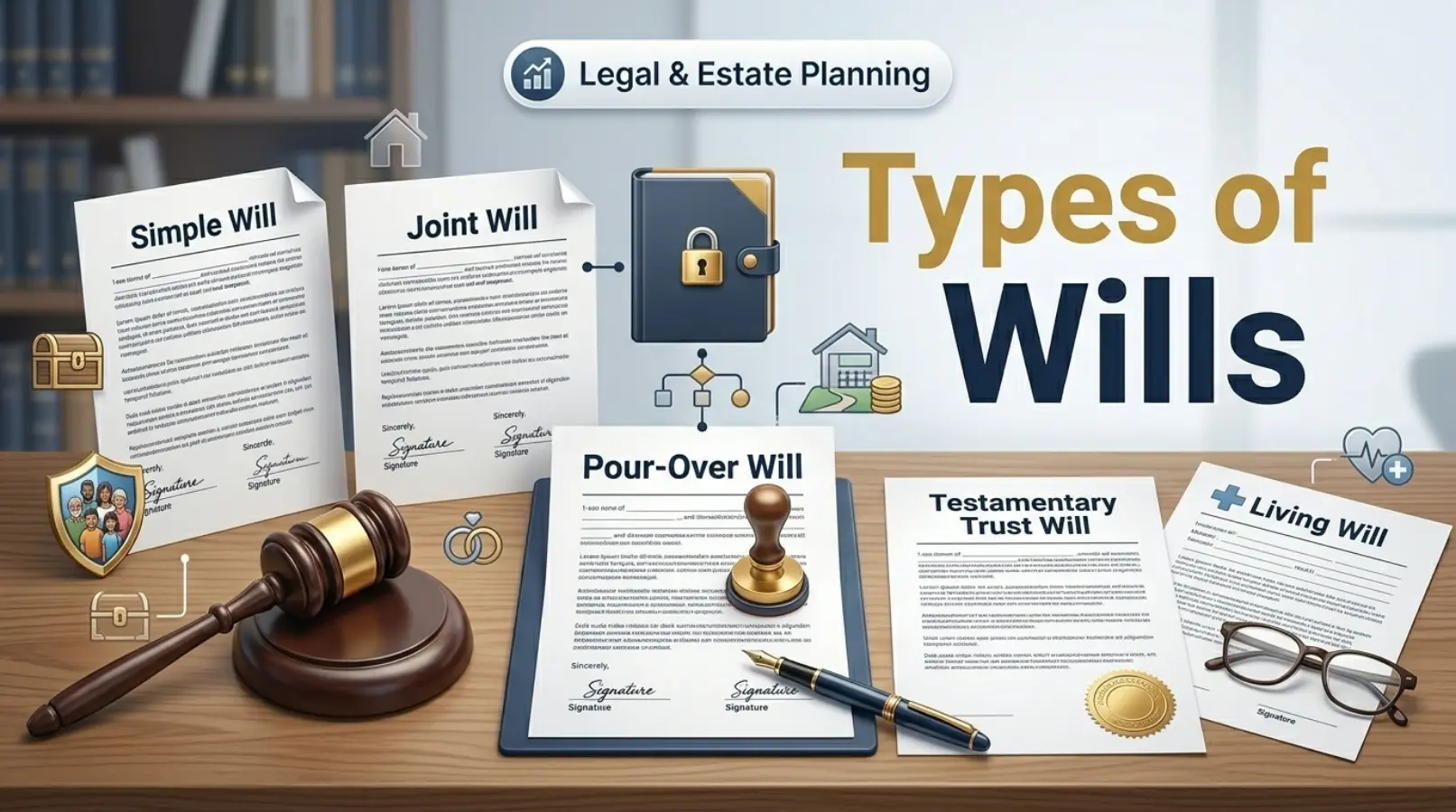
Types of Wills
Several types of wills exist.
Simple Will
Basic instructions for distributing assets.
Testamentary Will
Creates a trust after death.
Joint Will
Used by two people, often spouses.
Living Will
Provides healthcare instructions if you become unable to communicate.
Types of Trusts
Trusts come in many forms.
Revocable Living Trust
You can change or cancel it.
Irrevocable Trust
Changes are difficult after creation.
Special Needs Trust
Supports a beneficiary with disabilities.
Charitable Trust
Benefits charities and causes.
Asset Protection Trust
Helps protect assets from certain risks.
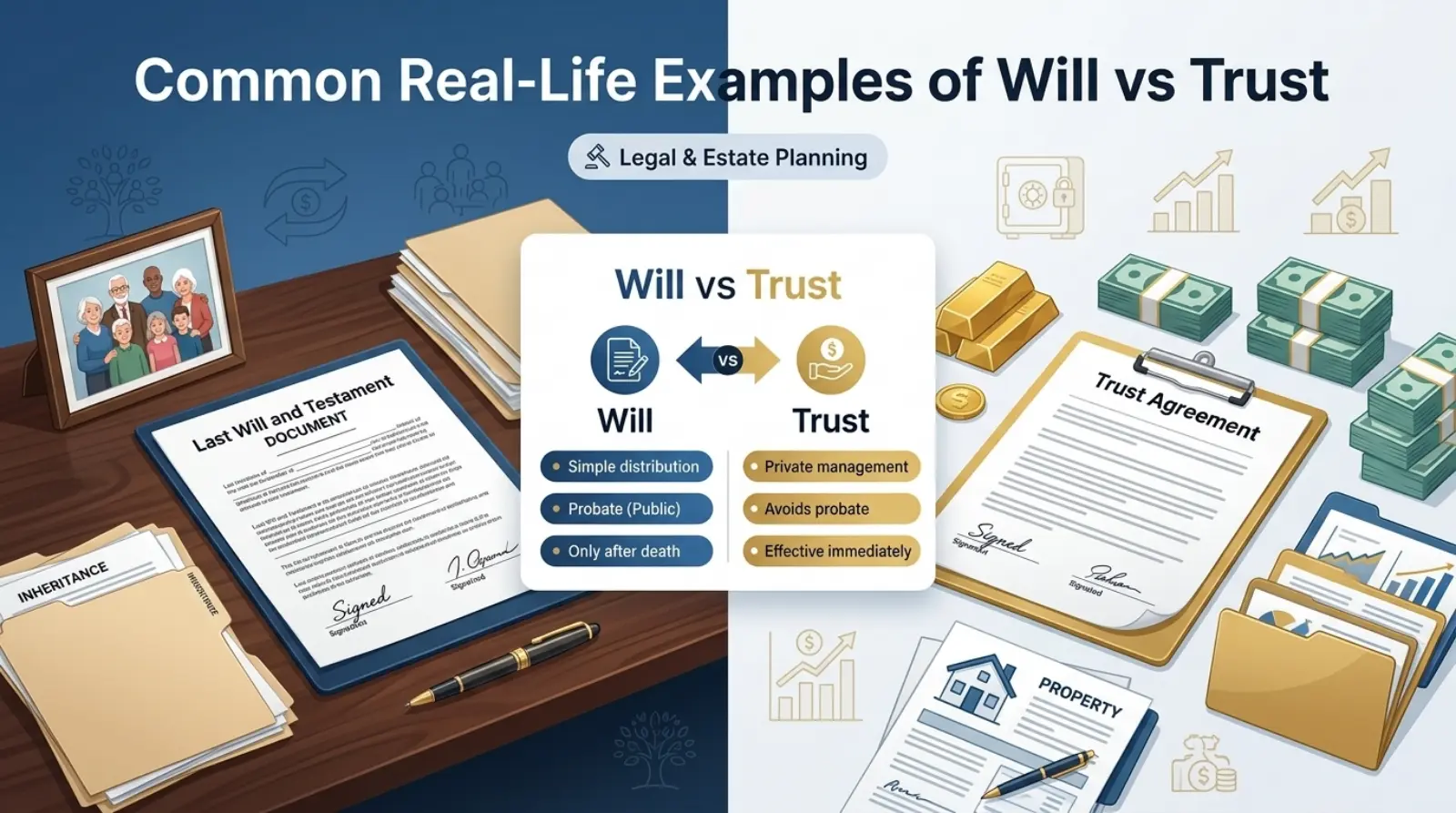
Real-Life Examples of Will vs Trust
Example 1: Young Family
Mark and Lisa have two young children.
A will helps name guardians if both parents die.
Example 2: Large Estate
Robert owns several properties.
A trust helps transfer assets smoothly and avoid probate.
Example 3: Business Owner
Emily owns a company.
A trust helps ensure business continuity after death.
Advantages of a Will
Lower Cost
Wills are generally cheaper to create.
Easy to Understand
Most people find wills straightforward.
Names Guardians
A will can appoint guardians for minor children.
Flexible Updates
You can update it when life changes.
Advantages of a Trust
Avoids Probate
Beneficiaries often receive assets faster.
Maintains Privacy
Trust details remain private.
Asset Management
A trustee can manage assets if you become incapacitated.
Greater Control
You can set detailed rules for distributions.
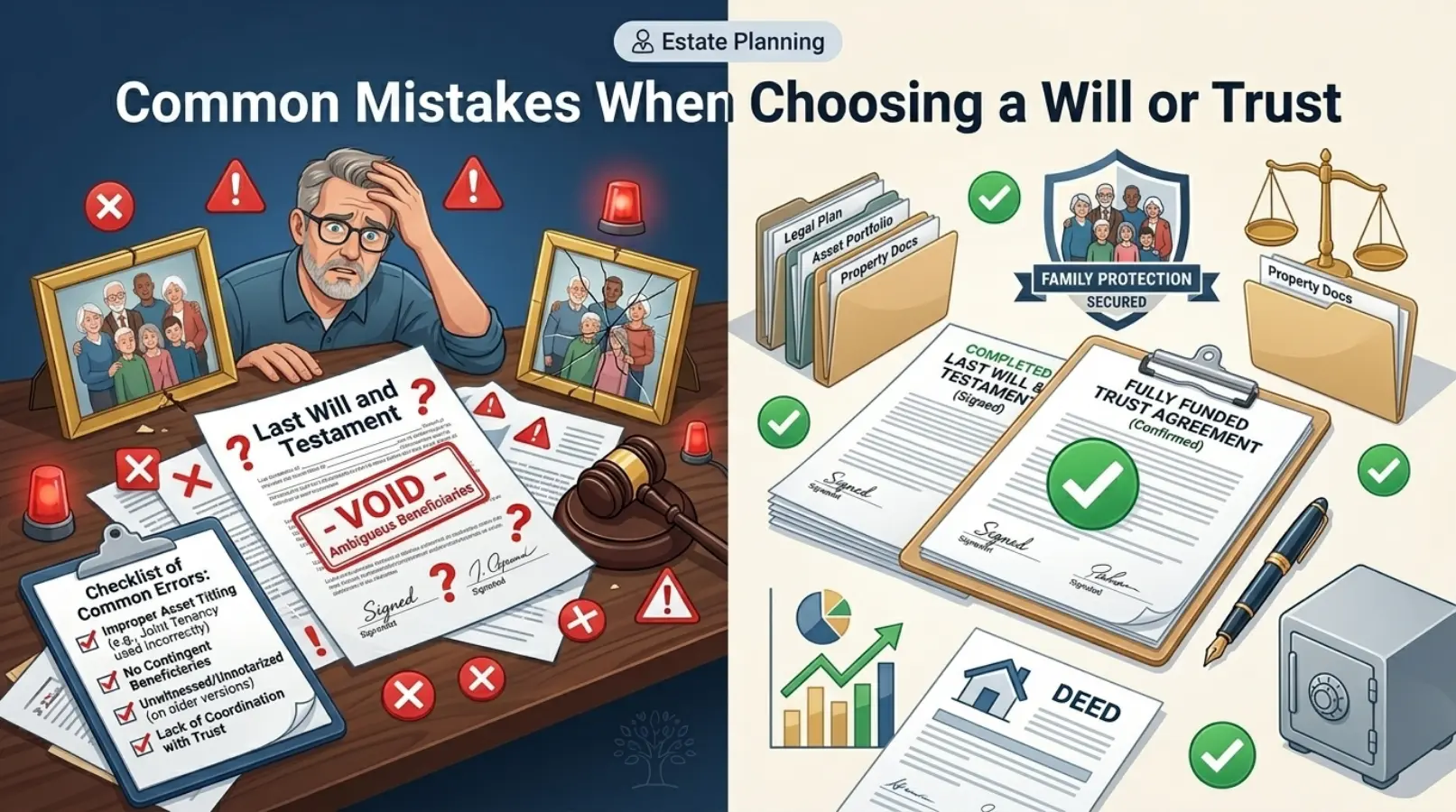
Common Mistakes When Choosing a Will or Trust
Many people make avoidable mistakes.
Not Having Any Estate Plan
This is the biggest mistake.
Forgetting to Update Documents
Marriage, divorce, and births require updates.
Choosing the Wrong Executor
Pick someone responsible and trustworthy.
Not Funding a Trust
Assets must be transferred into the trust.
Ignoring State Laws
Estate laws vary by location.
Will or Trust: Which One Is Better?
There is no single answer.
A will may be enough if:
- You have a simple estate
- You want lower costs
- You need guardian designations
A trust may be better if:
- You own significant assets
- You want privacy
- You want to avoid probate
- You need ongoing asset management
Many experts recommend using both.
Estate Planning Tips
Start Early
Planning now prevents future problems.
Review Documents Regularly
Update plans every few years.
Organize Important Records
Keep financial documents accessible.
Communicate With Family
Clear communication reduces disputes.
Seek Professional Advice
Estate planning professionals can help create the right strategy.
Expert Insights
Estate planning protects more than money.
It protects families, reduces confusion, and honors your wishes.
Many people delay estate planning because they think it is only for the wealthy. That belief is incorrect.
Even modest estates benefit from clear instructions.
Experts often suggest reviewing estate plans after major life events such as marriage, divorce, childbirth, or retirement.
A well-designed estate plan can save time, reduce stress, and prevent costly legal disputes.
Frequently Asked Questions (FAQs)
Is a trust better than a will?
Not always. The best option depends on your goals, assets, and family situation.
Can I have both a will and a trust?
Yes. Many people use both for complete estate planning.
Does a trust avoid probate?
In many cases, yes. Properly funded trusts often bypass probate.
Is a will cheaper than a trust?
Usually yes. Creating a will often costs less.
Who manages a trust?
A trustee manages trust assets according to the trust document.
Can a trust protect privacy?
Yes. Trusts generally remain private, unlike wills.
What happens if I die without a will?
State laws determine how assets are distributed.
When should I create an estate plan?
As soon as you own assets or have dependents.
Conclusion
Understanding will or trust options is essential for effective estate planning. A will provides instructions for distributing assets and naming guardians. A trust offers greater control, privacy, and potential probate avoidance.
Neither option is automatically better. The right choice depends on your financial situation, family needs, and long-term goals. Some people only need a will, while others benefit from a trust. Many families choose to use both.
The most important step is creating an estate plan before it becomes urgent. A clear plan protects your assets, supports your loved ones, and ensures your wishes are followed. Taking action today can provide peace of mind for years to come.