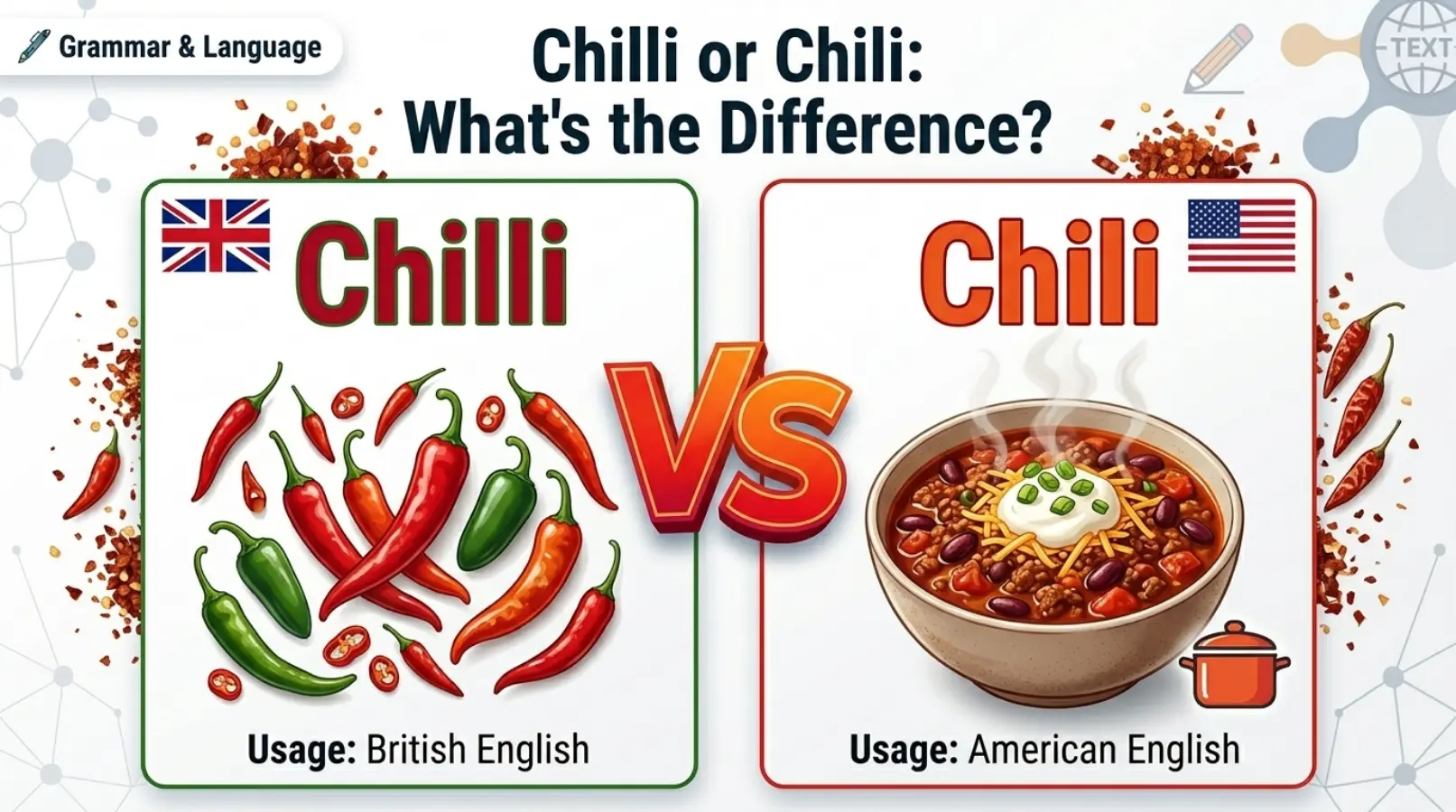
Chilli or chili is a common spelling question that confuses many writers. Both words refer to the same spicy pepper. However, the correct spelling often depends on where you live and who you are writing for.
Many people see chili in American recipes and chilli in British publications. This creates confusion, especially for students, bloggers, and business writers.
The good news is that both spellings are correct. The key is knowing when to use each one.
In this guide, you will learn the difference between chilli and chili, see real-life examples, avoid common mistakes, and discover which spelling fits your audience best.
Quick Summary Box
- Chili and chilli have the same meaning.
- Both words refer to spicy peppers.
- Chili is the preferred spelling in American English.
- Chilli is the preferred spelling in British English.
- Neither spelling is wrong.
- Choose one spelling and stay consistent.
- Match the spelling to your target audience.
What Does Chilli or Chili Mean?
The words chilli and chili describe a spicy fruit from plants belonging to the Capsicum family.
People use these peppers in foods around the world. They add heat, flavor, and color to dishes.
Examples:
- Chili powder adds spice to soup.
- Fresh chilli improves the taste of curry.
- Many sauces contain red chili peppers.
Although the spelling changes, the meaning stays exactly the same.
Chilli or Chili: Which Spelling Is Correct?
Both spellings are correct.
The difference comes from regional English preferences.
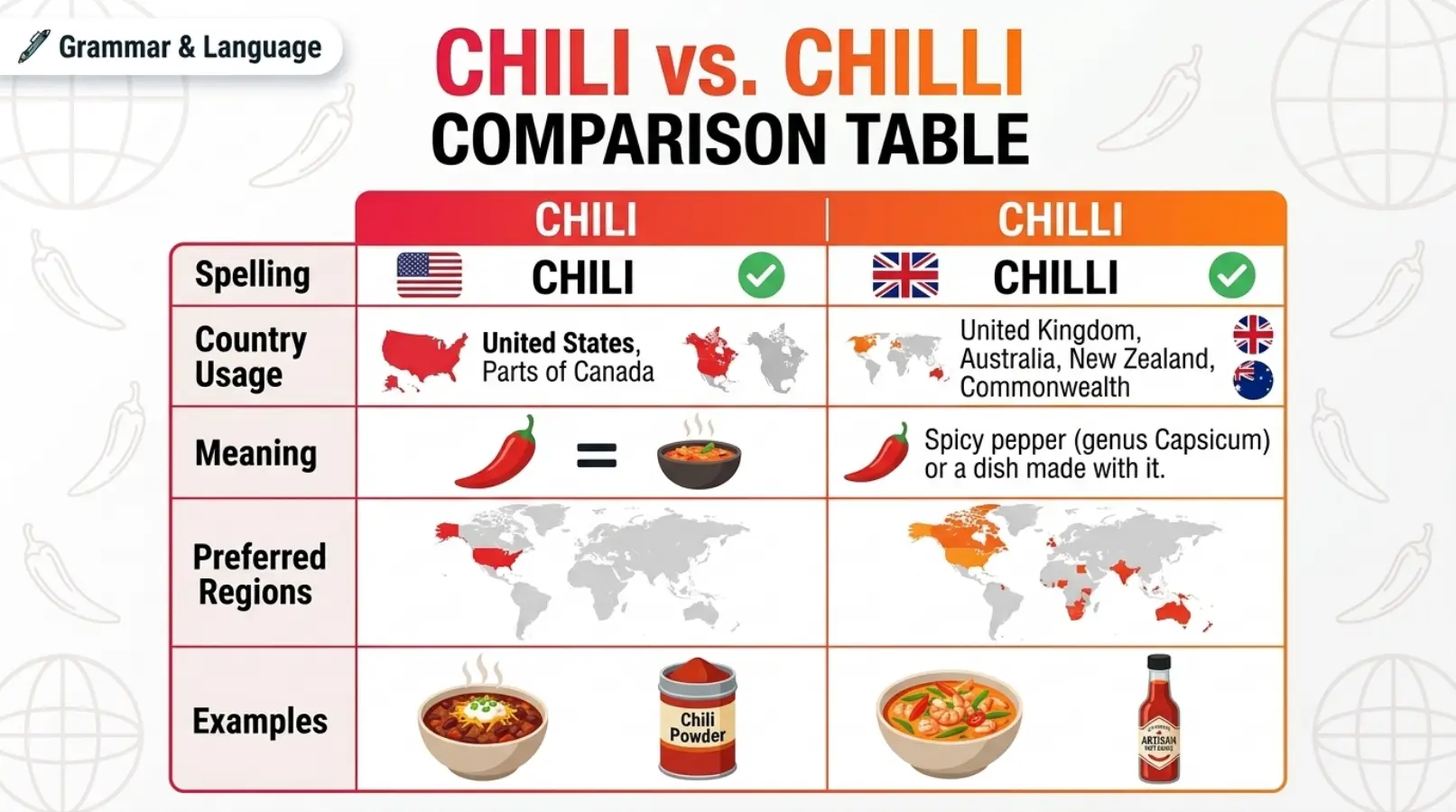
| Spelling | Common Region | Example |
| Chili | United States | Chili powder |
| Chilli | United Kingdom, Australia, New Zealand | Chilli sauce |
If you write for an American audience, use chili.
If you write for a British audience, use chilli.
Consistency matters more than the spelling choice itself.
Why Are There Two Different Spellings?
English often changes spellings based on location.
For example:
| American English | British English |
| Color | Colour |
| Flavor | Flavour |
| Traveler | Traveller |
| Chili | Chilli |
Language evolves differently in different countries. Over time, both versions became accepted.
Today, dictionaries recognize both spellings.
Chili vs Chilli Comparison Table
| Feature | Chili | Chilli |
| Meaning | Spicy pepper | Spicy pepper |
| Correct? | Yes | Yes |
| American English | Preferred | Less common |
| British English | Less common | Preferred |
| Used in US recipes | Very common | Rare |
| Used in UK recipes | Less common | Very common |
Quick Answer
- Writing for Americans? Use chili.
- Writing for British readers? Use chilli.
How Americans Use the Word Chili
In the United States, chili is the standard spelling.
Americans use it for peppers, powders, sauces, and recipes.
Examples:
- I added chili flakes to my pizza.
- This chili sauce is very hot.
- The recipe calls for dried chili peppers.
Americans also use chili to describe a famous dish called chili con carne.
Example:
- We cooked a large pot of chili for dinner.
How British English Uses Chilli
British English usually prefers chilli with a double “l.”
Examples:
- Add one chopped chilli to the curry.
- This chilli sauce tastes amazing.
- Red chillies are hotter than green ones.
Many UK food brands, cookbooks, and websites follow this spelling.
Therefore, British readers often expect to see chilli instead of chili.
Real-Life Examples of Chilli and Chili
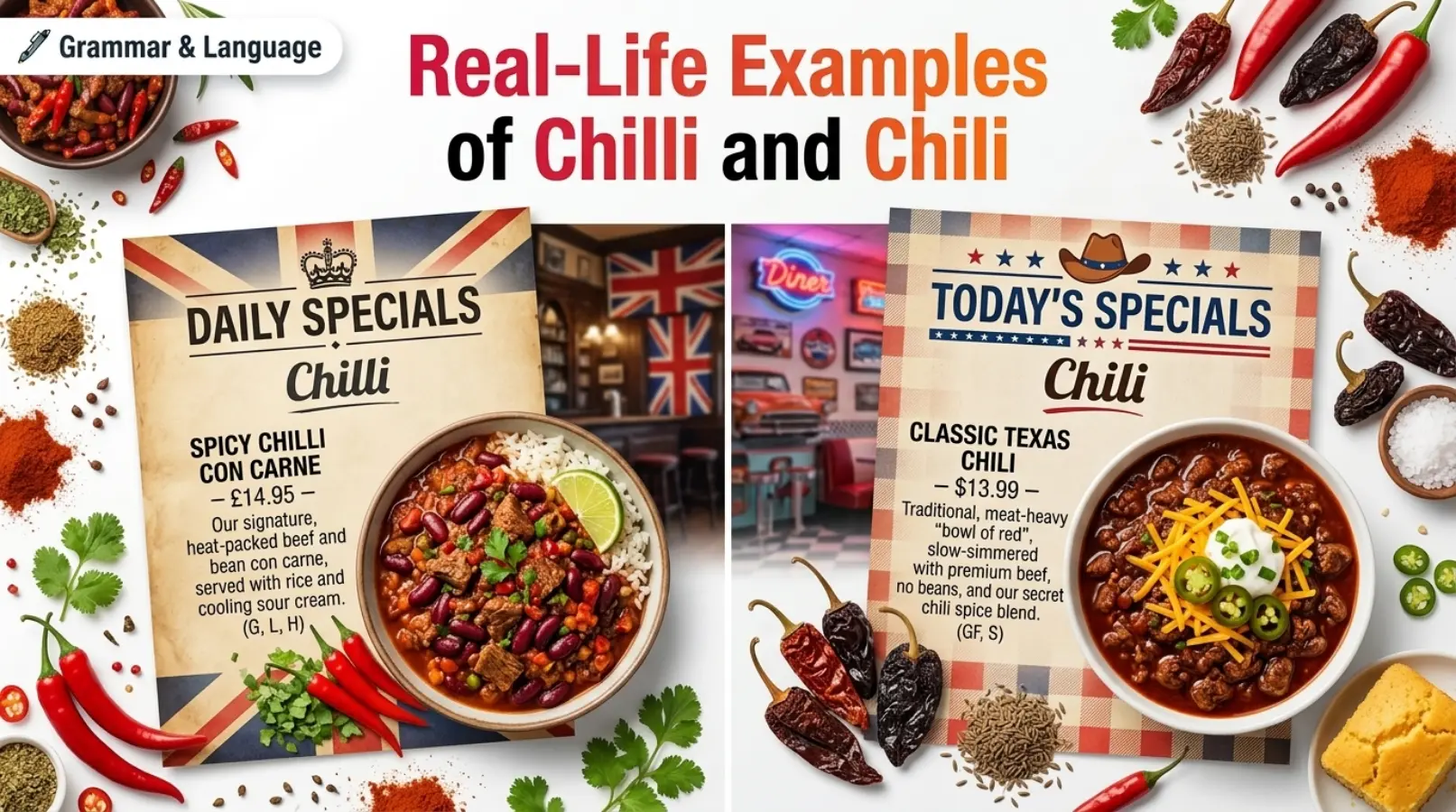
Here are examples from everyday situations.
American English
- Chili powder
- Chili flakes
- Chili peppers
- Chili recipe
- Chili sauce
British English
- Chilli powder
- Chilli flakes
- Chilli peppers
- Chilli sauce
- Fresh chilli
Notice that only the spelling changes.
The meaning remains identical.
Common Mistakes People Make
Many writers make simple mistakes when using these words.
1. Mixing Both Spellings
❌ Add chili powder and fresh chilli.
✅ Add chili powder and fresh chili.
✅ Add chilli powder and fresh chilli.
Choose one style and stay consistent.
2. Assuming One Is Wrong
Some people think chilli is incorrect.
Others think chili is incorrect.
Both spellings are accepted.
3. Ignoring the Audience
A British blog should generally use chilli.
An American website should generally use chili.
Audience expectations matter.
Tips for Choosing the Right Spelling
Use these simple tips.
Chili When:
- Writing for American readers
- Publishing on US websites
- Following American style guides
- Creating content for US businesses
Chilli When:
- Writing for UK readers
- Publishing on British websites
- Following British style guides
- Creating content for Australian audiences
Universal Tip
Always use the same spelling throughout your content.
Chilli or Chili in Daily Life
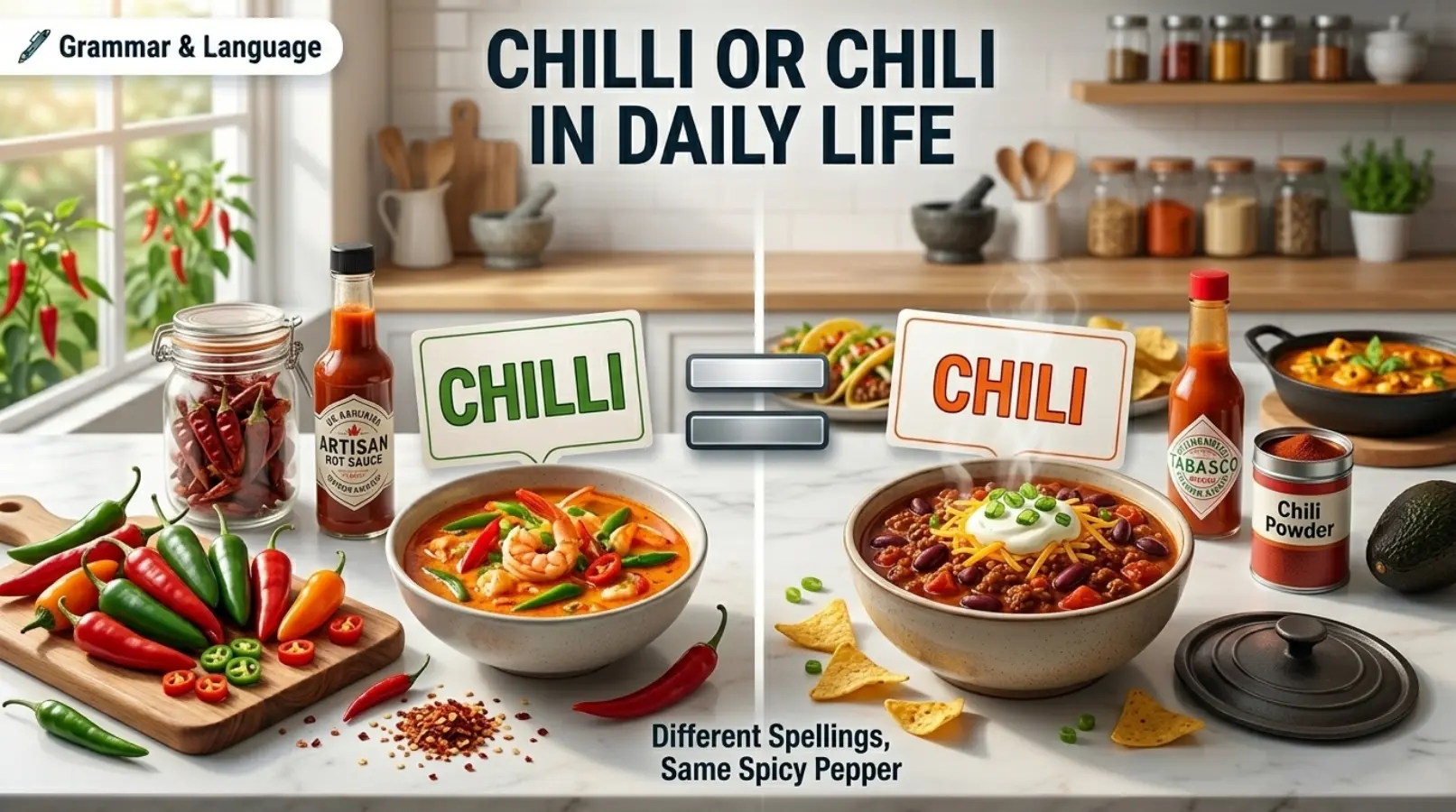
You can find these words almost everywhere.
Examples include:
Restaurants
- Chili chicken
- Chilli chicken
Grocery Stores
- Chili powder
- Chilli sauce
Cooking Blogs
- Homemade chili recipe
- Homemade chilli recipe
Food Packaging
Companies often choose the spelling that matches their market.
This helps customers recognize familiar language.
Synonyms
- Hot pepper
- Spicy pepper
- Capsicum
- Pepper pod
Why Correct Spelling Matters
Correct spelling builds trust.
It also improves readability.
When readers see familiar language, they feel comfortable.
For example:
A US visitor expects to read chili.
A UK visitor expects to read chilli.
Using the preferred spelling can improve:
- User experience
- Reader confidence
- Content professionalism
- SEO relevance for local audiences
Small language choices often make a big difference.
Chilli or Chili in Search Engines
Search engines understand both spellings.
Google recognizes that chili and chilli usually mean the same thing.
However, local search behavior matters.
American users often search:
- chili recipe
- chili powder
- chili peppers
British users often search:
- chilli sauce
- chilli flakes
- fresh chilli
Using the preferred regional spelling can help your content match search intent.
Expert Insights: Why Understanding Chilli or Chili Matters
Language should match your audience.
Professional writers always consider regional spelling.
A food blogger targeting the United States should use chili consistently.
A UK cooking website should use chilli consistently.
Experts recommend choosing one style before writing. This keeps content clean and professional.
Consistency also helps readers focus on the information rather than the spelling.
That is why understanding chilli or chili matters for writers, students, marketers, and business owners.
Frequently Asked Questions (FAQs)
Is chili or chilli correct?
Both are correct. The choice depends on regional English preferences.
Which spelling is used in America?
American English prefers chili.
Which spelling is used in Britain?
British English prefers chilli.
Do chili and chilli mean different things?
No. They have the same meaning.
Should I use both spellings in one article?
No. Choose one spelling and use it consistently.
Is chili pepper correct?
Yes. It is the standard American spelling.
Is chilli pepper correct?
Yes. It is the standard British spelling.
Does Google treat chili and chilli differently?
Google understands both spellings, but local search preferences can vary.
Conclusion
The debate over chilli or chili is not about right versus wrong. Both spellings are correct and widely accepted. The main difference comes from regional English usage. American English prefers chili, while British English usually prefers chilli.
When writing, think about your audience first. Use the spelling your readers expect and remain consistent throughout your content. This simple approach improves readability and professionalism.
Whether you choose chili or chilli, the meaning remains the same—a spicy pepper that adds flavor and heat to food. Remember the audience, stay consistent, and you will never go wrong.