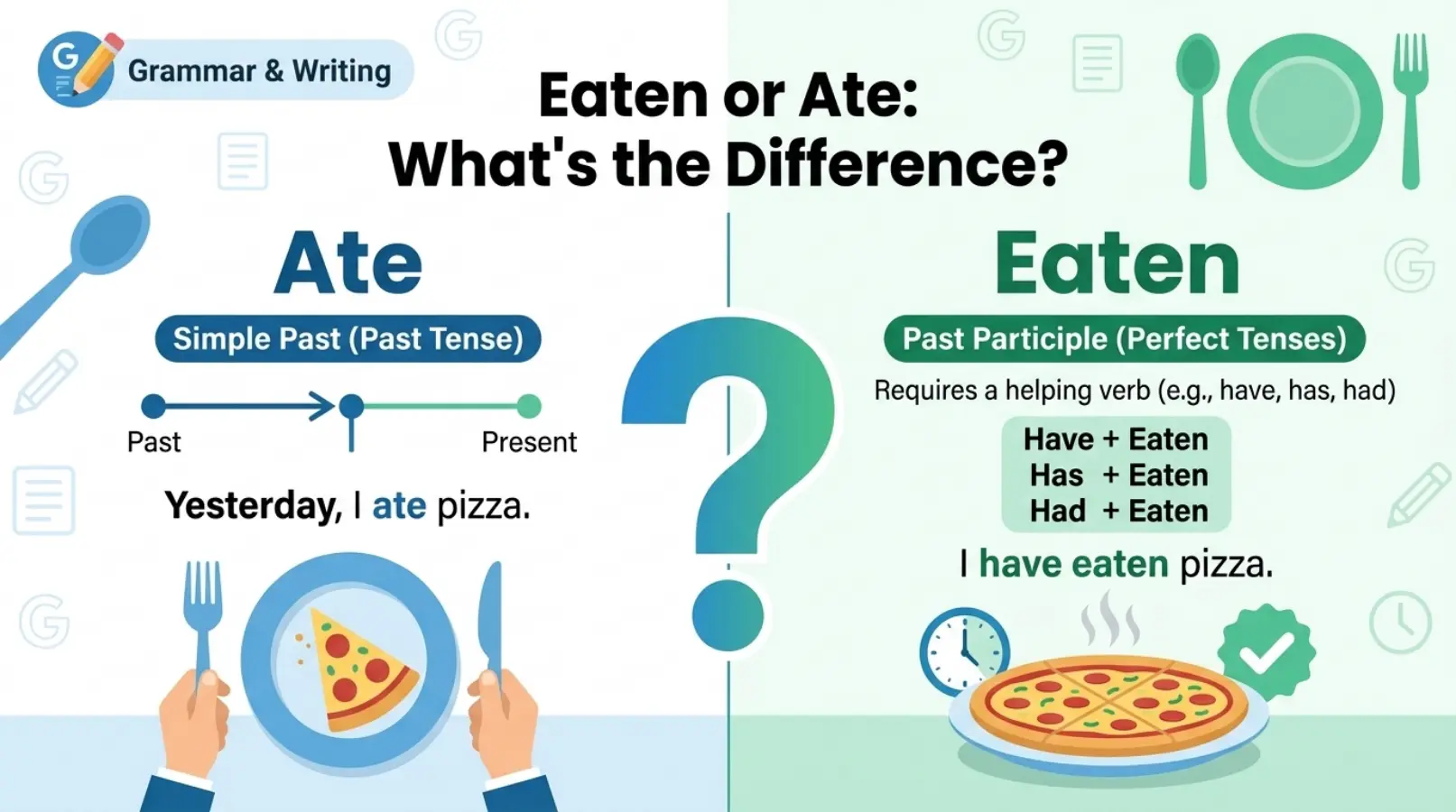
Eaten or ate is a common grammar question that confuses many English learners and native speakers. Both words come from the verb “eat,” but they have different uses in a sentence.
Knowing when to use ate and when to use eaten helps you write and speak correctly. It also improves your confidence in English communication.
Many people make mistakes because these words refer to actions that happened in the past. However, they follow different grammar rules.
In this guide, you will learn the meaning of each word, how they differ, common mistakes, and easy tricks to remember them. By the end, you’ll know exactly when to use eaten or ate in everyday conversations and writing.
Quick Summary Box
- Ate is the simple past tense of “eat.”
- Eaten is the past participle of “eat.”
- Use ate without helping verbs.
- Use eaten with helping verbs like has, have, had, or was.
- Correct: “I ate lunch.”
- Correct: “I have eaten lunch.”
- Incorrect: “I have ate lunch.”
- Incorrect: “I eaten lunch.”
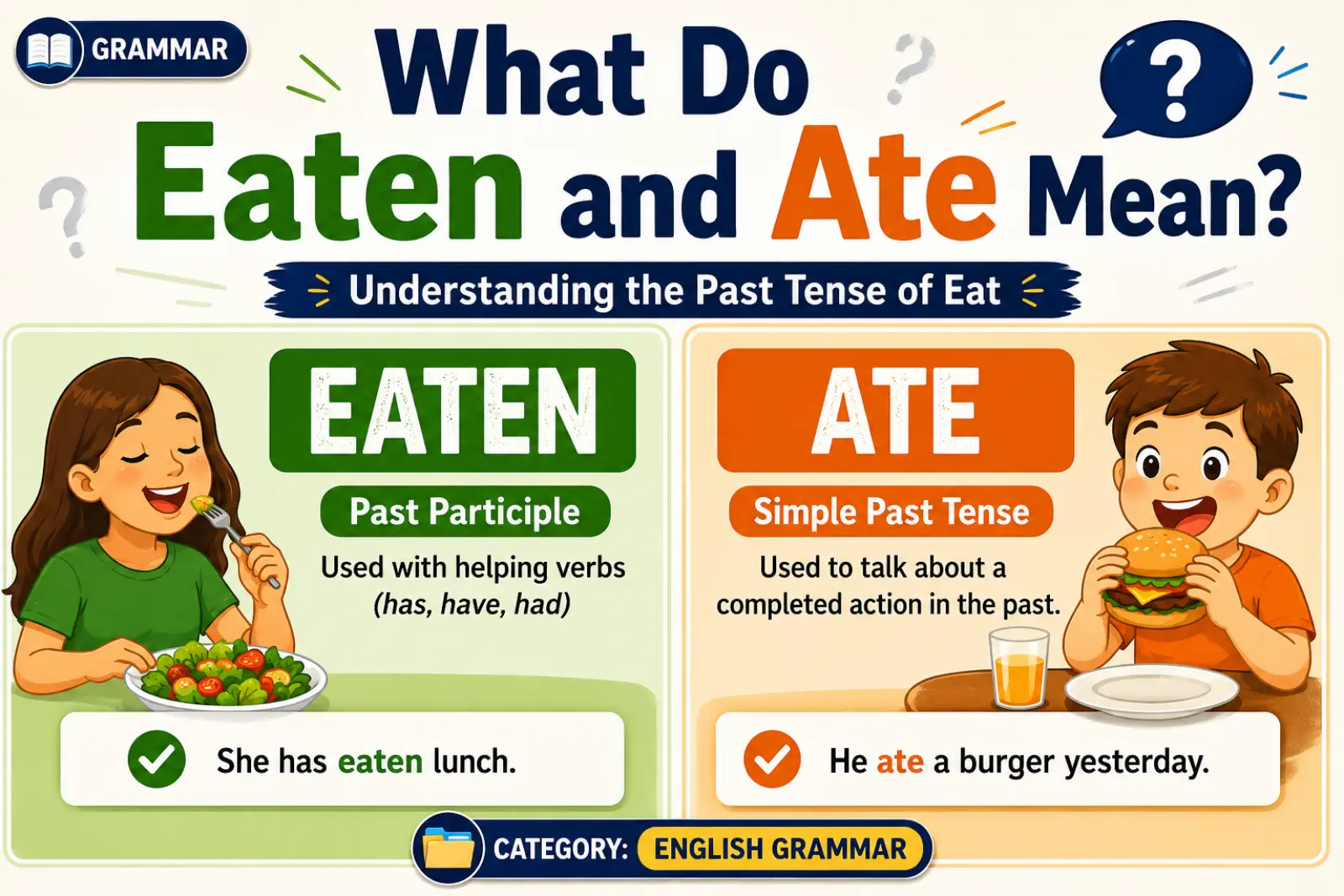
What Do Eaten and Ate Mean?
Both words come from the verb eat, which means to consume food.
Verb forms:
| Verb Form | Word |
| Base Form | Eat |
| Past Tense | Ate |
| Past Participle | Eaten |
| Present Participle | Eating |
Examples:
- I eat breakfast every morning.
- Yesterday, I ate breakfast at 8 AM.
- I have eaten breakfast already.
- She is eating breakfast now.
Understanding these forms makes grammar much easier.
What Is “Ate”?
Ate is the simple past tense of the verb “eat.”
Use it when talking about a completed action in the past.
Examples
- I ate pizza last night.
- She ate an apple after school.
- We ate dinner at a restaurant.
- They ate all the cookies.
In each sentence, the action happened in the past and is complete.
Formula
Subject + Ate + Object
Example:
- John ate lunch.
What Is “Eaten”?
Eaten is the past participle form of “eat.”
It usually needs a helping verb.
Common helping verbs include:
- Has
- Have
- Had
- Was
- Were
- Been
Examples
- I have eaten breakfast.
- She has eaten lunch already.
- They had eaten before arriving.
- The cake was eaten quickly.
Formula
Subject + Helping Verb + Eaten
Example:
- We have eaten dinner.
Eaten or Ate: Key Differences
The main difference is grammatical function.
| Feature | Ate | Eaten |
| Verb Type | Past Tense | Past Participle |
| Needs Helping Verb | No | Yes |
| Shows Completed Past Action | Yes | Usually |
| Used Alone | Yes | No |
| Example | I ate lunch. | I have eaten lunch. |
Quick Rule
- Use ate by itself.
- Use eaten with a helping verb.
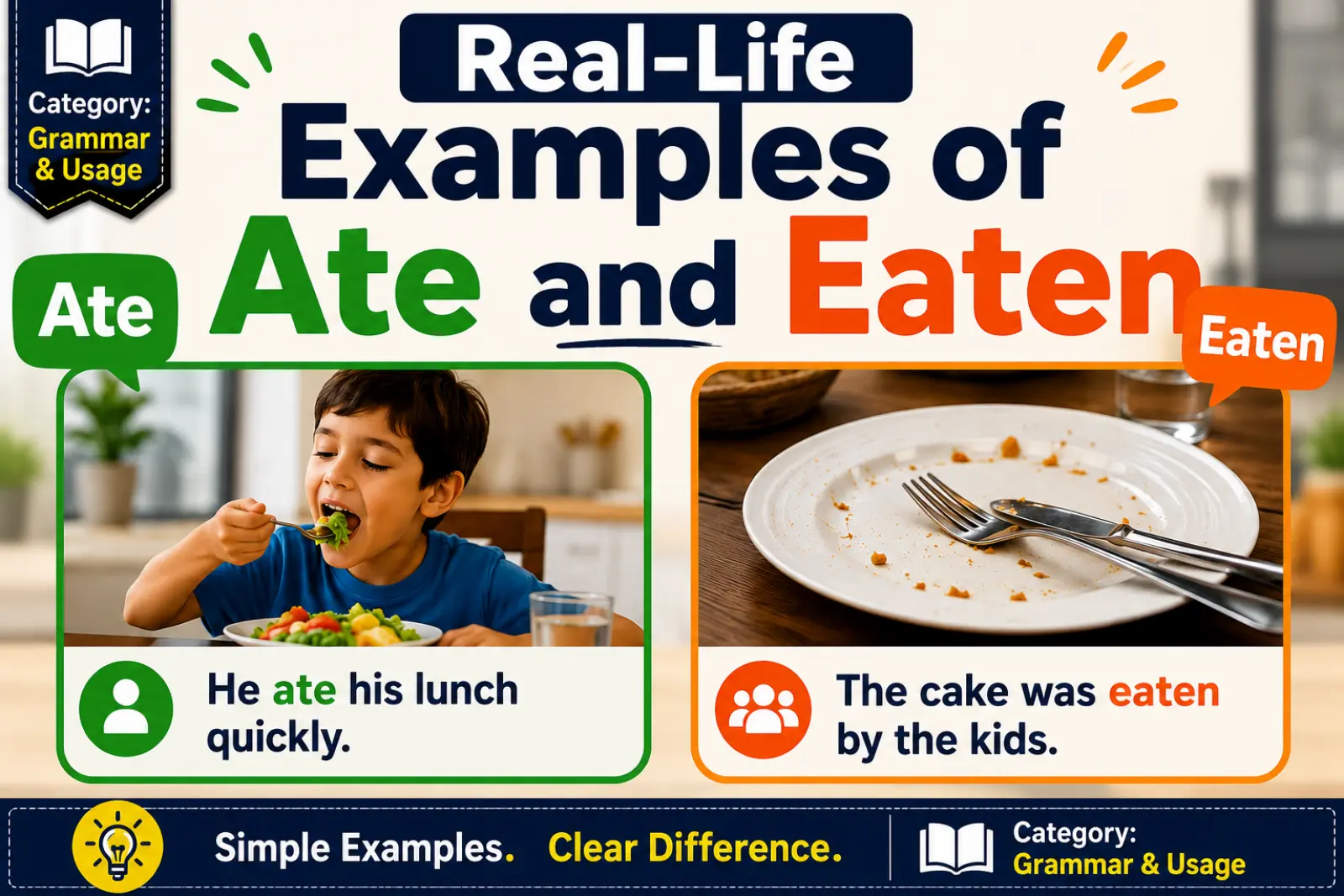
Real-Life Examples of Ate and Eaten
Using Ate
- I ate breakfast at 7 AM.
- We ate dinner together.
- Sarah ate the last cookie.
- They ate before the movie.
Using Eaten
- I have eaten already.
- She has eaten too much candy.
- We had eaten before the guests arrived.
- The food was eaten quickly.
These examples show how each word fits naturally into daily conversations.
When Should You Use Ate?
Use ate when discussing a specific time in the past.
Examples
- I ate lunch yesterday.
- We ate at noon.
- She ate before class.
- They ate during the trip.
Time Expressions Often Used with Ate
- Yesterday
- Last night
- Last week
- Earlier today
- Two hours ago
Example:
- I ate breakfast two hours ago.
When Should You Use Eaten?
Use eaten when forming perfect tenses or passive voice.
Present Perfect
- I have eaten lunch.
- She has eaten breakfast.
Past Perfect
- We had eaten before the meeting.
- They had eaten by then.
Passive Voice
- The cake was eaten by the children.
- All the food had been eaten.
Remember, eaten almost always needs a helping verb.
Common Mistakes People Make
Many learners confuse these forms.
Mistake #1
❌ I have ate lunch.
✅ I have eaten lunch.
Mistake #2
❌ I eaten dinner.
✅ I ate dinner.
Mistake #3
❌ She has ate already.
✅ She has eaten already.
Mistake #4
❌ We had ate before leaving.
✅ We had eaten before leaving.
Learning these mistakes helps you avoid them in writing and speech.
Easy Trick to Remember the Difference
Try this simple rule:
If There Is No Helping Verb → Use Ate
Example:
- I ate lunch.
If There Is a Helping Verb → Use Eaten
Examples:
- I have eaten lunch.
- She has eaten dinner.
- We had eaten already.
This trick works in most situations.
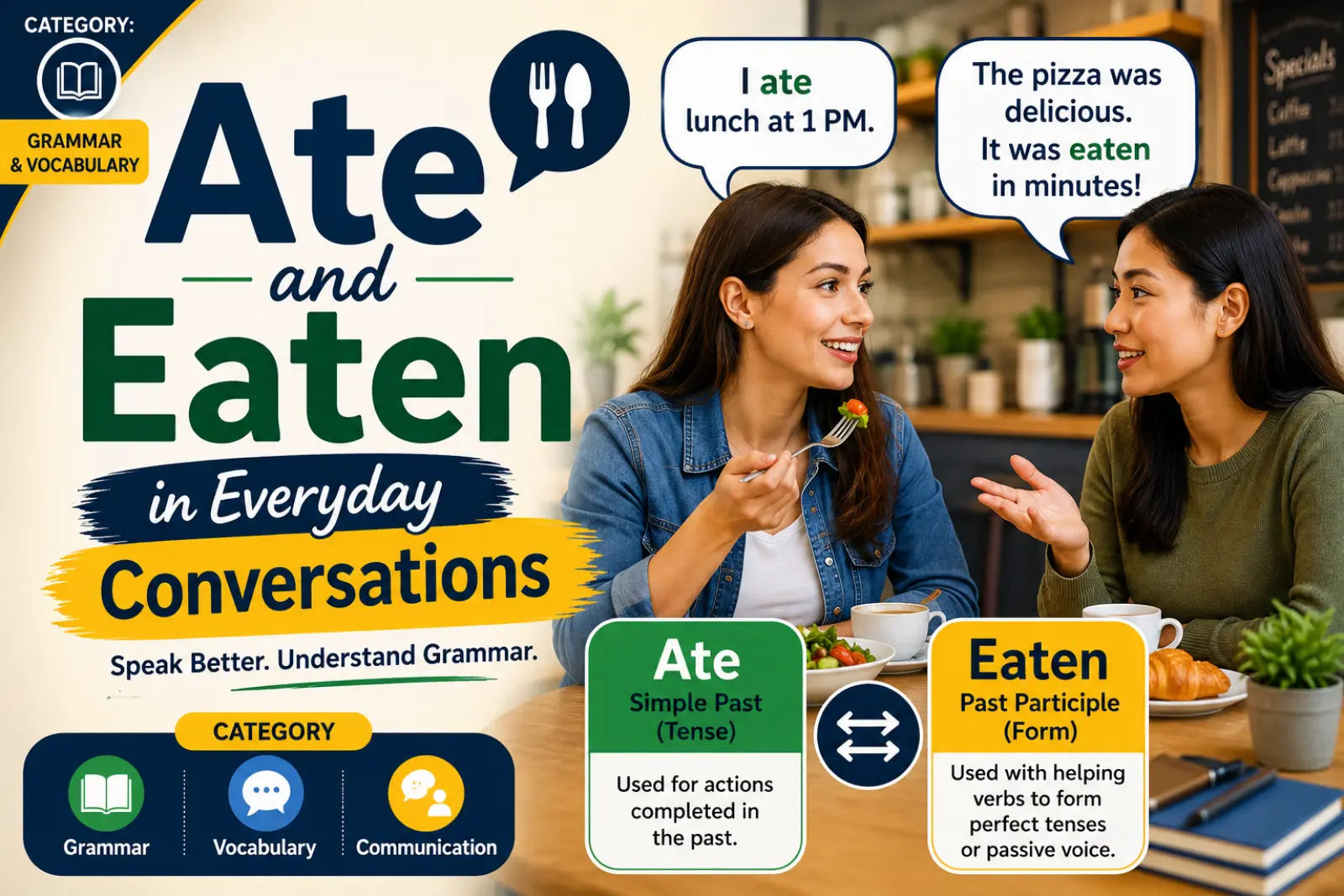
Ate and Eaten in Everyday Conversations
Here are common situations where these words appear.
Home
- I ate breakfast already.
- I have eaten enough.
School
- She ate lunch during recess.
- The students had eaten before class started.
Work
- We ate at a nearby café.
- Everyone had eaten before the meeting.
While Traveling
- They ate local food.
- They had eaten before boarding the train.
Synonyms
While ate and eaten come from the verb “eat,” related words may help improve vocabulary.
Synonyms
- Consumed
- Devoured
- Ingested
- Finished
- Enjoyed
Why Learning Ate and Eaten Matters
Correct grammar improves communication.
Benefits include:
- Better writing
- Clearer speaking
- Stronger school performance
- Improved professional communication
- More confidence in English
Small grammar corrections can create a big impact.
Expert Insights: Why Correct Usage Matters
Language experts recommend learning irregular verbs early.
The verb eat is irregular. It does not follow the standard “-ed” pattern.
Understanding the forms:
- Eat
- Ate
- Eaten
helps you master many English sentence structures.
Writers, teachers, and employers often notice grammar accuracy. Correct usage shows attention to detail and strong communication skills.
If you regularly use English, mastering eaten or ate is worth the effort.
Practice Sentences
Choose the correct word.
- I _____ breakfast this morning.
- She has _____ lunch already.
- We had _____ before leaving.
- They _____ dinner at 8 PM.
- The cake was _____ quickly.
Answers
- Ate
- Eaten
- Eaten
- Ate
- Eaten
Practice helps reinforce the rule.
Frequently Asked Questions (FAQs)
Is it correct to say “I have ate”?
No. The correct phrase is “I have eaten.”
Is ate past tense or past participle?
Ate is the simple past tense of “eat.”
Is eaten a real word?
Yes. Eaten is the past participle form of “eat.”
Can I use eaten without a helping verb?
Generally, no. Eaten usually requires a helping verb.
Which is correct: “She ate” or “She eaten”?
She ate is correct.
What is the past participle of eat?
The past participle is eaten.
Why do people confuse ate and eaten?
Both refer to past actions, but they serve different grammatical roles.
How can I remember the difference?
Use ate alone and eaten with helping verbs.
Conclusion
Understanding eaten or ate becomes simple once you know their roles. Ate is the simple past tense and works alone in a sentence. Eaten is the past participle and needs a helping verb such as has, have, or had.
A quick way to remember the rule is this: if there is no helping verb, use ate. If a helping verb appears, use eaten. This small grammar distinction can make your English sound more natural and professional.
Practice using both forms in daily conversations and writing. Over time, choosing between eaten and ate will become automatic. Mastering this common grammar point is a simple step toward clearer and more confident English communication.