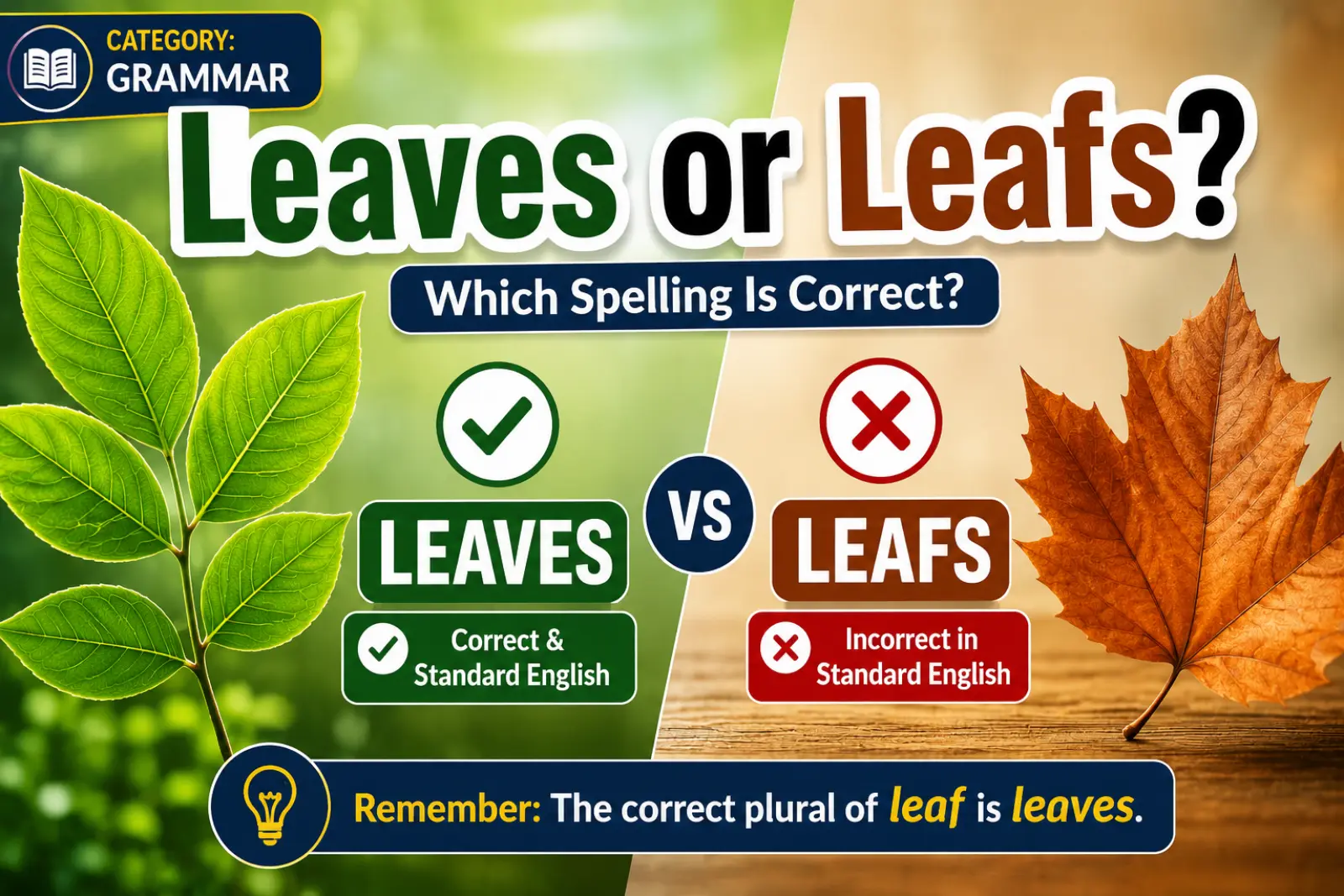
Leaves or leafs is a common grammar question. Many people wonder which plural form of leaf is correct. English has many words that follow special spelling rules. That is why this topic can feel confusing.
The good news is that the answer is simple. In most cases, leaves is the correct plural form of leaf. However, leafs can also appear in specific situations, especially as a verb or in certain names.
Understanding the difference helps you write better English. It also helps you avoid common grammar mistakes. In this guide, you will learn the meanings, rules, examples, and tips for using these words correctly. By the end, you’ll know exactly when to use leaves and when leafs is acceptable.
Quick Summary Box
- Leaf = one plant leaf
- Leaves = more than one leaf
- Leaves is the standard plural noun
- Leafs is usually incorrect as a plural noun
- Leafs can be a verb form of “leaf”
- Example: “The tree has many leaves.”
- Example: “She leafs through a magazine.”
- Remember: Most grammar situations require leaves
What Does Leaf Mean?
A leaf is the flat green part of a plant or tree. It helps the plant make food through sunlight.
Examples
- A leaf fell from the tree.
- The leaf turned yellow in autumn.
- I found a leaf on the sidewalk.
The word leaf is a singular noun because it refers to one item.
Leaves or Leafs: Which One Is Correct?
The correct plural noun is leaves.
Correct
- The tree has many leaves.
- Autumn leaves cover the ground.
- The leaves are bright green.
Incorrect
- The tree has many leafs.
- The leafs are falling.
In standard English grammar, leaves is the accepted plural form of leaf.
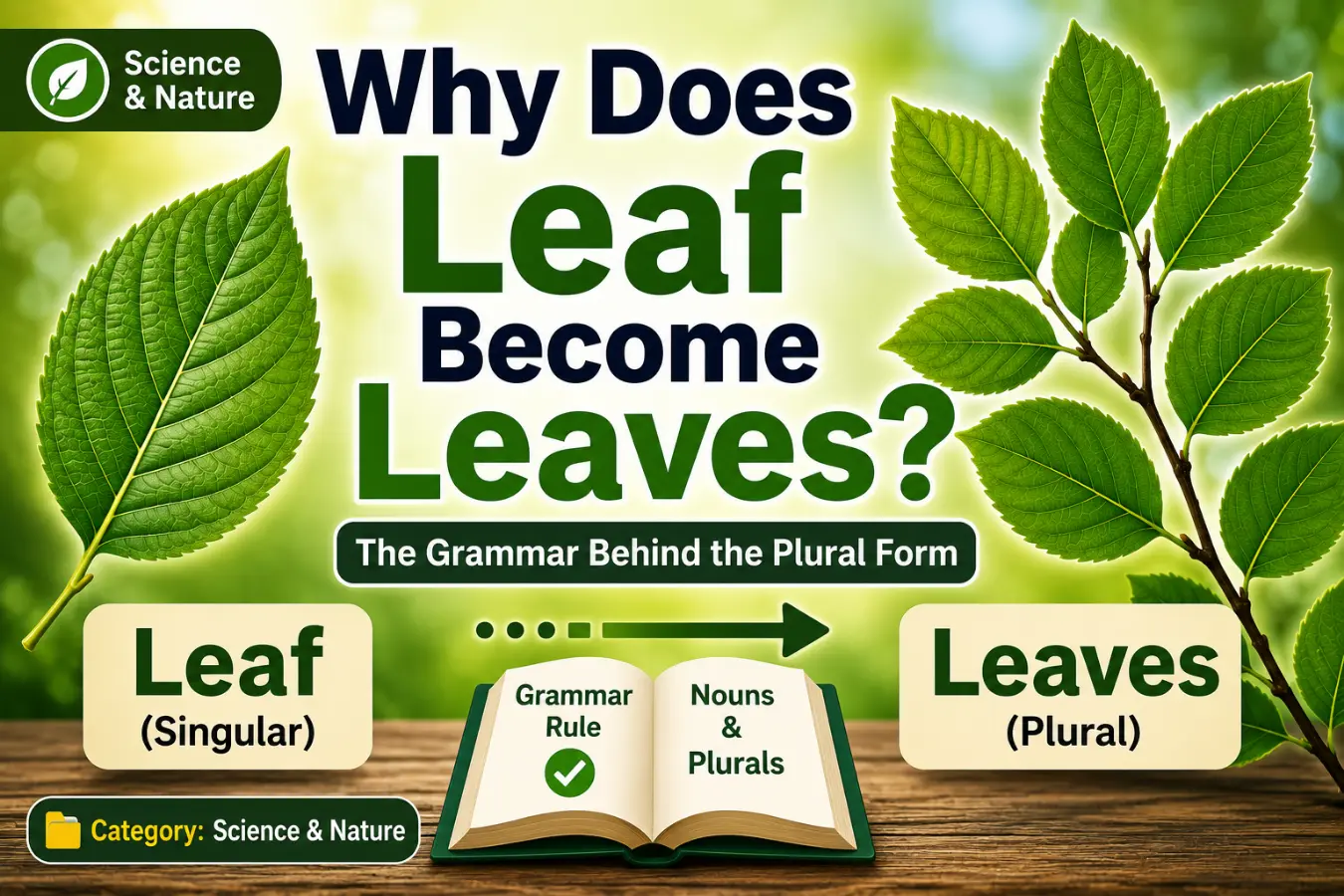
Why Does Leaf Become Leaves?
English follows a spelling rule for some nouns ending in -f or -fe.
Many of these words change the f to v and add -es.
| Singular | Plural |
| Leaf | Leaves |
| Wolf | Wolves |
| Knife | Knives |
| Life | Lives |
| Shelf | Shelves |
This rule explains why we write leaves instead of leafs.
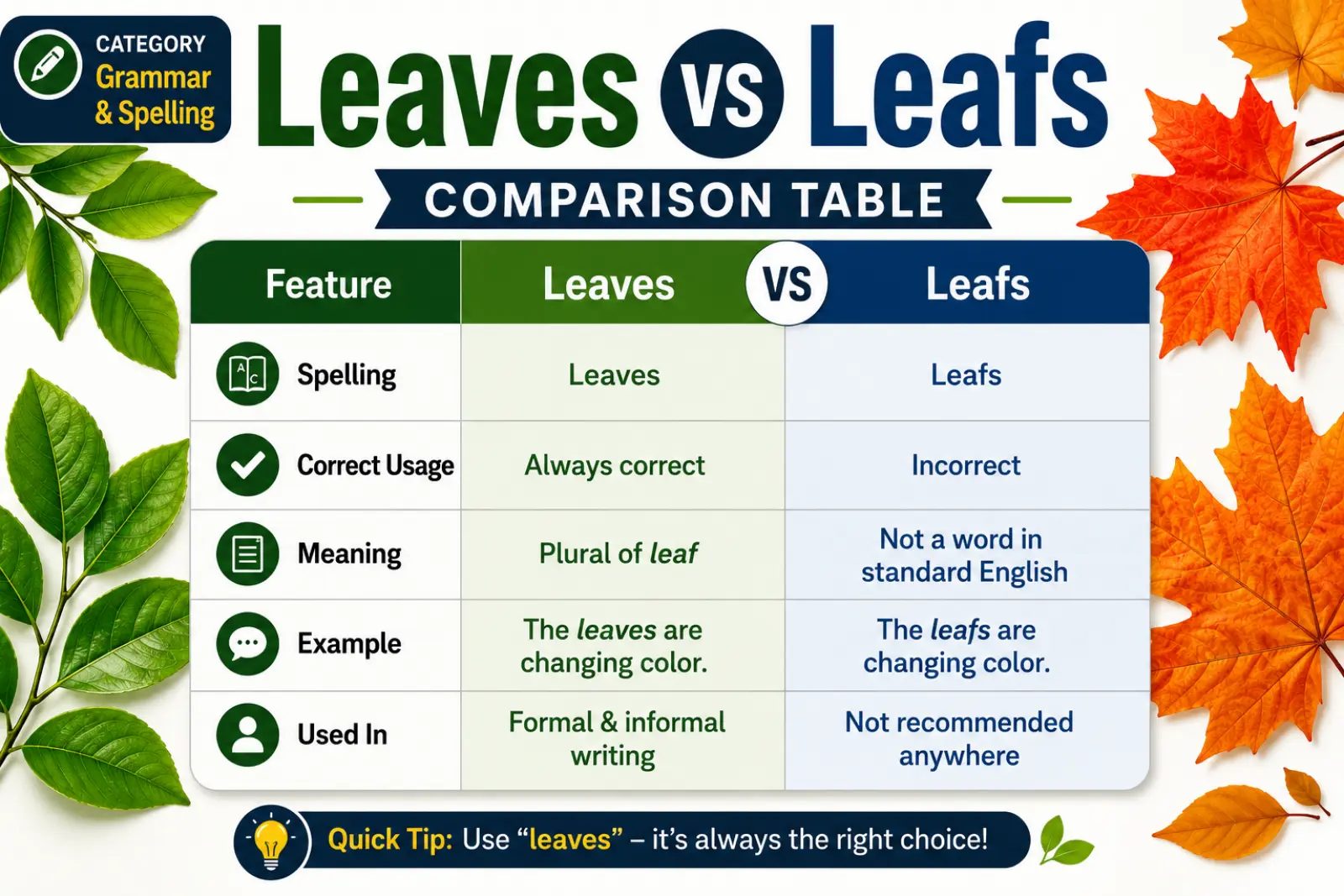
Leaves vs Leafs Comparison Table
| Feature | Leaves | Leafs |
| Standard plural of leaf | Yes | No |
| Accepted in formal writing | Yes | Usually No |
| Verb form of leaf | No | Yes |
| Common everyday use | Very common | Rare |
| Grammar-approved plural | Yes | No |
Quick Rule
Use leaves when talking about more than one leaf.
Use leafs only when using the verb “to leaf.”
When Is Leafs Correct?
Although leafs is not the normal plural noun, it can be correct as a verb.
Meaning of the Verb “Leaf”
The verb means to turn pages quickly.
Examples
- She leafs through the magazine.
- He leafs through old books.
- My teacher leafs through reports every day.
In these examples, leafs is a verb, not a plural noun.
Real-Life Examples of Leaves
You will often see leaves in daily life.
Nature
- Leaves fall during autumn.
- Green leaves grow in spring.
Gardening
- Remove dead leaves from plants.
- Healthy leaves show good plant growth.
Education
- Students learn about different leaf shapes.
- Scientists study leaves to understand plants.
These examples show how commonly the word leaves appears.
Common Mistakes People Make
Many English learners make the same errors.
Mistake 1: Adding -s Automatically
Incorrect:
- I collected several leafs.
Correct:
- I collected several leaves.
Mistake 2: Confusing Nouns and Verbs
Incorrect:
- The leafs on the tree are green.
Correct:
- The leaves on the tree are green.
Mistake 3: Following Regular Plural Rules
Most nouns simply add -s. However, leaf follows a special spelling pattern.
Easy Trick to Remember the Correct Form
A simple memory trick can help.
Think of Similar Words
- Leaf → Leaves
- Wolf → Wolves
- Knife → Knives
If the singular ends in -f, check whether it changes to -ves.
Quick Reminder
Leaf belongs to the leaves family.
This trick helps many students remember the correct spelling.
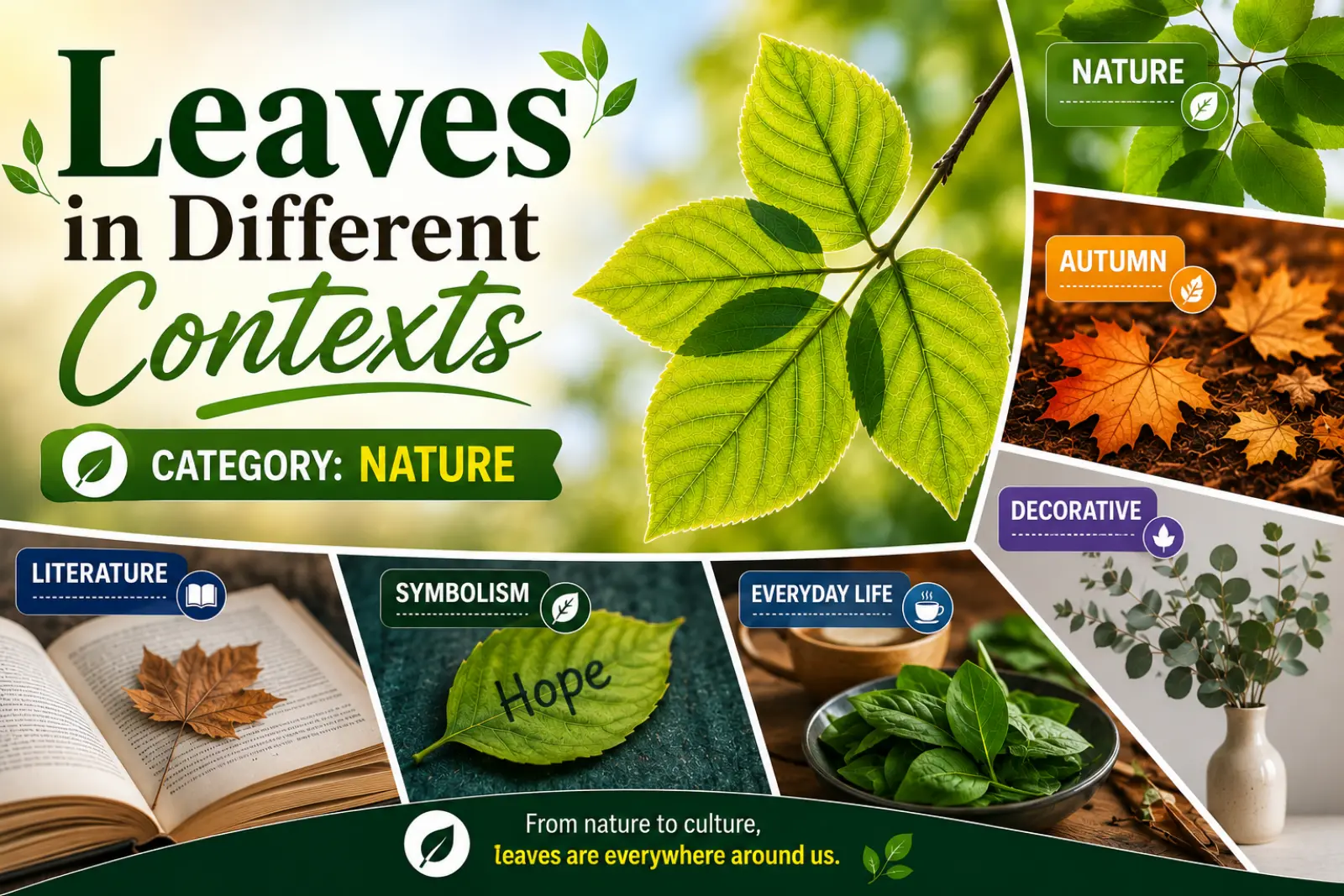
Leaves in Different Contexts
The word leaves has more than one meaning.
1. Plant Leaves
- The leaves are turning red.
2. Verb Form of Leave
“Leaves” can also be a form of the verb leave.
Example:
- She leaves work at five.
Here, leaves does not refer to plants.
Understanding the sentence context helps identify the meaning.
Synonyms
Here are some related terms and semantic keywords.
Synonyms
- Foliage
- Plant growth
- Greenery
- Vegetation
Usage in Daily Writing
Knowing the correct word improves communication.
School Assignments
Teachers expect correct grammar.
Example:
- The leaves changed color during autumn.
Business Writing
Professional writing should follow grammar rules.
Online Content
Blog posts and articles appear more trustworthy when grammar is correct.
Small grammar choices can make a big difference.
Expert Insights: Why This Grammar Rule Matters
Grammar experts recommend learning common irregular plurals early.
Why It Matters
- Improves writing accuracy
- Builds reader trust
- Helps in exams and tests
- Strengthens communication skills
- Reduces spelling mistakes
Writers who understand plural rules create clearer content. Readers also find their work easier to understand.
Learning words like leaf → leaves strengthens overall English grammar knowledge.
Frequently Asked Questions (FAQs)
Is it leaves or leafs?
Leaves is the correct plural form of leaf.
Why is leafs considered wrong?
It does not follow the standard plural spelling rule for the noun leaf.
Can leafs ever be correct?
Yes. It can be correct as a verb meaning “turns pages.”
What is the plural of leaf?
The plural of leaf is leaves.
Is leaves an irregular plural?
Yes. It changes from f to ves instead of simply adding s.
How do you use leaves in a sentence?
Example: “The leaves fell from the tree.”
What does leafs mean?
It is a verb form that means to flip through pages.
Do all words ending in f become ves?
No. Some do, while others simply add s. English contains exceptions.
What Is the Correct Plural of Leaf?
The correct plural of leaf is leaves. English changes the ending -f to -ves for this word. The form leafs is generally incorrect as a plural noun, although it may be used as a verb meaning “turns through pages.”
Conclusion
The answer to leaves or leafs is straightforward once you know the rule. The correct plural noun of leaf is leaves. This spelling follows a common English pattern where some words ending in -f change to -ves when pluralized. While leafs may appear as a verb meaning “flips through pages,” it is usually not correct when referring to more than one leaf.
Remember the simple rule: one leaf, many leaves. Using the correct form improves your grammar, writing, and communication. The next time you see this question, you can confidently choose leaves in almost every noun-related situation.