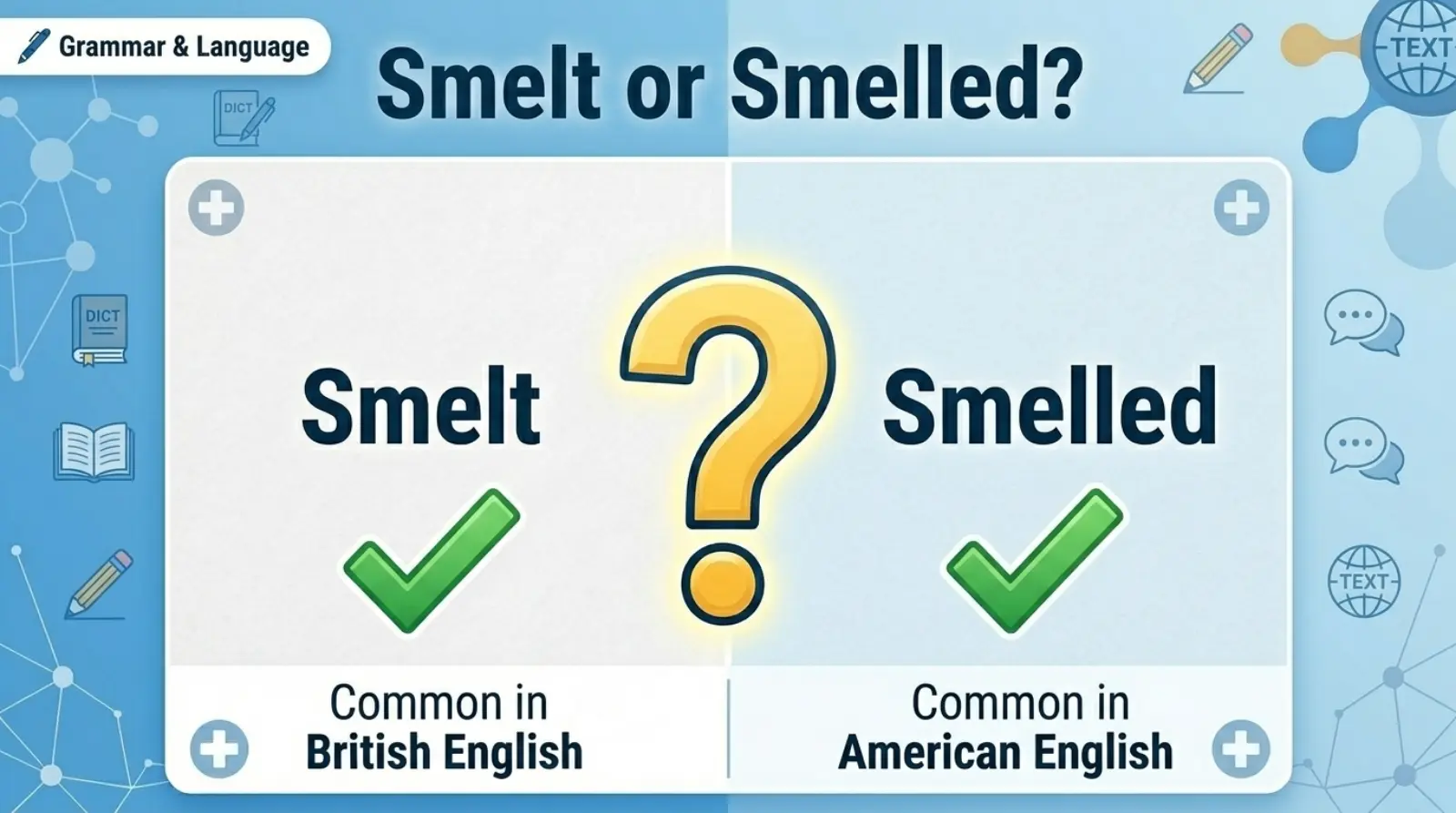
Smelt or smelled is a common grammar question that confuses many English learners and native speakers. Both words come from the verb smell, but they are used differently depending on where you live and write.
English has many verbs with more than one accepted past tense form. The word smell is one of them. That is why you may see both smelled and smelt in books, websites, and daily conversations.
In this guide, you will learn the difference between smelt or smelled, when to use each one, and which form is more common. You will also see simple examples, common mistakes, and expert tips. By the end, you will know exactly which word fits your writing.
Quick Summary Box
- Smelled and smelt are both correct past tense forms of smell.
- Smelled is more common in American English.
- Smelt is more common in British English.
- Both words mean that someone noticed an odor in the past.
- Choose one style and stay consistent throughout your writing.
- Example: “I smelled smoke.” ✔
- Example: “I smelt smoke.” ✔
What Do Smelt and Smelled Mean?
Both smelt and smelled are past tense and past participle forms of the verb smell.
Definition
Smell (verb):
To notice an odor through your nose.
Examples
- I smelled fresh bread this morning.
- I smelt fresh bread this morning.
- She smelled flowers in the garden.
- She smelt flowers in the garden.
Both versions have the same meaning.
Smelt or Smelled: Which One Is Correct?
The simple answer is that both are correct.
The difference comes from regional English usage.
| Form | Common In | Correct? |
| Smelled | American English | Yes |
| Smelt | British English | Yes |
If you write for a U.S. audience, use smelled.
If you write for a U.K. audience, smelt is often preferred.
Why Are There Two Forms?
English developed from many language influences. Over time, some verbs kept both regular and irregular forms.
The verb smell follows this pattern.
Regular Form
- Smell → Smelled
Irregular Form
- Smell → Smelt
Many British English speakers still use the shorter irregular form.
Meanwhile, American English mainly uses the regular form.
Smelled in American English
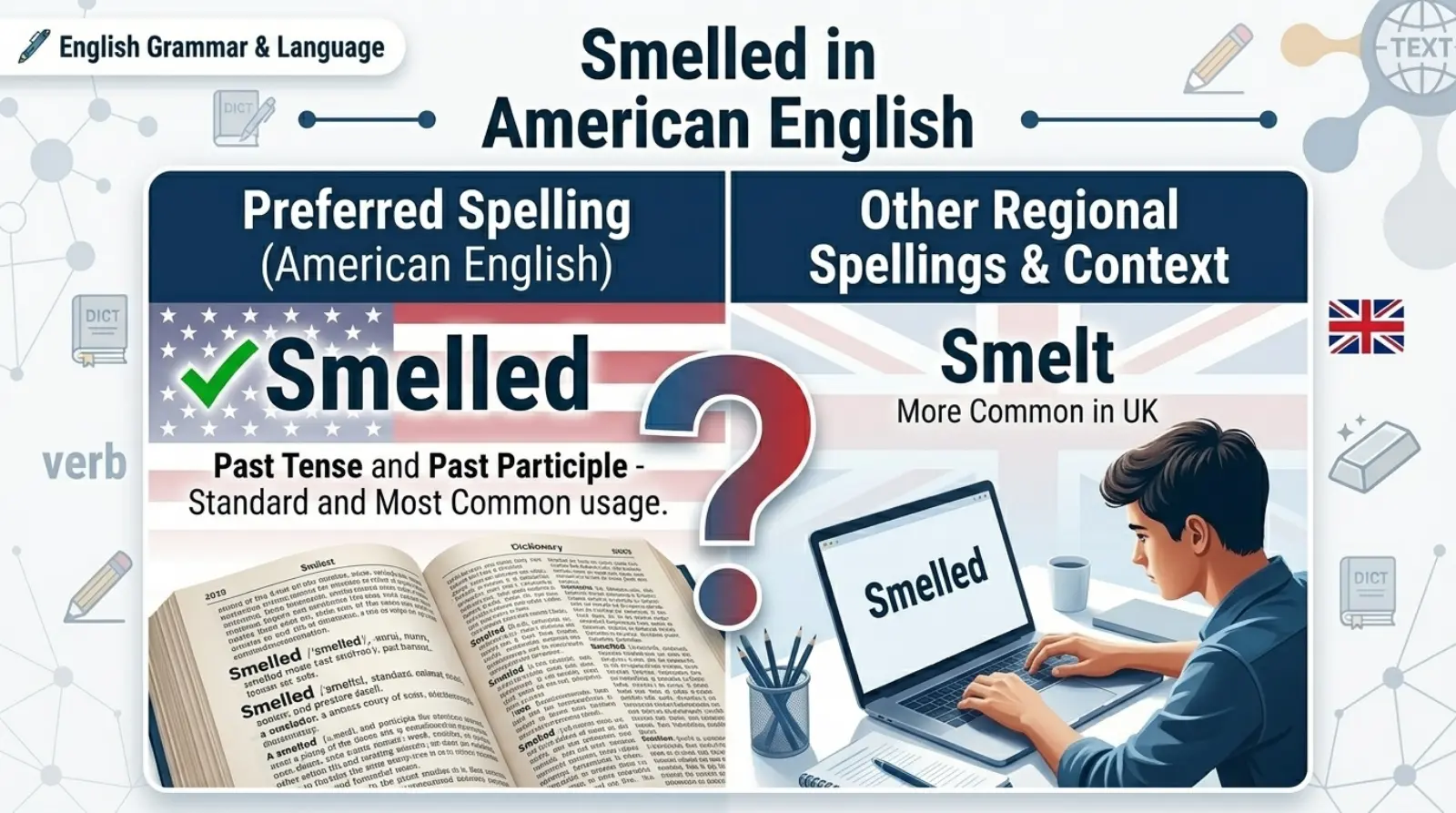
In the United States, smelled is the standard choice.
Most schools, style guides, and publishers prefer this version.
Examples
- I smelled smoke coming from the kitchen.
- We smelled fresh coffee.
- She smelled something strange.
Why Americans Prefer It
Regular verbs are easier to learn and follow predictable grammar patterns.
That makes smelled the dominant form in American writing.
Smelt in British English
In the United Kingdom, smelt remains widely accepted.
Many British writers use it naturally in speech and writing.
Examples
- I smelt smoke near the building.
- They smelt fresh rain in the air.
- She smelt perfume in the room.
British Preference
British English often keeps traditional irregular verb forms.
That is why smelt continues to appear frequently.
Smelt vs Smelled Comparison Table
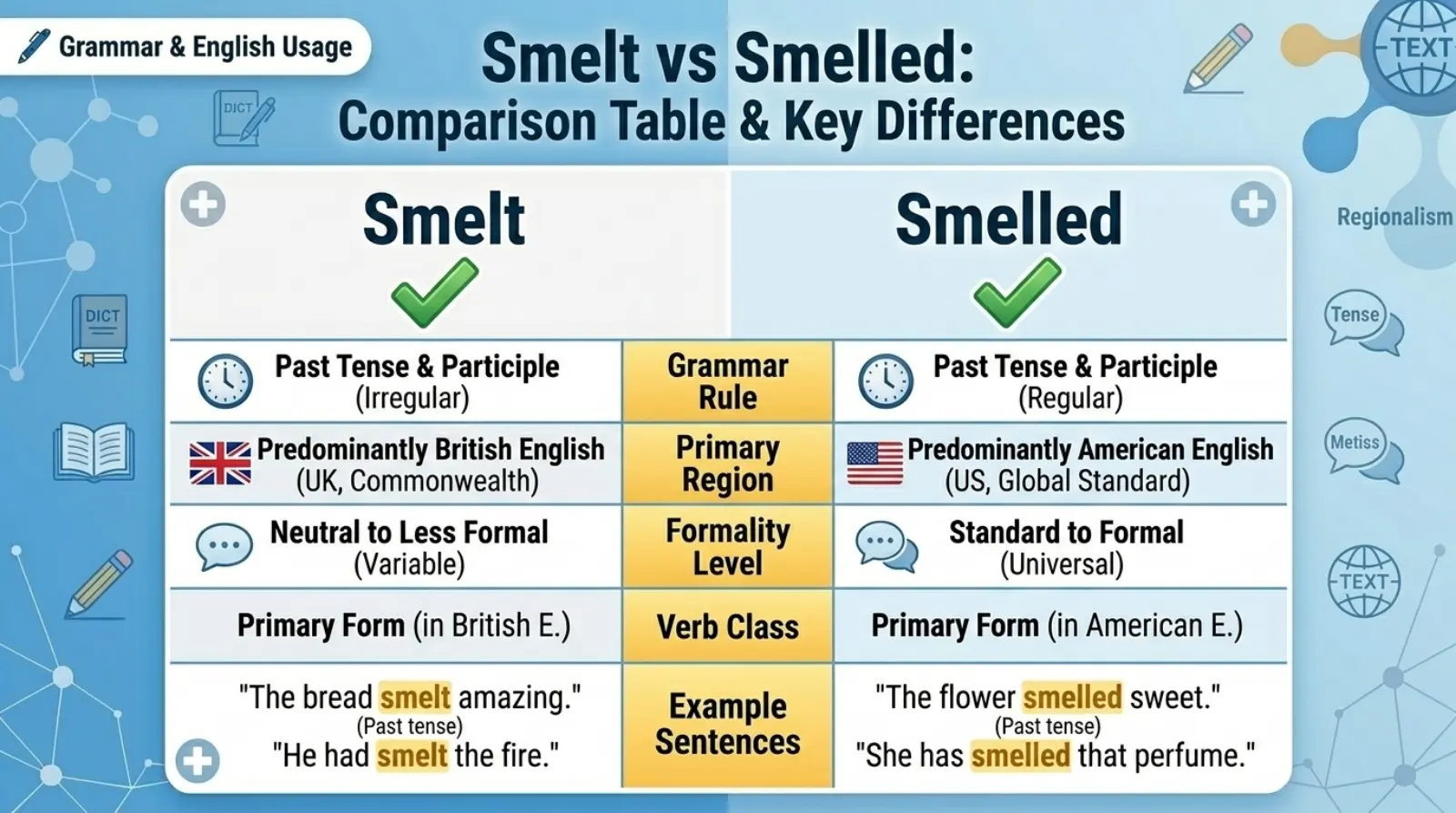
| Feature | Smelt | Smelled |
| Meaning | Past tense of smell | Past tense of smell |
| Grammar | Correct | Correct |
| British English | Common | Also accepted |
| American English | Less common | Most common |
| Formal Writing | Accepted | Widely preferred |
| Everyday Use | UK speakers | US speakers |
Key Takeaway
The meaning stays the same. Only regional preference changes.
Real-Life Examples of Smelt and Smelled
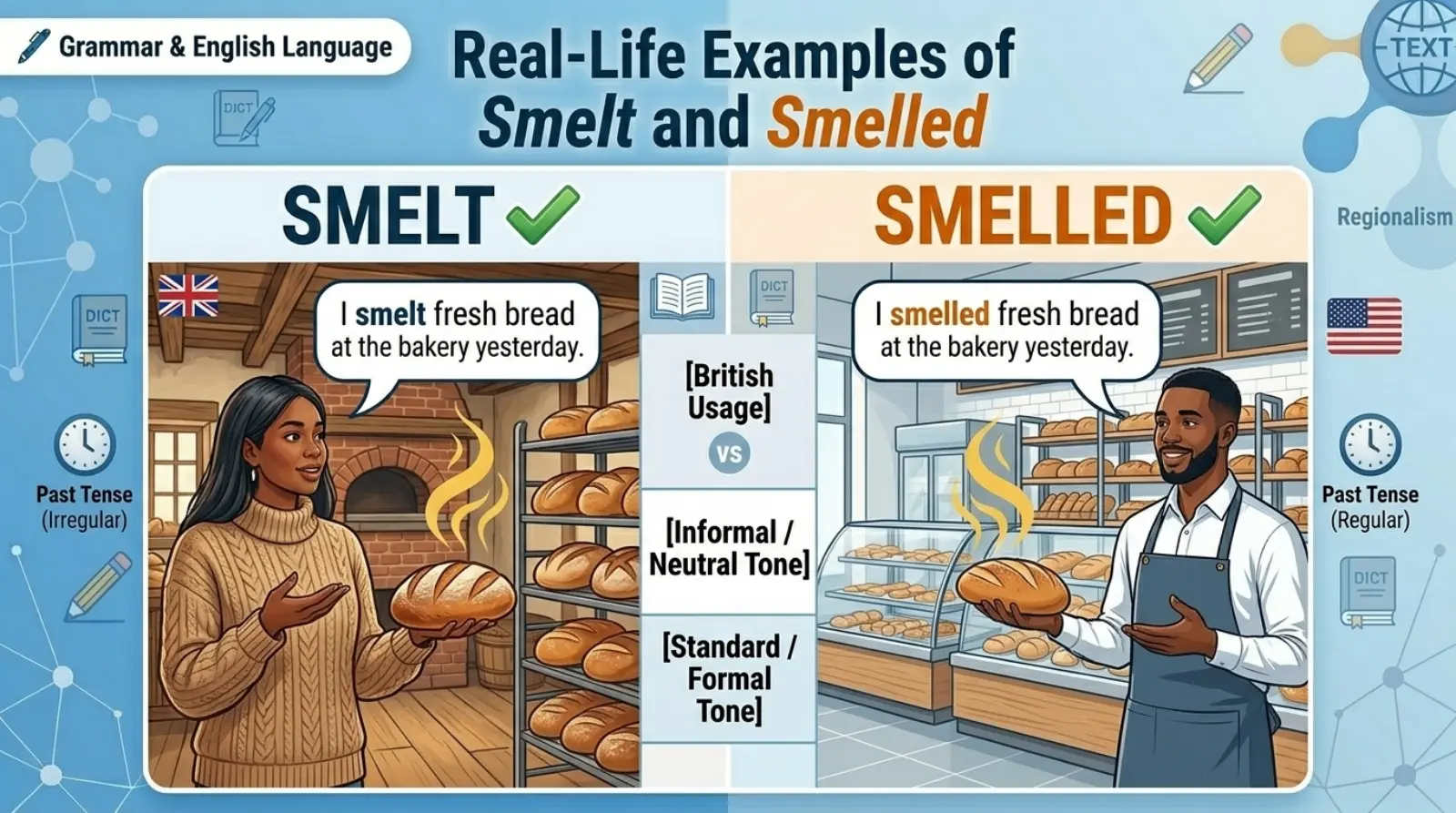
Here are common situations where both forms work.
1: Smoke
- I smelled smoke after dinner.
- I smelt smoke after dinner.
2: Flowers
- She smelled roses in the garden.
- She smelt roses in the garden.
3: Food
- We smelled fresh cookies baking.
- We smelt fresh cookies baking.
Each sentence remains grammatically correct.
Common Mistakes People Make
Many learners struggle with these forms.
Mistake 1: Thinking One Form Is Wrong
Incorrect belief:
- Smelt is wrong.
Truth:
- Smelt is correct in British English.
Mistake 2: Mixing Styles
Example:
- I smelled smoke yesterday, and later I smelt gas.
This sounds inconsistent.
Choose one style and stick with it.
Mistake 3: Confusing Smelt With the Fish
Smelt is also the name of a small fish.
Example:
- We caught smelt in the river.
Context helps readers understand the meaning.
How to Choose Between Smelt and Smelled
Use these simple rules.
Smelled If:
- You write for Americans.
- You follow American style guides.
- You want the most widely recognized form.
Smelt If:
- You write for British readers.
- You follow British spelling conventions.
- Your publication prefers British English.
Easy Tip
When unsure, choose smelled because it is more common globally.
Usage in Daily Life
People use the verb smell every day.
Common Sentences
- I smelled coffee this morning.
- We smelled rain before the storm.
- She smelled perfume in the hallway.
- He smelled gas and called for help.
British speakers may replace smelled with smelt in these same situations.
Synonyms and Related Words
Using related words improves writing quality and SEO relevance.
Synonyms
- Sensed
- Detected
- Noticed
- Sniffed
- Recognized
Smell Verb Forms Explained
Understanding the full verb pattern makes usage easier.
| Verb Form | Word |
| Base Form | Smell |
| Present Simple | Smell / Smells |
| Present Participle | Smelling |
| Past Tense | Smelled / Smelt |
| Past Participle | Smelled / Smelt |
Examples
- I smell flowers.
- She smells cookies.
- We are smelling fresh bread.
- They smelled smoke.
- They smelt smoke.
Expert Insights: Why Correct Usage Matters
Choosing the correct word improves clarity.
Professional writers often adapt their language to match their audience.
Expert Tips
- Follow one English style consistently.
- Match the spelling used in your publication.
- Use smelled for American audiences.
- Use smelt for British audiences.
- Avoid switching forms within the same article.
Consistency builds trust and improves readability.
This practice also supports strong grammar and professional communication.
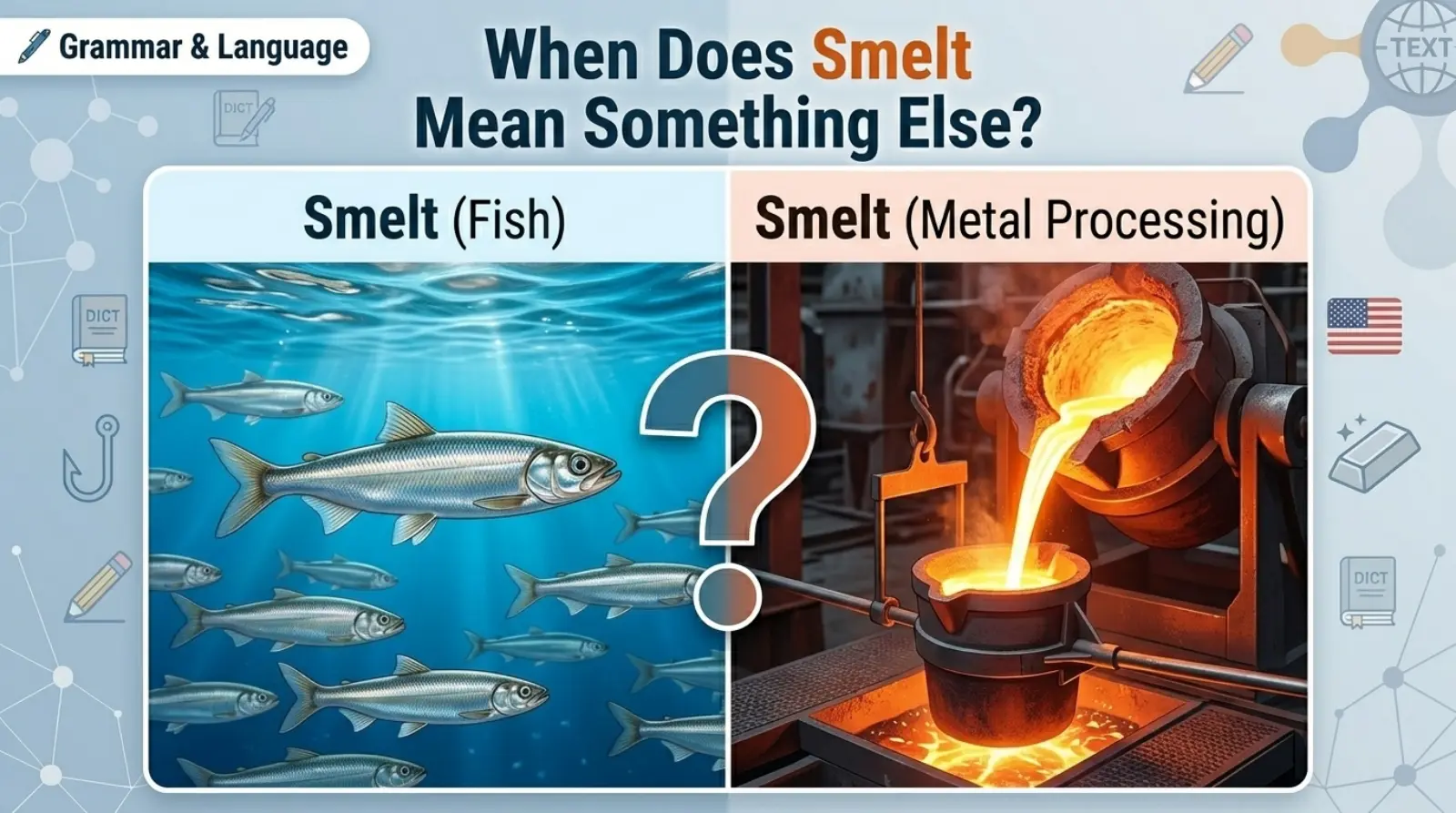
When Does Smelt Mean Something Else?
The word smelt has another meaning.
Smelt as a Fish
A smelt is a small fish found in fresh and salt water.
Example:
- Fishermen caught several smelt.
Smelt as a Metal Process
Smelt can also mean extracting metal from ore through heating.
Example:
- Workers smelt iron in a furnace.
These meanings are unrelated to the verb smell.
Frequently Asked Questions (FAQs)
Is smelt grammatically correct?
Yes. Smelt is a correct past tense and past participle form of smell.
Is smelled more common than smelt?
Yes. Smelled is more common, especially in American English.
Do British people say smelt?
Yes. Many British speakers prefer smelt.
Can I use smelled in British English?
Yes. British English accepts both smelled and smelt.
Which form should students use?
Students should follow the style required by their school or teacher.
Is smelt an irregular verb form?
Yes. Smelt is the irregular past tense form of smell.
What is the past participle of smell?
Both smelled and smelt can serve as past participles.
Is smelt only a fish?
No. Smelt can be a fish, a metal-processing verb, or the past tense of smell.
Conclusion
The debate over smelt or smelled is simpler than it appears. Both forms are grammatically correct and share the same meaning. The main difference is regional preference. Smelled dominates in American English, while smelt appears more often in British English. Neither choice is wrong when used correctly.
For most international readers, smelled is the safer option because it is widely recognized. However, if you write in British English, smelt fits perfectly. The most important rule is consistency. Pick one style and use it throughout your writing.
Now that you understand the difference between smelt or smelled, you can write with greater confidence and avoid common grammar mistakes.