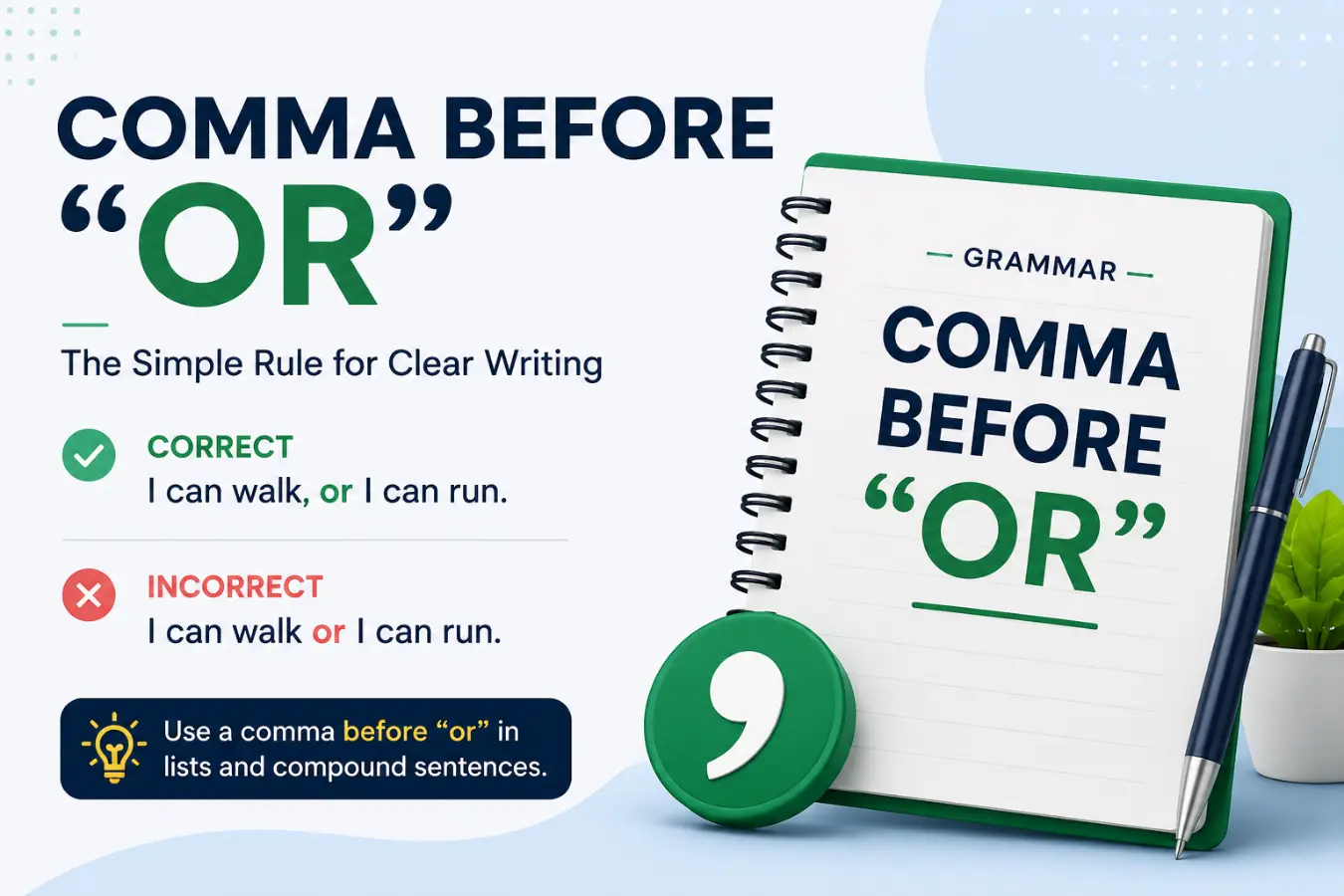
Comma before or is a common grammar question that confuses many writers. Some people add a comma before or every time. Others never use one. Both approaches can lead to mistakes.
The good news is that the rule is simple once you understand it. In some sentences, you need a comma before or. In others, you do not.
Knowing when to use a comma helps your writing look clear and professional. It also prevents confusion for readers. Whether you write emails, essays, blog posts, or social media content, this grammar rule matters.
In this guide, you will learn the meaning , when to use it, when to avoid it, and common mistakes to watch for. You will also see plenty of real-life examples to make the rule easy to remember.
Quick Summary Box
- It is sometimes correct and sometimes unnecessary.
- Use a it when joining two independent clauses.
- Do not use when connecting simple words or phrases.
- A comma may appear before or in a list, depending on style.
- The rule helps improve clarity and readability.
- Understanding the context is more important than memorizing examples.
What Does Comma Before Or Mean?
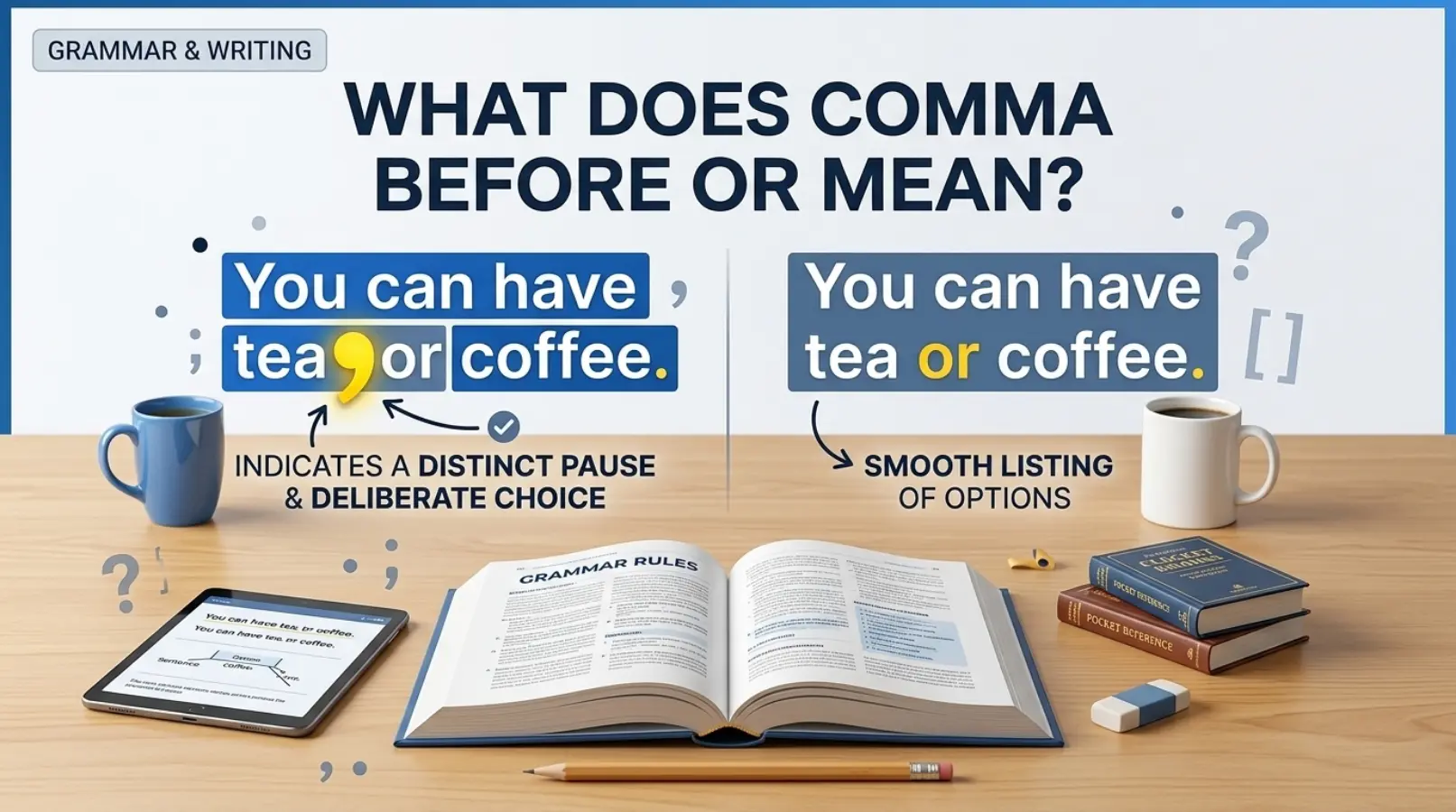
It refers to placing a comma immediately before the conjunction or in a sentence.
The word or connects:
- Words
- Phrases
- Clauses
- Choices
- Alternatives
The need for a comma depends on what or is connecting.
Example
Correct:
Would you like tea, or would you prefer coffee?
Correct:
Would you like tea or coffee?
The first sentence joins two complete thoughts, so it needs a comma.
The second sentence joins two items only, so no comma is needed.
When Should You Use?
You should use it when it joins two independent clauses.
An independent clause can stand alone as a complete sentence.
Examples
- I can drive you home, or you can take a taxi.
- We can leave now, or we can wait until tomorrow.
- She will call later, or she will send an email.
Each side of or contains a complete thought.
Therefore, the comma is necessary.
When Should You Not Use?
Do not use when connecting simple words, phrases, or sentence parts.
Examples
Correct:
- Do you want pizza or pasta?
- Wear a jacket or a sweater.
- We can meet today or tomorrow.
Incorrect:
- Do you want pizza, or pasta?
- Wear a jacket, or a sweater.
The comma creates an unnecessary pause.
Comma Before Or in Lists
Many writers ask about commas in lists.
Example List
- Apples
- Bananas
- Oranges
Sentence:
I bought apples, bananas, or oranges.
This sentence may use a comma before or because it is part of a list.
This comma is often called the Oxford comma or serial comma.
With Oxford Comma
We invited Tom, Sarah, or David.
Without Oxford Comma
We invited Tom, Sarah or David.
Both styles can be correct depending on the style guide.
Comma Before Or vs No Comma
| Situation | Use Comma? | Example |
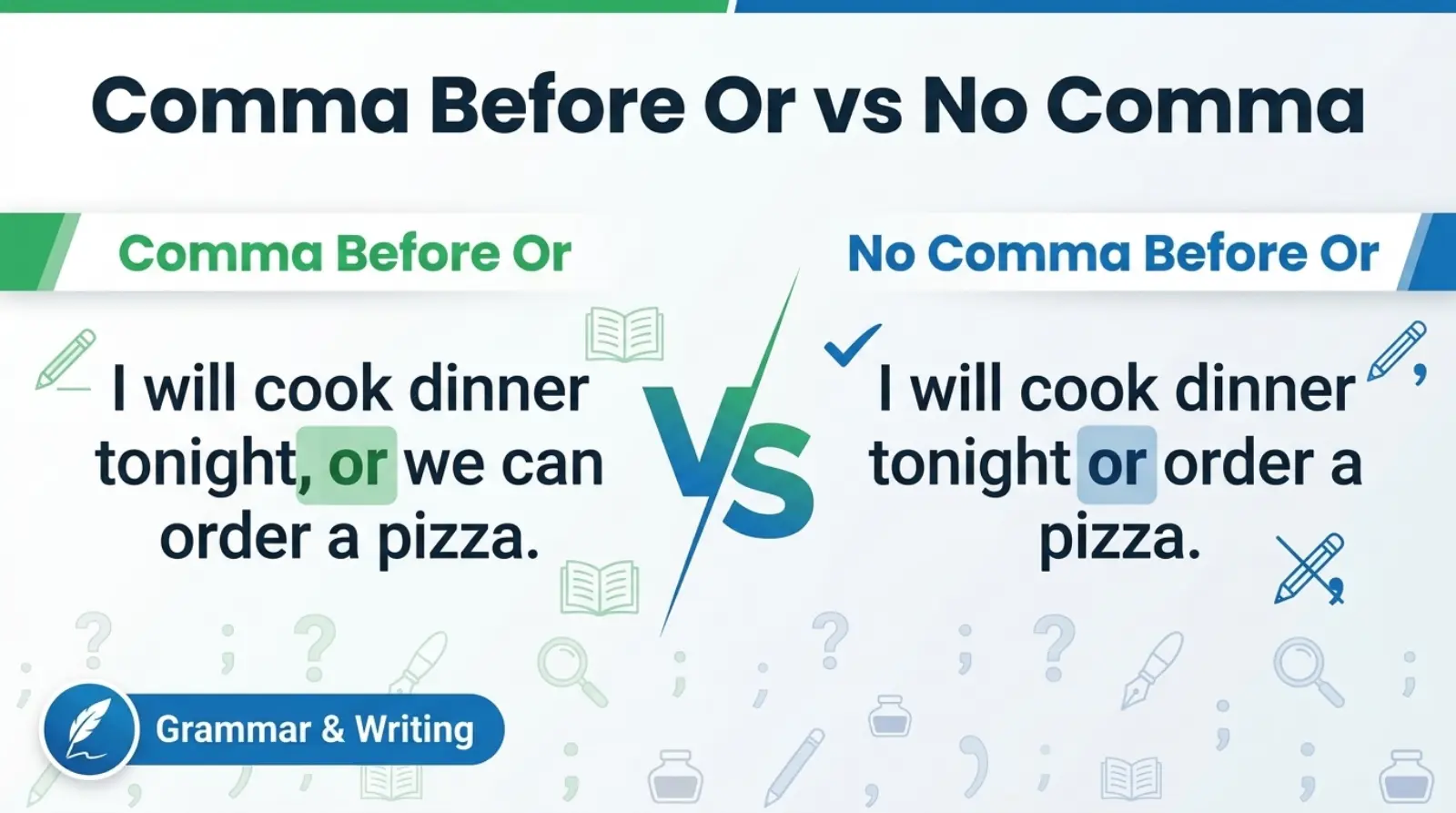
| Two independent clauses | Yes | I will cook, or we can order food. |
| Two words | No | Tea or coffee |
| Two phrases | No | In the morning or at night |
| Items in a list | Sometimes | Red, blue, or green |
| Parenthetical interruption | Sometimes | The answer, or so I thought, was correct. |
Real-Life Examples
Understanding real situations makes grammar easier.
At Work
Finish the report today, or submit it tomorrow morning.
In School
Study now, or you may struggle during the test.
At Home
We can watch a movie, or we can play a game.
Shopping
Would you like cash or credit?
Notice how the first three examples contain complete clauses. The last example does not.
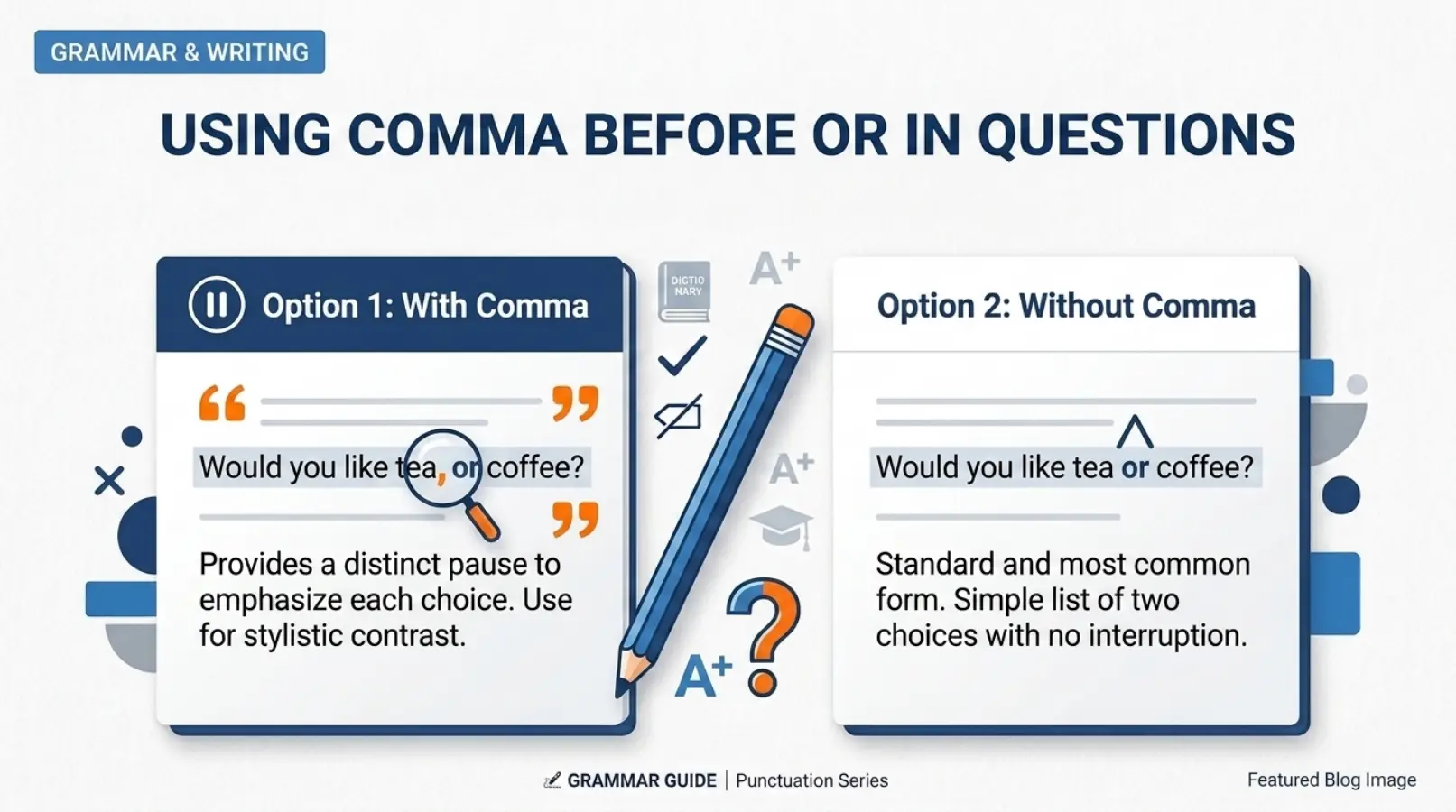
Using in Questions
Questions follow the same rules.
Use a Comma
Will you attend the meeting, or will you join online?
No Comma
Will you attend the meeting or join online?
The first question contains two complete clauses.
The second contains one clause with two options.
Common Mistakes
Many writers make the same errors.
Mistake 1: Adding a Comma Everywhere
Incorrect:
Do you want coffee, or tea?
Correct:
Do you want coffee or tea?
Mistake 2: Forgetting a Comma Between Independent Clauses
Incorrect:
Hurry up or we will miss the train.
Correct:
Hurry up, or we will miss the train.
Mistake 3: Misusing the Oxford Comma
Incorrect punctuation can create confusion.
Example:
I thank my parents, Taylor Swift and my teacher.
This suggests the parents are Taylor Swift and the teacher.
Better:
I thank my parents, Taylor Swift, and my teacher.
Easy Trick to Remember the Rule
Ask yourself one question:
Can both sides of “or” stand alone as complete sentences?
If yes:
Use a comma.
Example:
You can stay here, or you can leave now.
If no:
Do not use a comma.
Example:
You can stay here or leave now.
This simple test works most of the time.
Why Correct Usage Matters
Correct punctuation improves readability.
Benefits include:
- Better communication
- Professional writing
- Fewer misunderstandings
- Improved academic performance
- Higher credibility
Even a small comma can change how readers understand a sentence.
In Formal Writing
Formal writing requires careful punctuation.
Examples include:
- Academic papers
- Business reports
- Legal documents
- Professional emails
Example
The proposal may be approved, or it may require revisions.
Using the comma correctly improves clarity and professionalism.
In Informal Writing
Informal writing allows more flexibility.
Examples include:
- Text messages
- Social media posts
- Casual emails
Even so, following proper grammar helps readers understand your message.
Example
Are we meeting today or tomorrow?
No comma is needed.
Expert Insights: Why This Rule Matters
Grammar experts emphasize clarity over strict punctuation habits.
It helps separate complete thoughts. It prevents readers from stumbling through long sentences.
Writers often focus on complex grammar rules. However, mastering simple punctuation creates a stronger impact.
Professional editors recommend checking whether or joins complete clauses before deciding on comma placement.
This approach reduces mistakes and improves readability.
Frequently Asked Questions (FAQs)
Do you always put it?
No. Use a comma only in specific situations, such as joining independent clauses.
Is there a in a list?
Sometimes. It depends on whether you follow the Oxford comma style.
What is the rule for comma before or?
Use a comma when or connects two complete sentences.
Do I need a comma before or in a question?
Only if both parts of the question are independent clauses.
Is the Oxford comma required?
Not always. Different style guides have different preferences.
Can a comma before or change meaning?
Yes. In some cases, punctuation affects clarity and interpretation.
Is comma before or used in business writing?
Yes. Business writing often follows standard grammar rules for clarity.
How can I remember the rule easily?
Check whether both sides of or can stand alone as complete sentences.
Conclusion
Understanding comma before or becomes easy once you know what or connects. If it joins two independent clauses, use a comma. If it connects simple words or phrases, skip the comma. Lists may follow different styles depending on whether you use the Oxford comma.
This small punctuation mark can make a big difference in clarity and professionalism. By applying these simple rules, you can write more confidently and avoid common grammar mistakes. The next time you wonder about a comma before or, check if both sides can stand alone as complete sentences. That quick test will help you make the right choice every time.