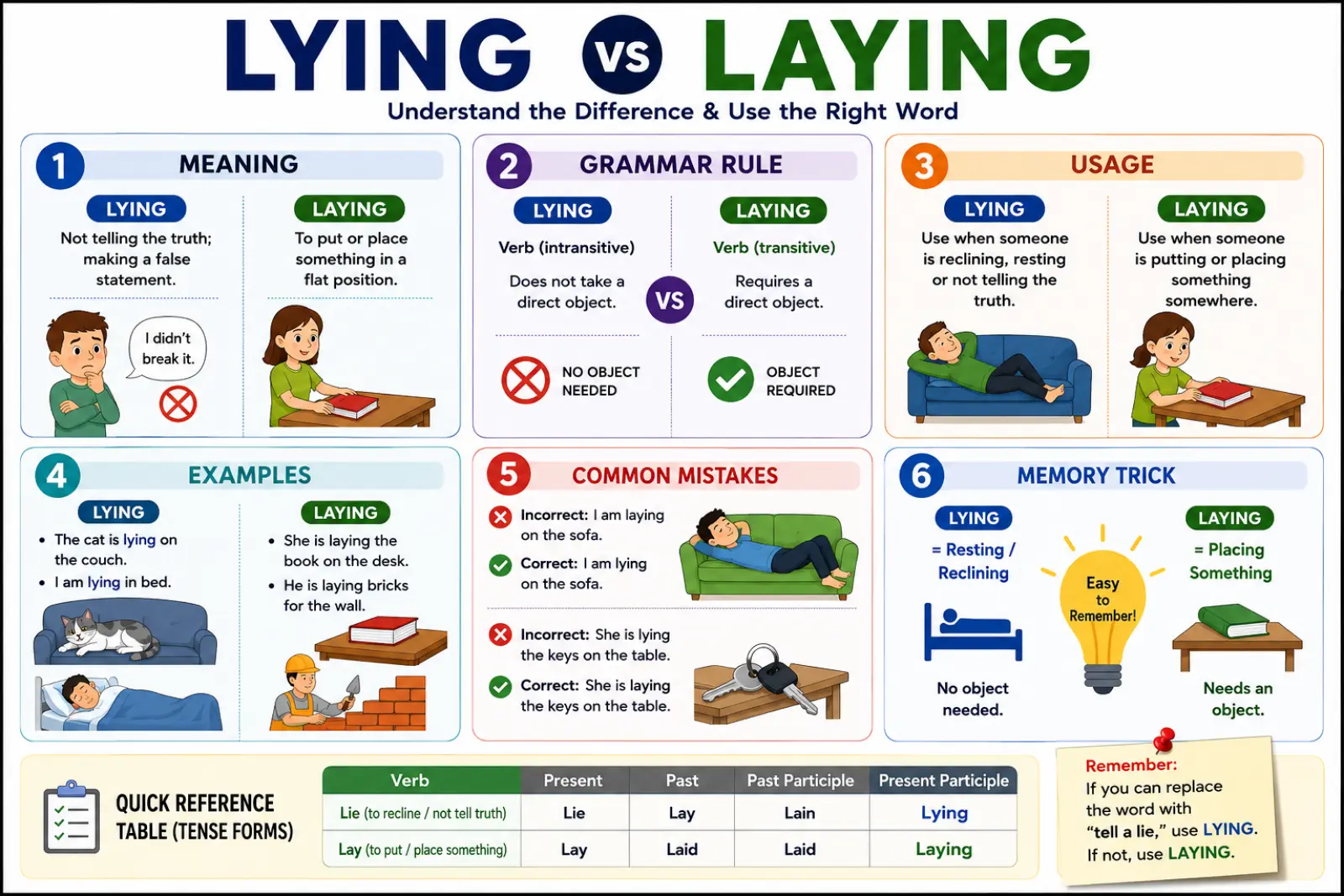
Lying or laying can be confusing because both words are correct but have different meanings. Many people use them incorrectly in everyday English. Lying usually means resting or being in a flat position, while laying means putting something down. The confusion often comes from the different forms of the verbs lie and lay. For example, you can say, “I am lying on the bed,” but “I am laying the book on the table.” Learning this simple difference can help you avoid common grammar mistakes. In this guide, we will explain lying or laying in simple English. You will learn their meanings, verb forms, common examples, and easy tricks to remember when to use each word correctly.
Quick Summary Box
- Lying = resting or reclining
- Laying = placing something down
- Lie does not take a direct object
- Lay requires an object
- “I am lying on the couch” ✔
- “I am laying the book on the table” ✔
- “I am laying on the couch” ✘ (usually incorrect)
- Remember: Lay something down, Lie down yourself
What Does “Lying” Mean?
Lying comes from the verb lie.
It means to rest, recline, or remain in a horizontal position.
Examples
- The cat is lying on the bed.
- I am lying on the sofa.
- The keys are lying on the desk.
- The child is lying under the tree.
In each example, no object receives the action.
Simple Rule
If someone or something is resting, use lying.
What Does “Laying” Mean?
Laying comes from the verb lay.
It means placing or putting something somewhere.
Examples
- She is laying the plates on the table.
- He is laying bricks for the wall.
- The farmer is laying straw in the barn.
- They are laying the carpet today.
In every example, something receives the action.
Simple Rule
If you are putting something down, use laying.
Lying vs Laying: Key Difference
The main difference is simple.
| Lying | Laying |
| Means resting | Means placing something |
| Comes from “lie” | Comes from “lay” |
| No object needed | Object required |
| Action happens to the subject | Action affects another thing |
| Example: I am lying down | Example: I am laying a blanket |
Easy Formula
- Lie = Recline
- Lay = Place
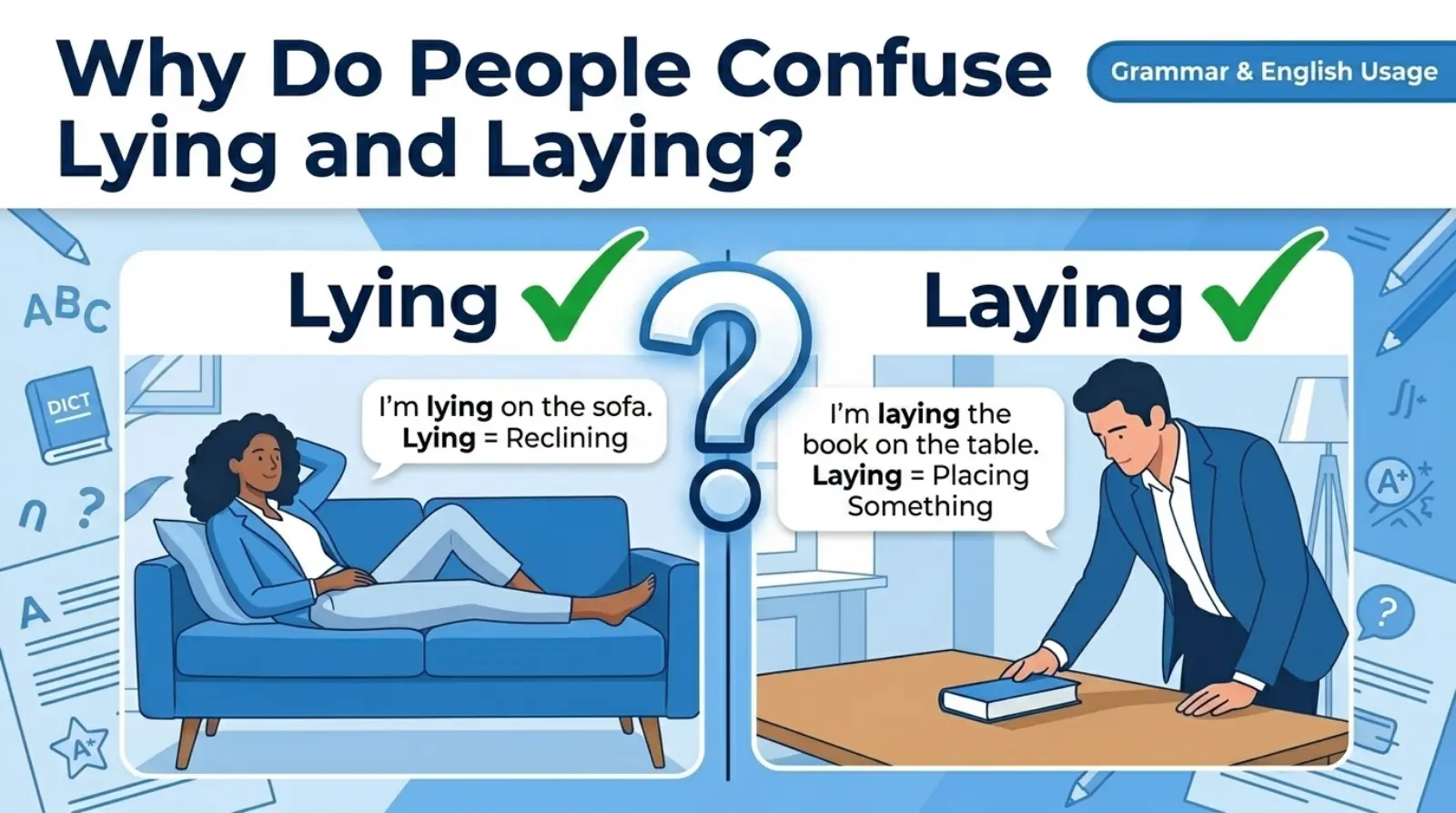
Why Do People Confuse Lying and Laying?
Many people confuse these words because their verb forms overlap.
The past tense of lie is lay.
This creates confusion.
Verb Forms
| Verb | Present | Past | Past Participle |
| Lie | Lie | Lay | Lain |
| Lay | Lay | Laid | Laid |
Example
- Today: I lie down.
- Yesterday: I lay down.
- Earlier: I had lain down.
Meanwhile:
- Today: I lay the book down.
- Yesterday: I laid the book down.
- Earlier: I had laid the book down.
Real-Life Examples of Lying
Here are common situations where lying is correct.
At Home
- I am lying on my bed.
- The dog is lying near the fireplace.
At Work
- Important documents are lying on my desk.
- My phone is lying beside the keyboard.
Outdoors
- People are lying on the beach.
- Leaves are lying across the path.
Real-Life Examples of Laying
Here are situations where laying is correct.
In the Kitchen
- She is laying napkins on the table.
- He is laying food on the counter.
Construction Work
- Workers are laying concrete.
- The team is laying tiles.
Gardening
- We are laying mulch around plants.
- They are laying stones in the garden.
Common Mistakes People Make
Many writers accidentally switch these words.
Incorrect
I am laying on the couch.
Correct I am lying on the couch.
Incorrect
The dog is laying under the tree.
Correct
The dog is lying under the tree.
Incorrect
She is lying the book on the desk.
Correct
She is laying the book on the desk.
Simple Trick to Remember the Difference
A quick memory trick can help.
The Object Test
Ask yourself:
Is something being placed somewhere?
If yes, use laying.
If no, use lying.
Examples
- I am lying on the floor. → No object.
- I am laying the blanket on the floor. → Object = blanket.
Memory Phrase
Lie = You recline.
Lay = You place.
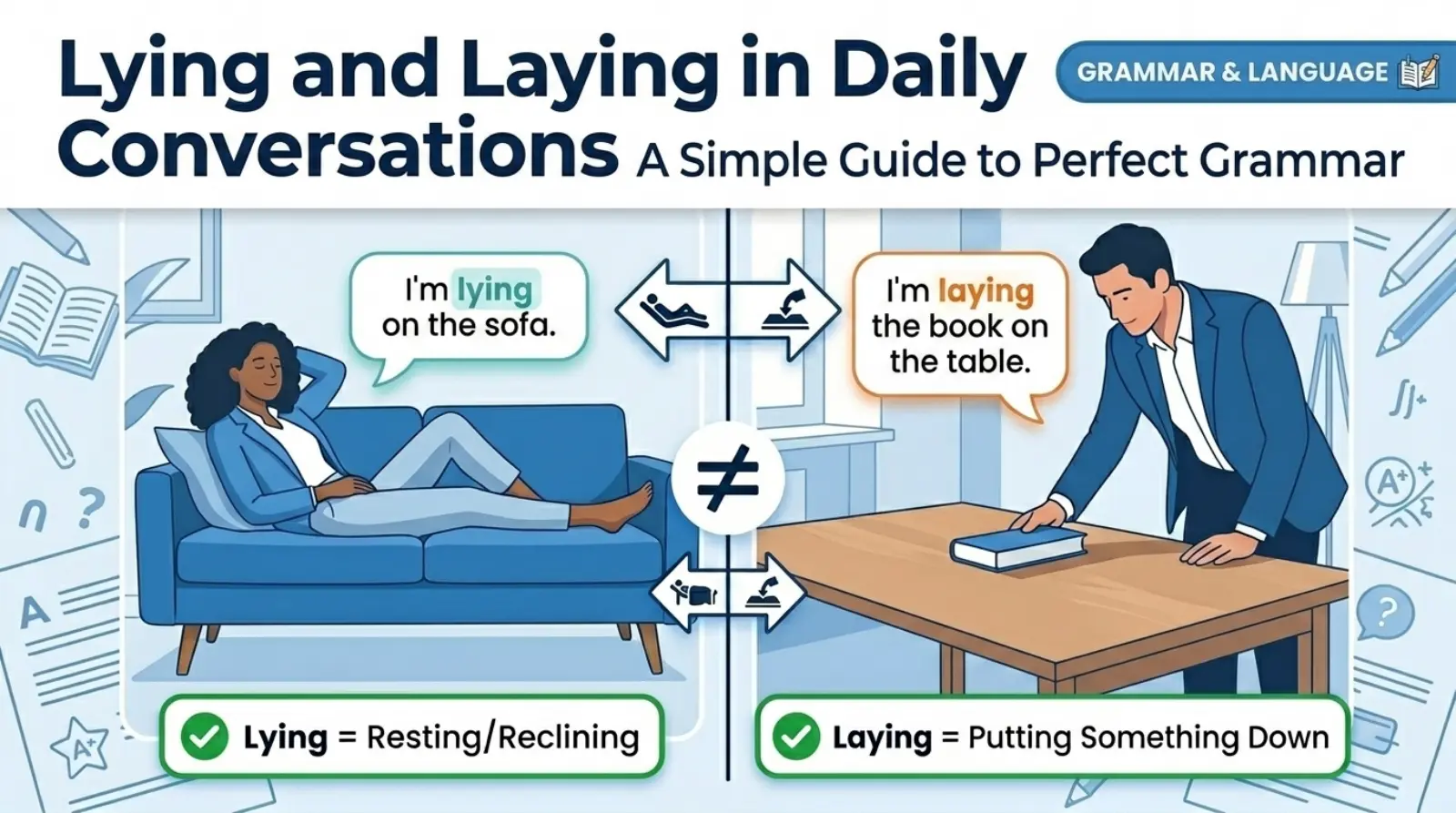
Lying and Laying in Daily Conversations
People use these words every day.
Common Sentences
- The baby is lying in the crib.
- The dog is lying beside me.
- She is laying fresh towels in the bathroom.
- They are laying supplies on the table.
Correct usage makes your communication clearer.
Synonyms
for Lying
- Resting
- Reclining
- Stretching out
- Lounging
- Relaxing
for Laying
- Placing
- Setting
- Positioning
- Arranging
- Putting down
Expert Insights on Lying vs Laying
Grammar experts recommend focusing on whether an object exists.
This simple check solves most confusion.
Professional writers often proofread sentences containing lie and lay. These verbs cause mistakes even in published content.
Using the correct word improves:
- Writing quality
- Professional communication
- Academic papers
- Business emails
- Content marketing
Small grammar improvements build trust with readers.
Lying vs Laying Comparison Table
| Feature | Lying | Laying |
| Base Verb | Lie | Lay |
| Meaning | Resting | Placing |
| Needs Object | No | Yes |
| Action Type | Self-action | Action on object |
| Example | I am lying down | I am laying a rug |
| Common Error | Less common | Often misused |
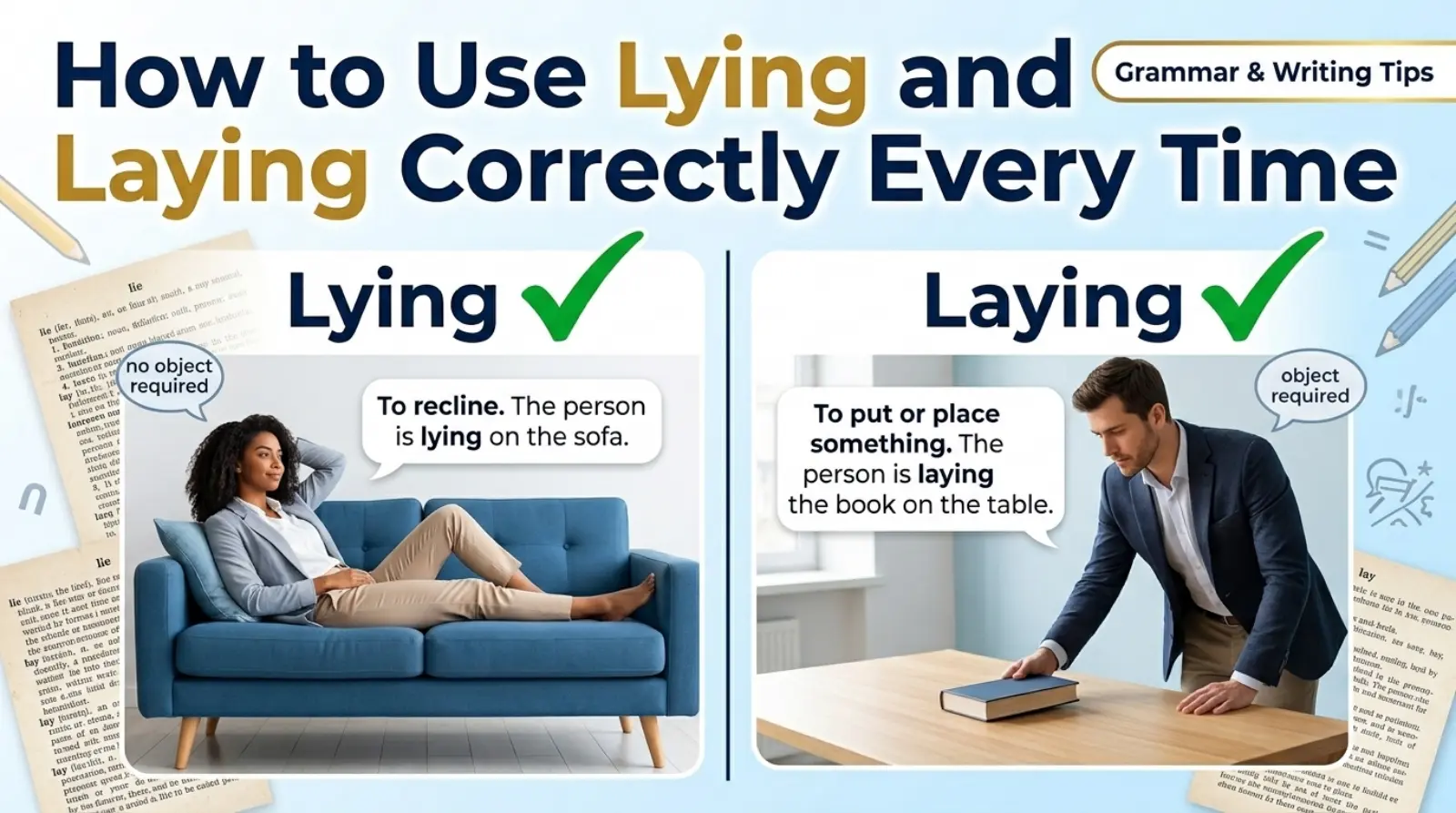
How to Use Lying and Laying Correctly Every Time
Follow these steps:
Step 1
Find the action.
Step 2
Ask whether something receives the action.
Step 3
If an object exists, use laying.
Step 4
If no object exists, use lying.
Example
Sentence:
“I am ___ on the couch.”
No object exists.
Correct answer:
“I am lying on the couch.”
Frequently Asked Questions (FAQs)
1. Is it lying in bed or laying in bed?
Lying in bed is correct because no object is being placed.
2. Is it laying down or lying down?
Usually, lying down is correct when someone reclines.
3. Why is lying and laying confusing?
The past tense of lie is lay, which causes confusion.
4. Does laying always need an object?
Yes. Something must receive the action.
5. Is the dog lying or laying on the floor?
The dog is lying on the floor.
6. Is “I am laying on the couch” wrong?
In standard grammar, yes. The correct phrase is “I am lying on the couch.”
7. What is the easiest way to remember?
Use this rule:
Lie = recline
Lay = place
8. Can native speakers make this mistake?
Yes. Many native speakers confuse these verbs.
Conclusion
Understanding lying or laying becomes much easier when you remember one simple rule. Lying means resting or reclining, while laying means placing something somewhere. The key difference is that laying requires an object, but lying does not.
Although many people mix these words up, a quick object check can help you choose the correct one every time. Whether you are writing an email, blog post, school paper, or social media update, using the right word makes your communication clearer and more professional.
The next time you wonder about lying or laying, remember this simple phrase: Lie means recline. Lay means place. That one rule can save you from one of English grammar’s most common mistakes.