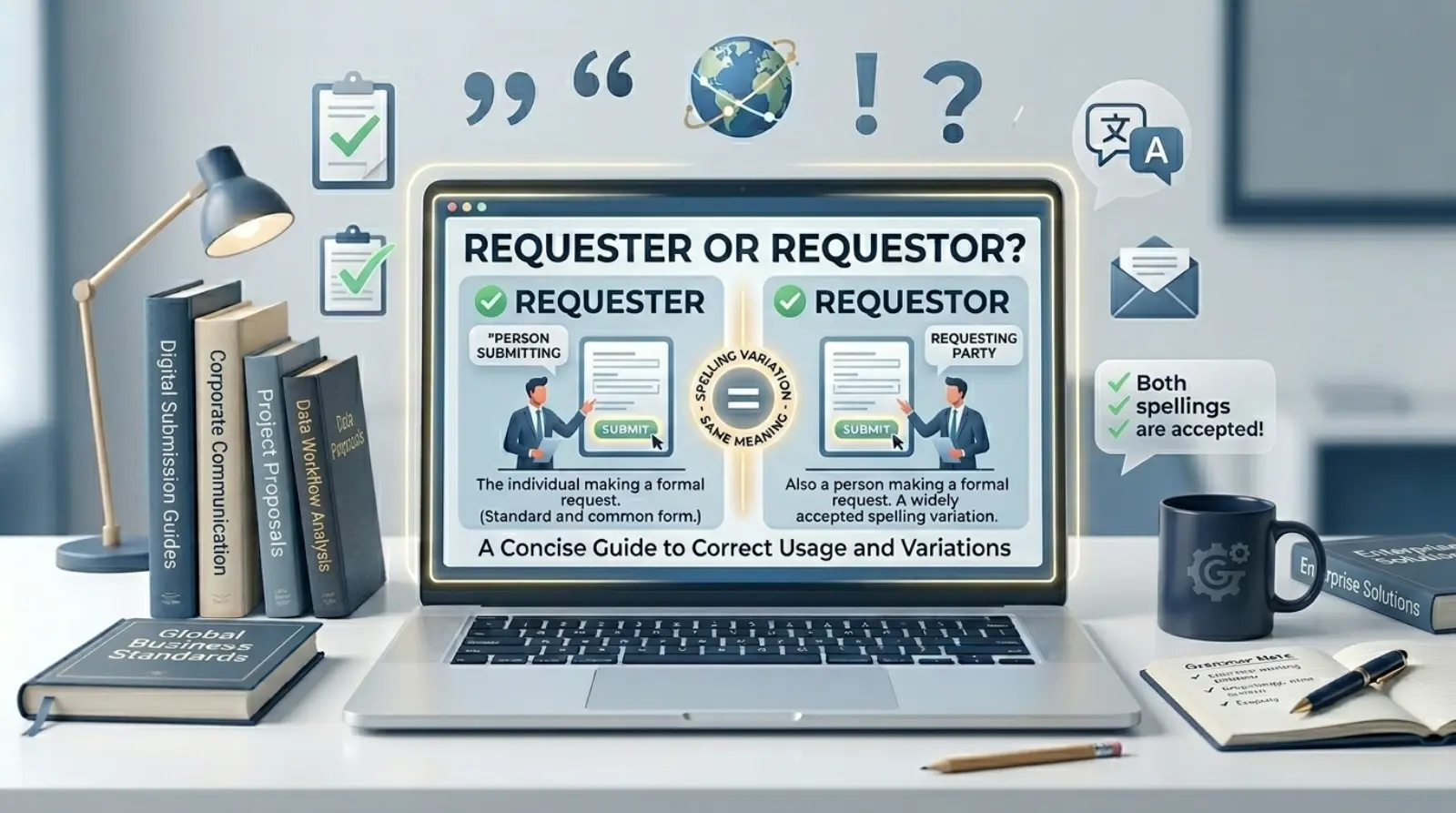
The keyword requester or requestor refers to a person who makes a request.
In simple English, a requester or requestor is someone who asks for something.
This word is often used in business, law, and technology.
Both spellings are correct, but usage depends on style.
In modern English, “requester” is more common.
However, “requestor” still appears in legal and formal documents.
Many people get confused between these two spellings.
This article will make everything clear in simple words.
You will learn meaning, difference, examples, and correct usage.
By the end, you will confidently use both terms in writing.
Quick Summary
- A requester or requestor is a person who makes a request
- Both words mean the same thing
- “Requester” is more commonly used in modern English
- “Requestor” is often used in legal or formal contexts
- Used in IT, business, and legal documents
- Example: A customer requesting support is a requester
- No difference in meaning, only spelling variation
Meaning of Requester or Requestor
A requester or requestor means a person or system that asks for something.
It can be information, service, approval, or action.
In simple words, it is the “asker.”
The word comes from “request,” which means to ask politely.
Simple Explanation of Requester or Requestor
A requester is anyone who sends a request.
It can be a person, company, or software system.
For example:
- A student requesting admission
- A customer requesting refund
- A user requesting data access
All of these are requesters.
The meaning stays the same for both spellings.
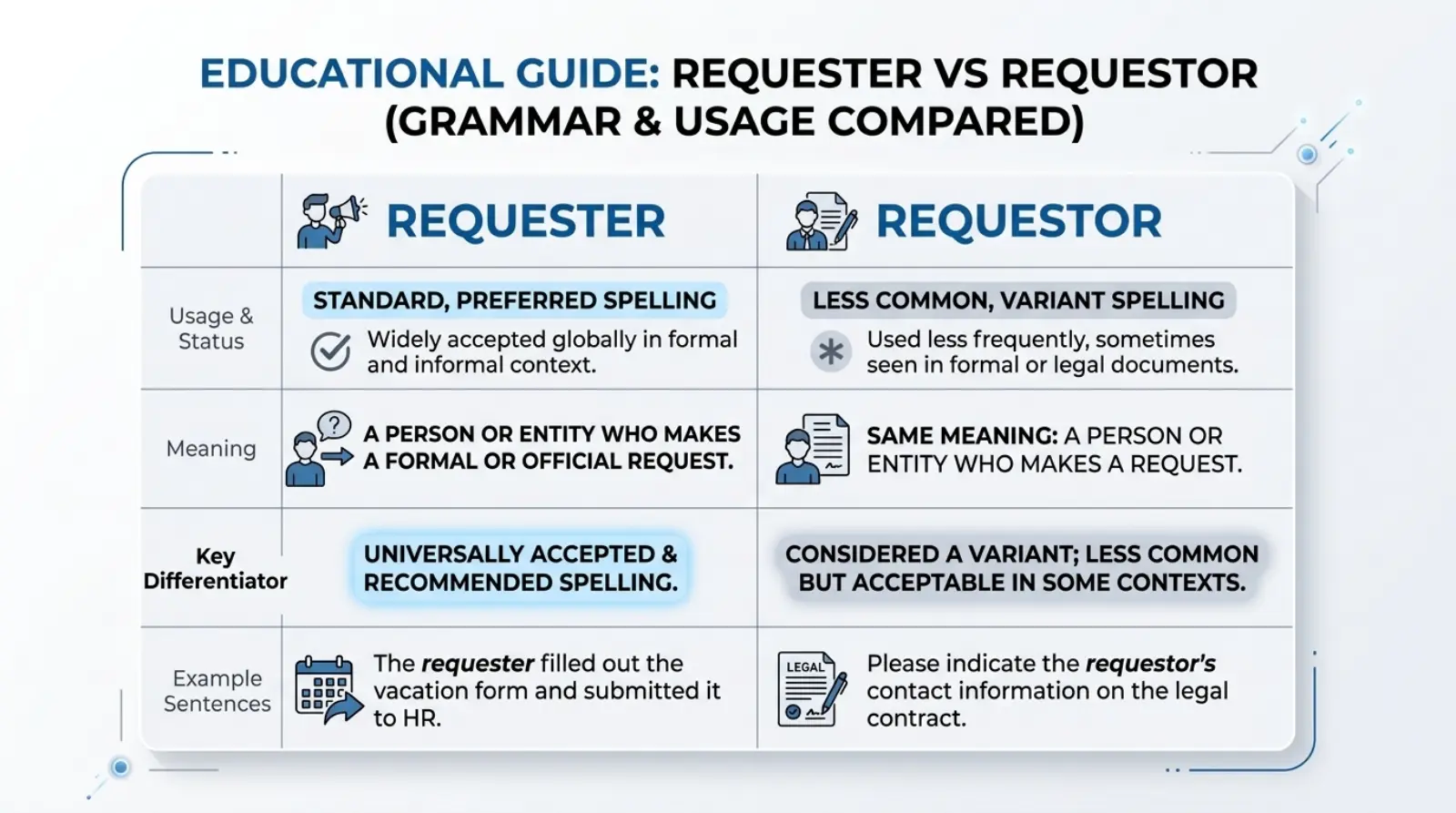
Difference Between Requester and Requestor
There is no difference in meaning.
The only difference is spelling and usage style.
- Requester → Modern and commonly used
- Requestor → Traditional or legal usage
Both are correct in English grammar.
Comparison Table (Requester vs Requestor)
| Feature | Requester | Requestor |
| Meaning | Person who makes a request | Person who makes a request |
| Usage | Modern English | Legal/technical English |
| Popularity | Very common | Less common |
| Context | Business, IT, daily use | Legal documents, contracts |
| Correctness | Fully correct | Fully correct |
Real-Life Examples of Requester or Requestor
Here are simple examples:
- A customer is a requester for product return
- A student is a requester for scholarship
- A bank client is a requester for loan approval
- In software, a system user is a requester of data
- In law, a petitioner is also a requestor of justice
These examples show the same meaning in all cases.
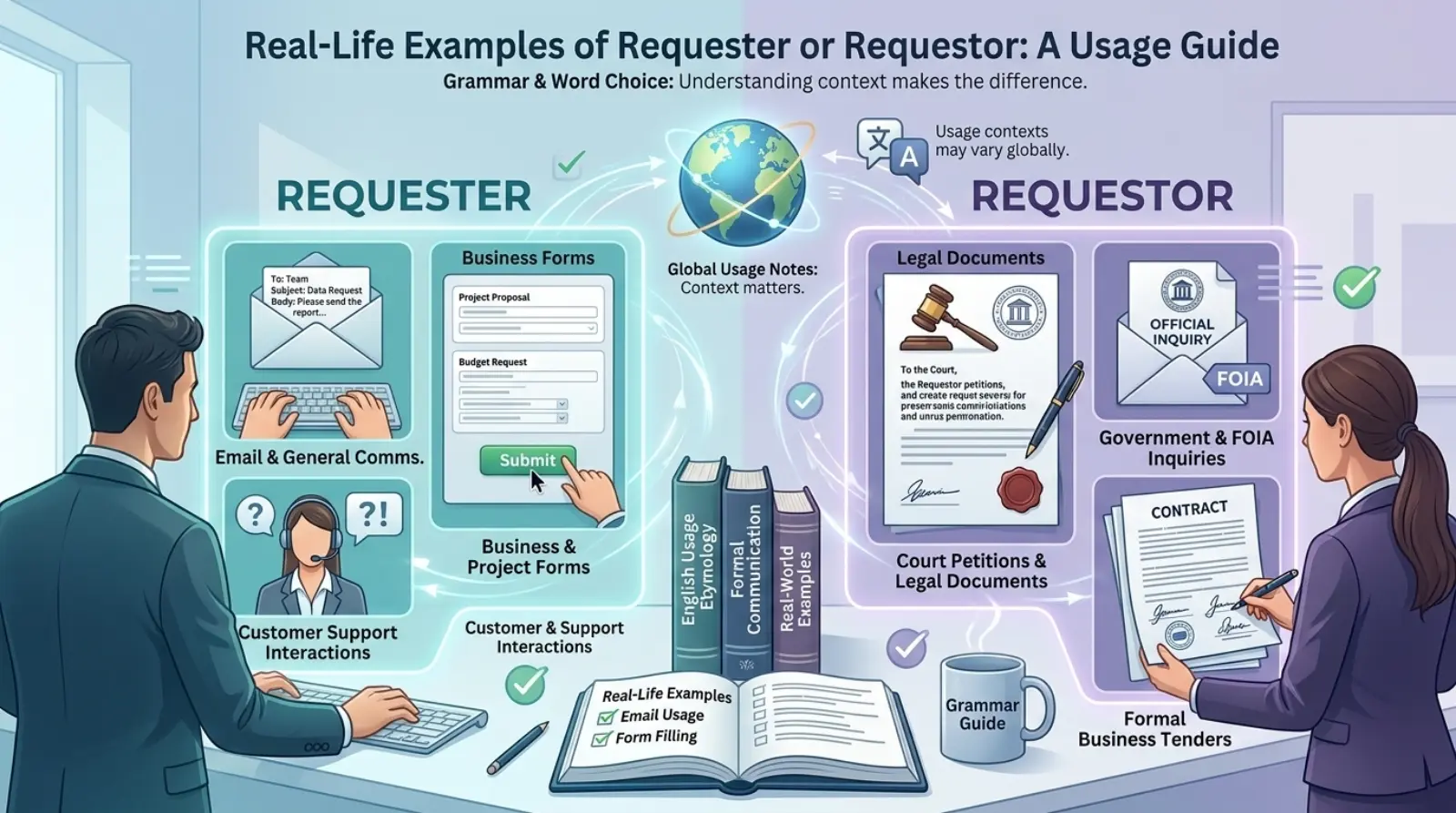
Usage in Business and IT
In business systems, a requester is very important.
They start the workflow by making a request.
In IT systems:
- A user requests data access
- A system logs the requester ID
- APIs identify the requester
In companies:
- Employees request leave
- Managers approve requester submissions
This role is essential in workflows and automation systems.
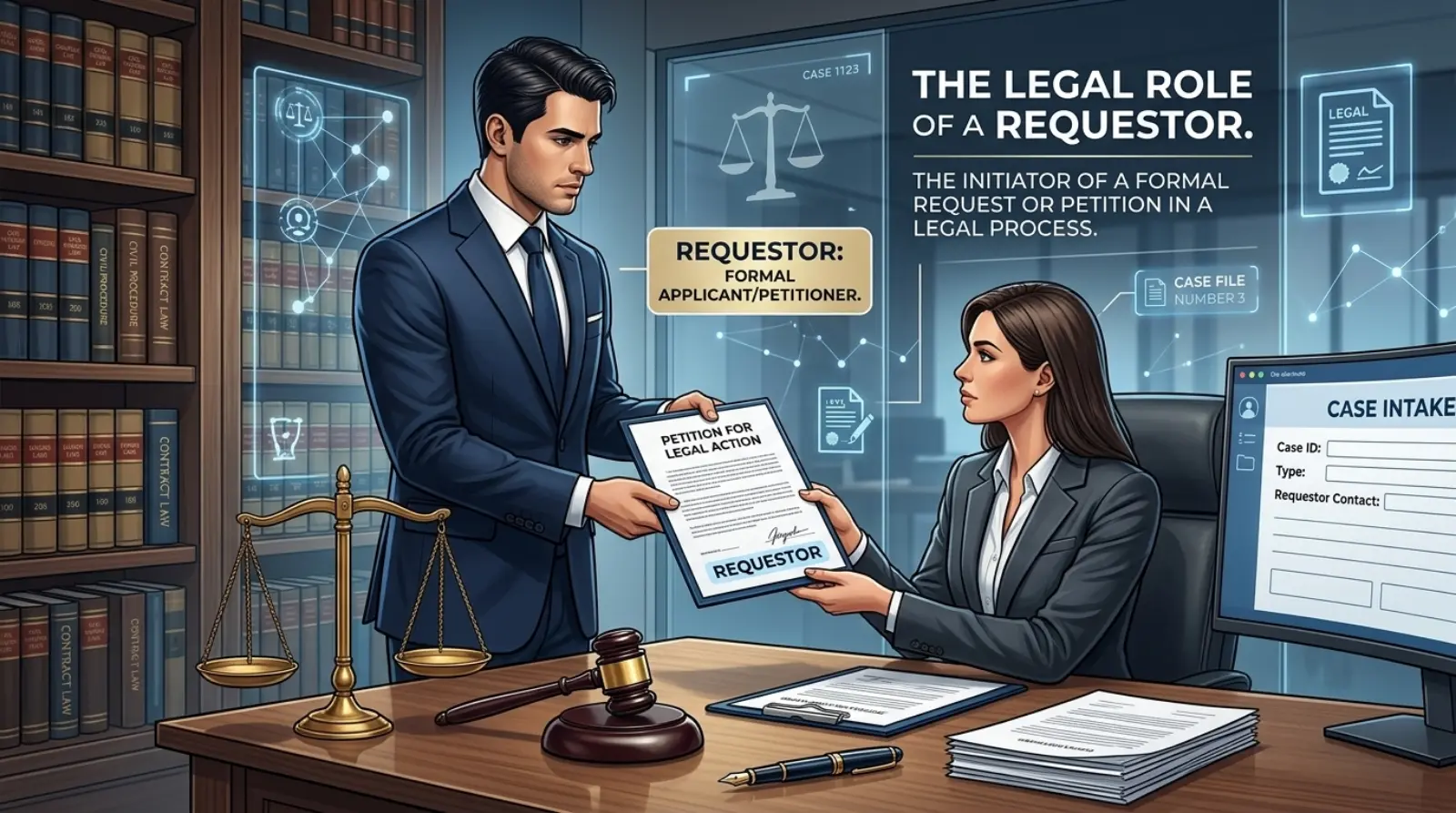
Usage in Legal Context
In legal documents, the word requestor is more common.
It is used for:
- Legal petitions
- Court requests
- Formal applications
Example:
- The requestor filed a motion in court
Even though “requester” is also correct, “requestor” sounds more formal in law.
Common Mistakes People Make
Many learners make these mistakes:
- Thinking both words have different meanings
- Using only one spelling everywhere
- Mixing informal and legal usage incorrectly
- Overthinking which is “correct”
The truth is simple: both are correct.
Tips to Use Requester or Requestor Correctly
Here are easy tips:
- Use requester in daily writing
- Use requestor in legal documents if required
- Stay consistent in one document
- Do not switch spellings randomly
- Focus on meaning, not spelling stress
Requester in Daily Life
We use the concept of requester every day.
Examples:
- You request food in a restaurant
- You request help from a teacher
- You request money transfer in banking apps
- You request customer support online
In all cases, you are the requester.
Requester in Technology Systems
Modern systems rely heavily on requesters.
In APIs:
- Requester sends data request
- Server responds to requester
In apps:
- Login system verifies requester identity
- Cloud systems track requester actions
This helps improve security and control.

Expert Insights (EEAT Section)
Experts in English linguistics confirm:
- Both forms are grammatically correct
- “Requester” is preferred in modern usage
- “Requestor” survives in legal and technical writing
- Consistency matters more than choice
Why this topic matters:
- Prevents confusion in writing
- Improves professional communication
- Helps in legal and technical accuracy
- Supports better SEO content writing
Clear understanding builds writing authority and trust.
FAQs About Requester or Requestor
1. What is a requester or requestor?
A person who makes a request for something.
2. Are requester and requestor the same?
Yes, both have the same meaning.
3. Which spelling is correct?
Both are correct, but “requester” is more common.
4. Where is requestor used?
Mostly in legal and formal documents.
5. Can I use requester in business writing?
Yes, it is widely used in business and IT.
6. Is requestor outdated?
No, it is still used in formal contexts.
7. What is the plural of requester?
Requesters or requestors.
8. Is there a difference in pronunciation?
No, both are usually pronounced the same.
Synonyms
- Applicant
- Petitioner
- User
- Claimant
- Seeker
- Asker
These words depend on context.
When to Use Requester or Requestor
Use requester when:
- Writing blogs
- Business communication
- Technical documentation
Use requestor when:
- Writing legal documents
- Following formal style guides
- Using older English conventions
Why Understanding This Term Matters
Understanding this keyword helps in:
- Better writing clarity
- Professional communication
- SEO content accuracy
- Legal document precision
Small differences in spelling can affect tone and perception.
Conclusion
The terms requester or requestor both mean the same thing.
They refer to a person who makes a request.
The main difference is usage style, not meaning.
“Requester” is more common in modern English writing.
“Requestor” is still used in legal and formal documents.
Understanding both helps improve writing accuracy and confidence.
It also helps in business, legal, and technical communication.
In simple words, choose the spelling based on context.
Focus on clarity, consistency, and reader understanding.