
Trick or trade is a phrase that often confuses many English learners and writers. Some people use it when talking about skills, jobs, or clever techniques. However, the phrase is not always used correctly.
Understanding the meaning of trick or trade can help you avoid common language mistakes. It can also improve your writing and communication skills.
In this guide, you will learn what trick or trade means, where it comes from, and how to use it correctly. You will also see examples, common errors, related phrases, and expert tips.
By the end of this article, you will clearly understand whether “trick or trade” is the right phrase for your situation.
Quick Summary Box
- Trick or trade combines two words with different meanings.
- Trick means a clever method or technique.
- Trade means a profession, occupation, or skilled work.
- The phrase is sometimes confused with other expressions.
- Context determines whether the phrase makes sense.
- Understanding the difference improves communication.
- Common related phrase: tricks of the trade.
What Does Trick or Trade Mean?
The phrase trick or trade does not have a widely accepted dictionary definition as a fixed idiom.
Instead:
- Trick refers to a clever method.
- Trade refers to a profession or skill.
People sometimes combine these words when discussing techniques used in a profession. However, the more common and correct expression is “tricks of the trade.”
Example
A mechanic may know several tricks that make repairs easier.
These useful techniques are called tricks of the trade.
Understanding the Words Separately
Meaning of Trick
A trick is:
- A clever technique
- A useful shortcut
- A special method
Examples
- She showed me a trick for removing stains.
- This cooking trick saves time.
- The photographer shared a camera trick.
Meaning of Trade
A trade is:
- A skilled job
- A profession
- A craft learned through practice
Examples
- Plumbing is a trade.
- He learned the trade from his father.
- Electricians often study a trade.
Trick or Trade vs Tricks of the Trade
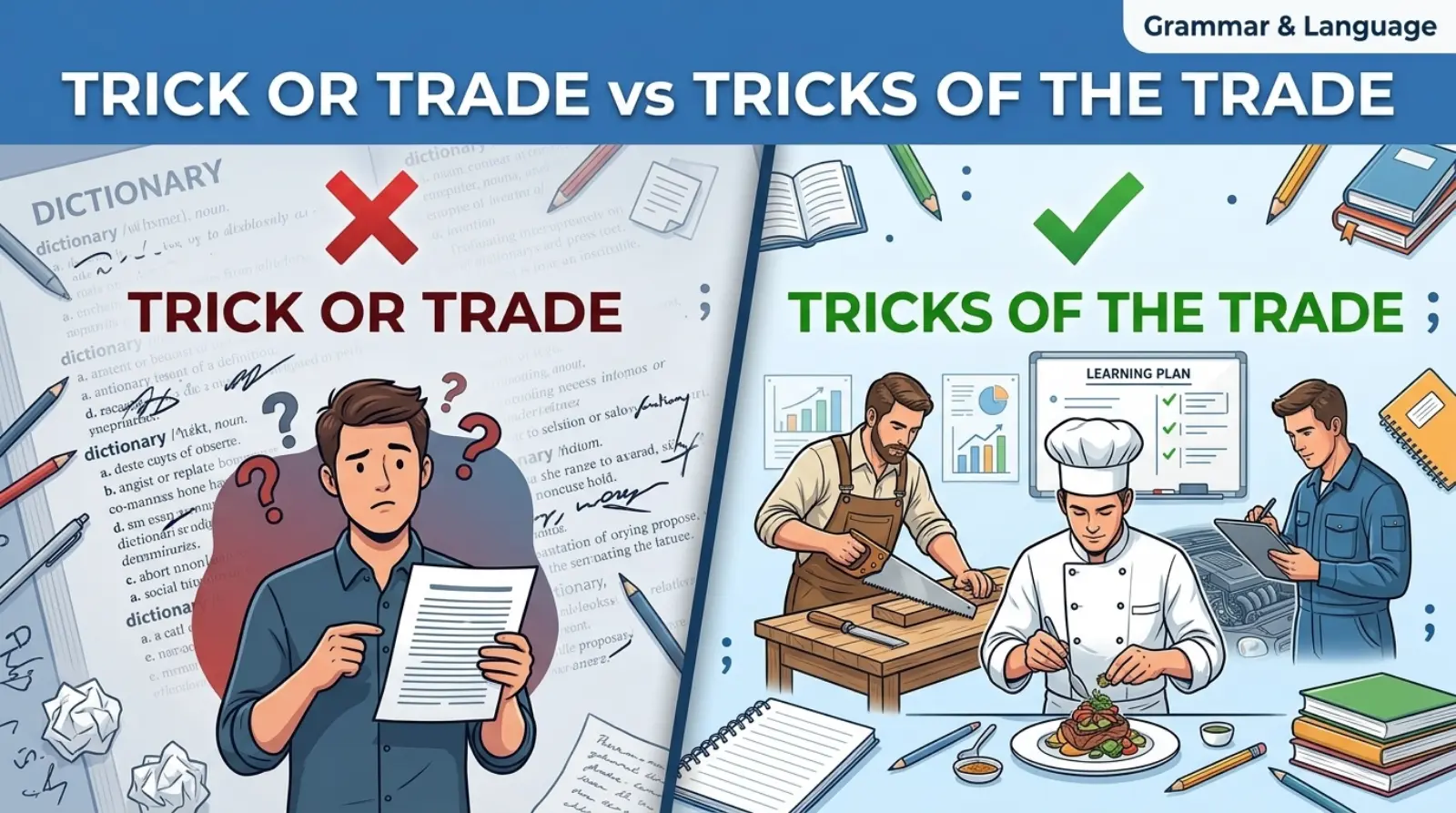
Many people mistakenly say trick or trade when they actually mean tricks of the trade.
Comparison Table
| Phrase | Meaning | Correct Usage |
| Trick or Trade | Not a standard idiom | Rare and context-dependent |
| Tricks of the Trade | Special techniques used by professionals | Common and correct |
| Trade Trick | A technique used in a profession | Less common but understandable |
Example
❌ He learned many trick or trade methods.
✅ He learned many tricks of the trade.
Origin of the Phrase “Tricks of the Trade”
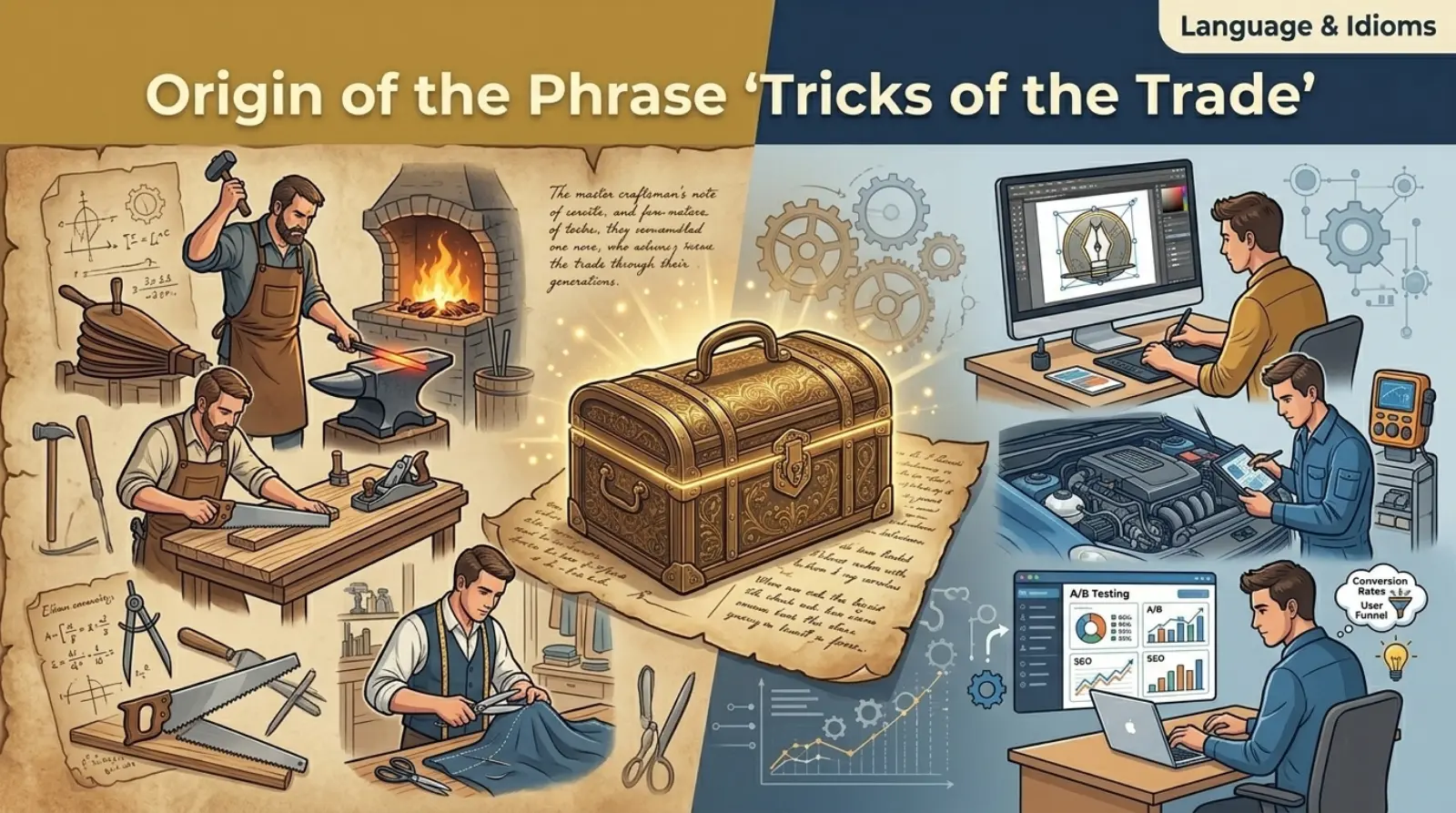
The expression tricks of the trade has been used for many years.
It describes special skills or techniques that professionals learn through experience.
These methods often:
- Save time
- Improve results
- Make difficult tasks easier
Every profession has its own tricks of the trade.
Examples
- Chefs use special cooking methods.
- Carpenters have precise measuring techniques.
- Writers use editing shortcuts.
Real-Life Examples of Tricks of the Trade
Understanding examples makes the concept easier.
In Cooking
A chef may:
- Use warm water to activate yeast.
- Rest meat before serving.
- Sharpen knives regularly.
In Writing
A writer may:
- Create outlines first.
- Use simple language.
- Edit after taking a break.
In Photography
A photographer may:
- Use natural light.
- Adjust camera angles.
- Shoot during golden hour.
These are all considered tricks of the trade.

How People Commonly Use Trick or Trade
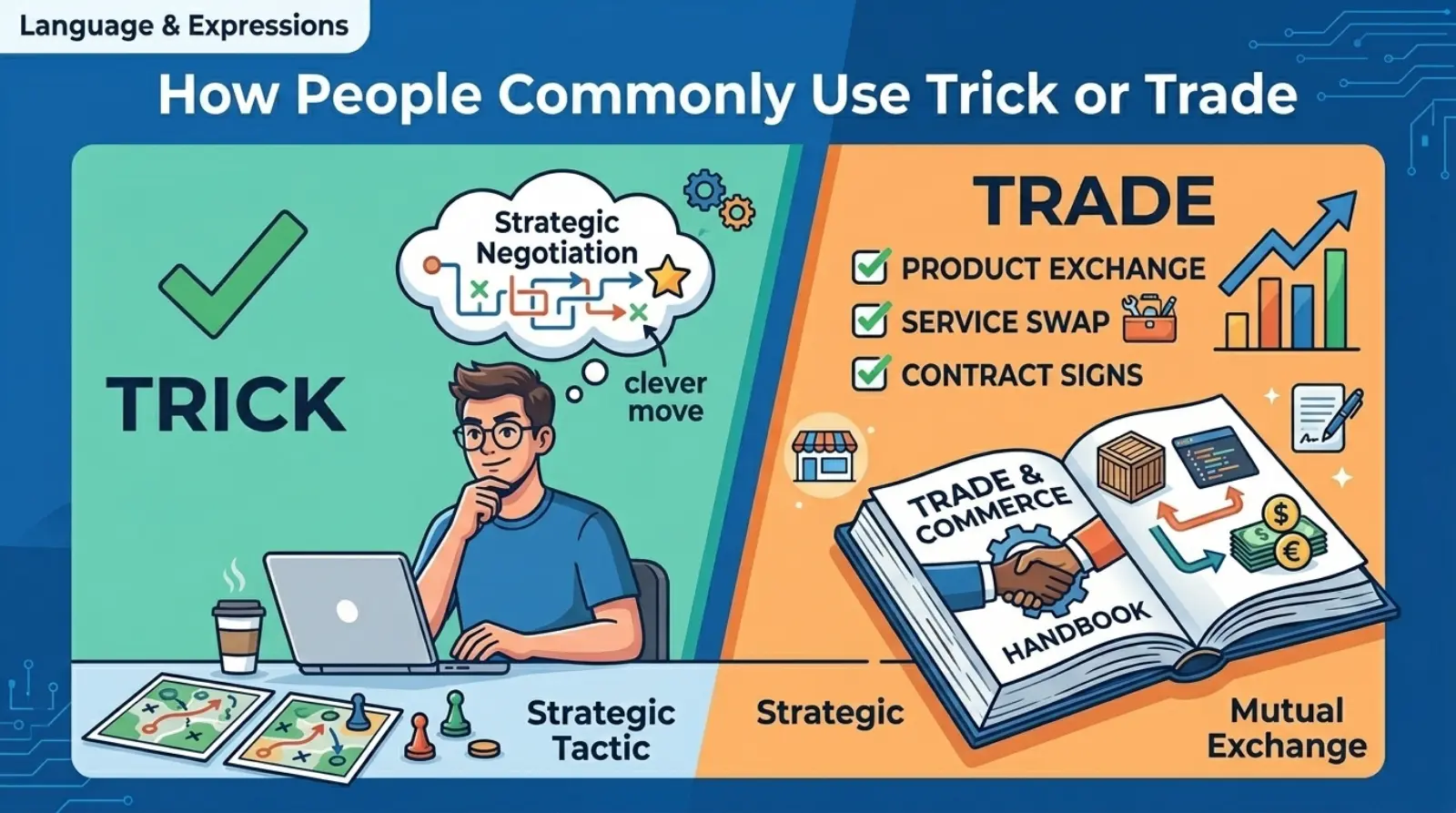
Although the phrase is uncommon, people may use it in conversations involving:
Skills
- Learning professional techniques
- Improving job performance
Business
- Industry secrets
- Specialized methods
Crafts
- Woodworking
- Sewing
- Metalworking
However, using tricks of the trade sounds more natural and grammatically correct.
Common Mistakes People Make
Many writers confuse similar expressions.
Mistake #1: Using Trick or Trade as an Idiom
❌ She knows every trick or trade.
✅ She knows all the tricks of the trade.
Mistake #2: Mixing Up Trade and Profession
❌ My trade is a trick.
✅ My trade is plumbing.
Mistake #3: Dropping Important Words
❌ These are trade tricks.
✅ These are tricks of the trade.
Tips for Using the Phrase Correctly
Follow these simple tips.
Use “Tricks of the Trade”
This is the accepted phrase.
Consider the Context
Ask yourself:
- Are you discussing skills?
- Are you talking about professional techniques?
If yes, use tricks of the trade.
Keep It Natural
Use the phrase only when discussing experience-based methods.
Usage in Daily Life
You can hear this expression in many situations.
Workplace
“She taught me some tricks of the trade.”
School
“The teacher shared study tricks.”
Sports
“Experienced players know many tricks of the trade.”
Home Projects
“DIY experts use tricks of the trade to save time.”
Synonyms
- Professional techniques
- Insider knowledge
- Expert methods
- Practical skills
- Trade secrets
- Best practices
- Useful shortcuts
- Specialized methods
Why Understanding This Phrase Matters
Knowing the correct phrase helps you:
- Write clearly
- Speak confidently
- Avoid grammar mistakes
- Improve professional communication
Small language errors can create confusion.
Using the right expression shows strong language skills.
Expert Insights: Why “Tricks of the Trade” Is Important
Language experts recommend learning common idioms because they improve communication.
Professionals often use tricks of the trade to describe valuable experience.
These techniques:
- Come from practice
- Save effort
- Improve efficiency
- Increase success
Writers, teachers, mechanics, and business owners all rely on tricks of the trade.
Learning these methods can help people perform better in their chosen field.
Real-Life Scenario
Imagine two beginner bakers.
Baker A
Follows recipes exactly.
Baker B
Learns tricks of the trade, such as:
- Measuring ingredients carefully
- Using room-temperature ingredients
- Checking oven temperature
Baker B often gets better results because of practical experience.
This example shows why tricks of the trade matter.
How to Learn Tricks of the Trade
Learn From Experts
Watch professionals work.
Practice Regularly
Experience builds knowledge.
Ask Questions
Experts often share useful techniques.
Read Industry Resources
Books and blogs provide valuable insights.
Keep Improving
Every skill develops over time.
Frequently Asked Questions (FAQs)
Is “trick or trade” a real idiom?
No. It is not a widely recognized English idiom.
What is the correct phrase?
The correct phrase is tricks of the trade.
What does tricks of the trade mean?
It means special techniques used by professionals.
Can I use trick or trade in writing?
You can, but it may sound unusual or incorrect.
Is tricks of the trade formal?
It works in both casual and professional writing.
What is an example of tricks of the trade?
A chef using a special cooking technique is an example.
Are tricks of the trade the same as trade secrets?
Not always. Trade secrets are confidential. Tricks of the trade are practical methods.
Why do professionals use tricks of the trade?
They help save time and improve results.
Conclusion
The phrase trick or trade often causes confusion because it is not a common English idiom. In most situations, people actually mean tricks of the trade, which refers to useful techniques and skills learned through experience. These methods help professionals work faster, smarter, and more effectively.
Whether you are a writer, chef, mechanic, teacher, or business owner, learning tricks of the trade can improve your results. Understanding the difference between trick, trade, and tricks of the trade also helps you communicate more clearly and confidently.
The key takeaway is simple: when talking about professional techniques or insider knowledge, use tricks of the trade rather than trick or trade for the most natural and correct English.